The Holy Crusader
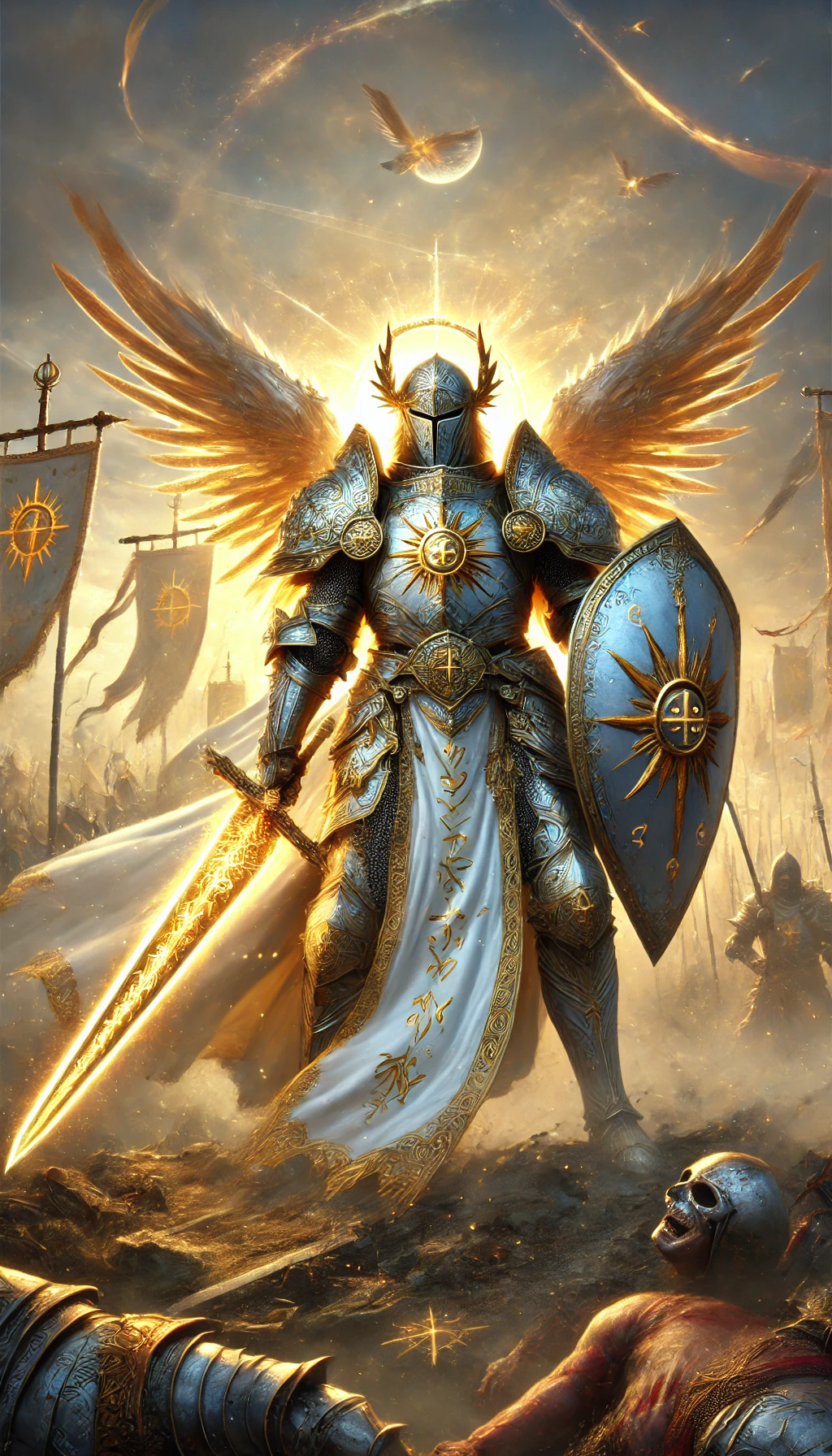 For untold ages, shrines, temples, and churches, all places of wealth or adorned with gold, jade, and gems in honor of the gods, have been targeted and looted by marauding bands of infidels, enemies, and nonbelievers who defile and desecrate out of spite, cruelty, or personal gain. Countless are the holy sites that have been sacked and/or burned to the ground. These places
are favorite targets because they often hold items of great value. Not just precious metals, but ancient relics, holy artifacts, books, scrolls, and other magic items. The largest and most powerful churches and temples may even contain powerful Rune or Holy Weapons, magic armor, and other holy or magic items of legend. Even the least sophisticated thieves or dull-witted monsters know the value of plundering temples.
For untold ages, shrines, temples, and churches, all places of wealth or adorned with gold, jade, and gems in honor of the gods, have been targeted and looted by marauding bands of infidels, enemies, and nonbelievers who defile and desecrate out of spite, cruelty, or personal gain. Countless are the holy sites that have been sacked and/or burned to the ground. These places
are favorite targets because they often hold items of great value. Not just precious metals, but ancient relics, holy artifacts, books, scrolls, and other magic items. The largest and most powerful churches and temples may even contain powerful Rune or Holy Weapons, magic armor, and other holy or magic items of legend. Even the least sophisticated thieves or dull-witted monsters know the value of plundering temples.
Historically, temples and churches are lightly defended by priests, acolytes, worshippers, and mercenary troops. The inhabitants, custodians, and the faithful hope that the threat of repercussions from protectors on site, the law and punishment, and respect for the gods will keep thieves and evildoers at bay. For the most part, it does, but not against a determined thief or the threat of plunder in war. In the face of large or powerful assaults, hired mercenaries and less devout worshippers may flee or have their hands full fighting for their lives, leaving the clergy to deal with plunderers. Although each priest commands great power, it is often insufficient against superior numbers and/or those who wield power greater still.
As a countermeasure, several religious sects and churches have taken to recruiting young warriors devoted to the faith to a) defend them, b) avenge them, c) recover treasured artifacts and valuable property, and d) punish those responsible. The young warriors are trained as soldiers and equipped to serve their faith as protectors and avengers. These highly trained and inspired foot soldiers are known as Holy Crusaders or "Soldiers of ..." insert name of the deity, church, faith, etc." In addition to their combat training, each Holy Crusader is taught essential skills such as reading, writing, basic theology, and religious doctrine. They are required to be courageous, devout, courteous, and unquestioningly obedient to their church, its deities, and the priests who lead it (good or evil).
The Holy Crusader lives only to serve and defend the religious sect to which he has pledged his faith. The interests of the church come before those of king, country, or self. Duty to the church takes precedence over friendship and loyalty towards family. As a rule, this makes most Holy Crusaders religious fanatics who will do anything asked of them by their religious leaders, including stealing back what has been taken, killing the infidels, and, when necessary, sacrificing their own lives.
In addition to being church protectors, avengers, and a reclamation force, Holy Crusaders are expected to be representatives of their religion, the gods, and the organization that sponsors them, whether it be a recognized church, religious sect, or cult. When not smiting its enemies and tracking down thieving criminals, they are to subtly (or not so subtly) spread the word of their church and its beliefs and doctrines to other people. Holy Crusaders who bring numerous converts into the church are considered blessed and the greatest of them all. It is these individuals who are most likely to rise in power, attain higher rank, receive public praise and recognition, and rewards by way of financial wealth and superior equipment (e.g. Greater Holy Weapon, magic items, etc.).
The way each Holy Crusader conducts themself is a reflection of their alignment, upbringing, natural personality, the church they serve, and the deities they worship. Some are benevolent and kind, some courteous and charitable, and some are as brave, honorable, and virtuous as the most noble of Knights. All are supposed to be just and virtuous, but that's a tall order. Some become ruffians or brutish thugs, others are arrogant and dismissive of common folk and/or snide and demanding, some become bullies or self-serving, and some become downright evil, cruel, and self-indulgent. Any breach or failure of duty is punished severely. A negligent Holy Crusader may be subjected to stern scolding, a required act of penance, and even a flogging, sometimes even for minor infractions. Serious betrayals or major crimes against the church, including acts of cowardice and treachery, result in banishment, excommunication, and very likely, another Holy Crusader or Man-Catcher being hired to either bring the culprit in for punishment (decades of imprisonment or public execution) or to bring them his head. When any of this happens, most Holy Crusaders either spend the remainder of their lives attempting to atone for past sins or spend the rest of their life on the run and looking over their shoulder. Some commit suicide, while others become lifelong enemies of the religious organization that created them. In the latter case, the individual is likely to engage in regular action to undermine the organization and/or plunder it, sometimes even destroy it or the clergy within it who he hates and believes needs to be brought to justice or destroyed. That may extend to heroes and the authorities and anyone protecting the church or sect.
The terms "Paladin" and "Holy Crusader" are often used for the same thing but there is a distinct difference between the two, each embodying unique attributes and roles. Here's a comparison between them:
- Paladin: Paladins are typically depicted as noble warriors committed to upholding law, justice, and righteousness. They are often characterized by their unwavering moral code and dedication to protecting the innocent. Paladins possess abilities such as healing, auras that benefit allies, and proficiency in combat. Their alignment usually adhere to a strict ethical framework. Paladins are "idealistic upholders of law and justice, and strive to protect the downtrodden."
- Holy Crusader: Holy Crusaders, on the other hand, are often portrayed as fervent warriors driven by their religious convictions. They are the militant enforcers of their faith, focusing on combating heresy and advancing their deity's influence. Their abilities may include spellcasting granted by divine favor, specialized combat techniques, and heightened resilience against mental and spiritual attacks. The Holy Crusader class emphasizes abilities such as "Iron Will," "Heart of Stone," and limited spellcasting that manifests after years of dedicated service.
Key Distinctions:
- Motivation and Focus: Paladins are primarily driven by a commitment to universal principles of justice and protection, whereas Holy Crusaders are motivated by a specific religious mission, often involving the expansion or defense of their faith.
- Abilities: While both classes are competent in combat, paladins often have healing abilities and support skills that benefit their allies. Holy Crusaders may have unique abilities tied to their religious devotion, such as specific combat techniques or divine spells that reflect their deity's domain.
- Alignment and Ethics: Paladins usually adhere to a strict moral code aligned with law and good, focusing on righteousness and virtue. Holy Crusaders might prioritize their religious directives, which can vary widely depending on their faith, potentially leading to more varied ethical interpretations.
While both classes share similarities as holy warriors, paladins embody the archetype of the virtuous knight championing justice, whereas Holy Crusaders are zealous champions dedicated to advancing and defending their specific religious doctrines.
Alignments and Holy Crusaders
As stated, A Holy Crusader can be of any alignment; Good, Selfish or Evil. Being a Holy Crusader is not indicative of the man's character, it depends on the Gods served. Thus, we have the good honourable, chivalric Holy Crusader and foul, wicked, evil Holy Crusader. The same conditions found with knights and alignments and the laws of chivalry apply exactly the same to Holy Crusaders.
Armour
Prefer Heavy types; Chain through Plate, usually needing maximum physical protection for combat situations.
Weapons
Standard issue is typically a Lance, Dagger, Sword or Weapon of choice. They may purchase any other weapons at their own expense.
Other Equipment
Standard starting equipment includes: Shield of choice marked with the churches holy symbol, Back pack, Belt with 2 Pouches, Boots, 2 sets of Clothing, a Robe, Cape or Cloak, Grooming Utensils, Holy symbol, Bed Roll, Tinder Box, 2 Large Sacks, 2 Small Sacks, Holy Water, Horse, Tack and Barding. Any other equipment can be bought at the Holy Crusaders expense.
Holy Crusader Abilities
The Holy Crusader serves not only a religion but also as a patron goddess or god and is thus granted special abilities. Holy Crusaders have the following abilities/bonuses:
- O.C.C. Bonuses: +1 to M.E. and M.A. attributes, +20 to S.D.C., +2 on Perception Rolls to recognize suspicious behavior, +2 on initiative (these guys are very aggressive), +1 to strike, +2 to damage, +1 to save vs possession and the mind control of vampires/undead, and +2 to save vs Horror Factor.
- Penance and Sacrifice: Identical to Clergy: Priest of Light O.C.C., found on page 67 of the Palladium Fantasy RPG, 2nd edition.
- The Heavy Touch: Instead of other clergy prayers and abilities, the Holy Crusader is gifted with the Heavy Touch and limited spell casting abilities (see #4). At second level experience, the Holy Crusader can channel
the power of his gods through touch. This is very similar to the Priest's ability of Healing Touch, but unlike the Priest, the Holy Crusader inflicts damage against the enemies of the church and supernatural evil!
Damage (special): Thus, an ordinary "touch" inflicts 1D6 damage, a punch or head butt does 2D6 damage and a kick (or tail strike, if applicable) does 3D6 damage DIRECT TO HIT POINTS, inflicts double damage against animated dead, undead,
Necromancers, Witches, and evil supernatural beings (but not deities or Demon Lords)!
A successful strike does damage directly to Hit Points even through body armor or Armor of Ithan, does not need to roll higher than A.R., just 6 or higher!
A missed or dodged strike still uses up the P.P.E. spent on the Heavy Touch and counts as a melee action.
Parry does not escape damage. Even when an opponent makes a successful parry with his hand/arm/body they are "touched" and take full damage. A successful parry with a shield, large weapon, or object (broomstick, frying pan, chair, etc.) DOES block and successfully parries the Heavy Touch without inflicting damage. Limitations: The Heavy Touch can be called upon as often as twice per melee round, but each touch counts as one melee attack and burns up P.P.E. Moreover, to use it, the player must announce his or her character's intention before rolling to strike, and then deduct the P.P.E. cost from their P.P.E. base.
The Holy Crusader must physically "touch" an opponent with his hand or body via a touch, punch, kick, head butt, body block/tackle, or wrestling hold. Each "touch" counts as one melee action, so the Holy Crusader cannot hold someone and impart damage via Heavy Touch by just wishing it. There must be a new physical contact to deliver damage. Touching or striking a handheld weapon, shield, or object blocks and prevents the damage from a Heavy Touch. To be clear, the warrior cannot transmit the Heavy Touch through a weapon like a sword or an arrow. P.P.E. Cost (special): 2D6 P.P.E. for each use. The amount of P.P.E. expended is different and unpredictable with each Heavy Touch attack. Some say it depends on the power of the deity being channeled from within the pantheon, others say it is just an unpredictable power wielded by a split class that is small part clergy and large part fighting men of arms. P.P.E. Base for this Ability and later Spell Casting: 1D4x10 + P.E. attribute number, +1D4 for each subsequent level of experience beginning at level two.
- At 5th Lvl. the Holy Crusader swears the Oath that binds him as a Holy Crusader forever. Up to this time the Holy Crusader has been in a preparatory stage, committed to the path but not yet sworn to it. Each Divine Oath has a list of associated spell like abilities as well as the ability to Channel Divinity which is divine energy used to fuel magical effects. Each Channel Divinity option provided by the chosen Oath explains how to use it. When Channel Divinity is used, the Holy Crusader chooses which option to use.The Holy Crusader must then finish a short or long rest to use Channel Divinity again. Some Channel Divinity effects require saving throws.
Divine Oaths
- Rank and Station: Upon reaching fifth level, most Holy Crusaders are promoted to the title of "Knight-Crusader." The new rank is accompanied by a wage increase and greater respect and recognition. Commanding officers are usually 8th level and higher. Those who have earned the title "Knight-Commander" or "Knight-Templar" are revered as Crusaders of Renown, sometimes, as Living Saints. In addition, they are given a considerable raise, a war horse, additional weapons and equipment, access to more magic items for dangerous missions, and may be assigned a squad or platoon of lower level Holy Crusaders, Knights, Mercenary Warriors or Priests.
- WARNING - Loyalty & Devotion Required or Else: Should the Holy Crusader betray his masters and be excommunicated from the church or lose favor from the deities of the sponsoring institution, ALL the Special O.C.C. abilities, bonuses, and spell casting abilities listed here vanish as if they never were. Of course, the salary and support of the church is gone as well. Skills and martial training remain.
Special Holy Crusader Training & Mastery
The Way of the Horse
Horsemanship Holy Crusader, see that skill description for full details regarding the character's riding prowess, combat bonuses while on horseback, and knowledge about horses. Holy Crusaders are excellent horsemen, able to make jumps, perform tricks and make special manoeuver on horse back even in full plate armour.The Way of the Lance
The Holy Crusader is skilled in the use of the Lance as a weapon in combat and for tournaments. The character gets the equivalent of W.P. Lance with the following abilities and bonuses: The roll of a natural 19 or 20 (unmodified die roll) means the lance strike inflicts triple damage (instead of double; an otherwise successful strike does normal damage, including bonuses for being on horse back) or the strike unseats his opponent. The player must announce his character's intention as to whether he intends to inflict damage or unseat his opponent.Opponents unseated from horse back suffer 1d6 damage from the lance, are knocked off their horse and take an additional 1d6 damage unless they successfully roll with fall/impact. The fallen rider also loses initiative and one melee action/attack. An opponent who is not on horse back, but standing on the ground can be knocked off his feet and on his back side with the same result, except no additional damage from the fall.
In the alternative, the Holy Crusader can try to disarm an opponent with the lance. Roll to strike as usual, but if the defender fails to parry or dodge, the Holy Crusader successfully strikes him in such a way that he drops his weapon or shield. The player must announce his character's intension to disarm his opponent and make a called shot indicating what item he is trying to knock out of the opponents hands. This attack can also be used to knock off any hat or helmet that isn't bolted directly to the body armour. This attack is often used by Holy Crusaders for fun and games, as a warning, or an attempt to frighten away or discourage an opponent rather than engage in a battle to the death.
An opponent may also be unseated or disarmed with a modified strike roll (all bonuses included) that is 19, 20 or greater.
The Holy Crusader O.C.C.
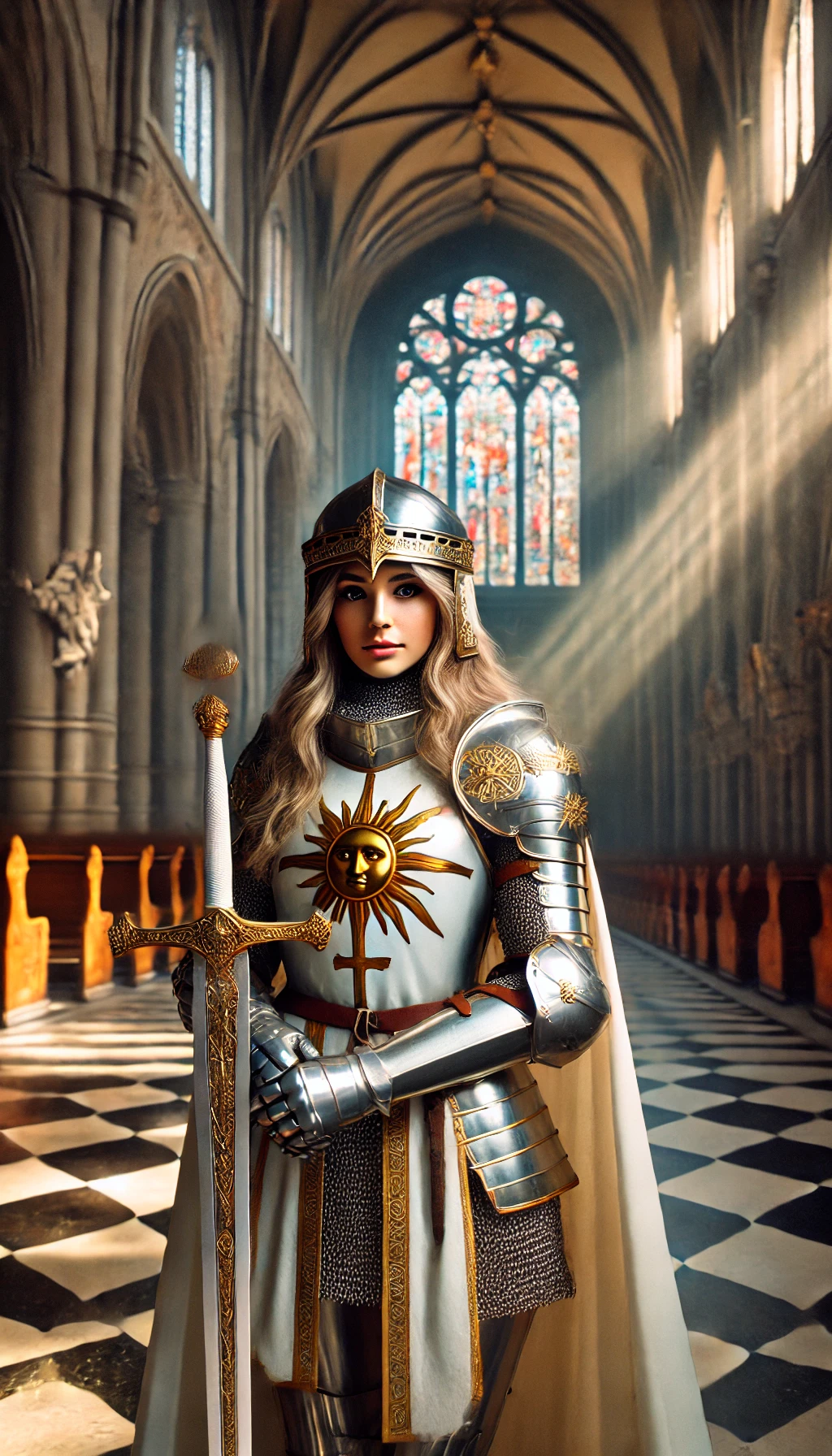
Also Known As: Holy Avenger, Champion, and Hatchet Man.
Alignment: Any, so long as the individual's behavior is acceptable to the sponsoring religious institution/church/sect/cult and deities.
Attribute Requirements: I.Q. 8 and a devotion to the church and its pantheon of deities.
Gender: As per the bias of the religious institution. Many favor males, so only about 25% of Holy Crusaders are female.
Race: As per the bias of the religious institution. Many have no racial restrictions, though the majority of powerful churches in human-dominated kingdoms are likely to favor humans, Elves, and Dwarves.
O.C.C. Skills:
- Climb/Scale Walls (+10%)
- Horsemanship: Paladin (+10%)
- Intelligence (+10%)
- Land Navigation (+10%)
- Language: Native Language (98%)
- Language: Two of Choice (+15%).
- Literacy: Native Language or one of choice, usually Elven (+10%).
- Lore: Demons & Monsters (+10%)
- Lore: Religion (+20%)
- Lore: Witch (+25%)
- Mathematics: Basic (+10%)
- Military Etiquette (+10%)
- Public Speaking(+10%)
- Sing (religious hymns, etc. +10%)
- Track Humanoids (+10%)
- W.P. Shield
- W.P. Sword
- W.P. Lance
- W.P. Two of choice; any except Long Bow, and Siege Weapons.
- Hand to Hand: Expert, which may be changed to Martial Arts (or Assassin, if evil) at the cost of one O.C.C. Related skill.
O.C.C. Related Skills: Choose 2 other skills form the communications skill category and five other skills at level 1 , plus 1 per level starting at level 2. All new skills start at Lvl. one proficiency.- Communications: Any (+5%)
- Domestic: Any
- Espionage:Any (+5%)
- Horsemanship: Exotic Only.(+5%)
- Labour: Any
- Magical/Religious: Any (+10%)
- Medical: First Aid Only. (+5%)
- Military: Any (+5%)
- Naval: Any
- Performing Arts: Any
- Physical: Any except Acrobatics.
- Rogue: Varies with Pantheon/God Selected.
- Scholar/Noble/Technical: Any (+5% to Lore skills only).
- Science: None.
- Weapon Proficiency: Any, except Long Bow.
- Wilderness: None.
Secondary Skills: Choose 4 at level 1, plus 1 per level starting at level 2. All new skills start at Lvl. one proficiency. These are additional areas of knowledge that don't get the O.C.C. bonus.
Starting Equipment: One weapon for each W.P., a silver-coated dagger (1D6 damage), small or medium shield (pick one) with the symbol of the church or favorite deity painted or engraved upon it, a silver holy symbol worn on a gold chain around the neck, belt with two pouches, a pair of quality leather gloves or gauntlets (pick one), a pair of good boots, two sets of clothing, a hooded robe, backpack, a water skin, grooming utensils, one medium sack, 10 sticks of incense, two candles, tinder box, and flint, 1D4 vials of holy water.
Armor: A suit of leather armor for stealth missions and a medium or heavy suit of armor. Select one of the following: chain mail, double mail, scale, or splint armor. Of course, the individual may purchase additional armor for personal use.
Horse: A good steed with saddle and saddlebags is often provided at level one. A warhorse may be awarded for exceptional service as well as given to those with the rank of Knight or Templar.
Magic Weapons & Gear: Holy Crusaders are bestowed with one Simple Holy Weapon of choice, usually one with an applicable W.P. It contains the 4 standard abilities plus the Damage Bonus ability (an extra 2D6 damage!) AND one Special Holy Weapon Ability of choice; a medallion of Nightvision, Cherubot Rope (20 feet/6.1 m), one Container of Much Water (waterskin or jug the normal size and weight that holds 6 gallons of water/22.7 liters and magically replenishes every 24 hours), Fire Wick, and 2 Smoke Bombs and 2 Stink Bombs.
Note: At the rank of Commander or Templar the warrior may exchange the Simple Holy Weapon for a Greater one. Commanders and Templars of great renown and Living Saint status are allowed to have both a Simple and Greater Holy Weapon.
Weapons for Special Assignments: Additional weapons, gear, magic items, potions, and scrolls may be provided only to proven veterans (fifth level or higher), recognized heroes, and occasionally for special missions. Even then availability may be limited due to resources (the sponsoring church or local temple just doesn't have any) and politics (the Priest in charge doesn't like you so he refuses even reasonable requests). Of course, the Holy Crusader may purchase additional weapons and equipment at their own expense.Magic Combat:
Level Magic Combat Experience 1 +1 vs. Spell Magic 0-1,930 2 +1 vs. Circles/Wards 1,931-3,860 3 +1 Spell Strength 3,861-7,720 4 Sence Good/Evil 40% 7,721-15,200 5 2 Spell Att/Melee 15,201-23,300 6 Recognize Enchantment 30% 23,301-36,666 7 +2 vs. Spell Magic 36,667-56,666 8 +2 Spell Strength 56,667-86,666 9 +2 vs. Circles/Wards 86,667-111,666 10 Sence Good/Evil 65% 111,667-135,666 11 +2 vs. Circle/Wards 135,667-166,666 12 Recognise Enchantment 50% 166,667-216,666 13 +3 vs. Spell Magic 216,667-266,666 14 Recognize Enchantment 71% 266,667-316,666 15 +3 vs. Circle/Wards 316,667-386,666