Pirate Kingdom of Kydmarra
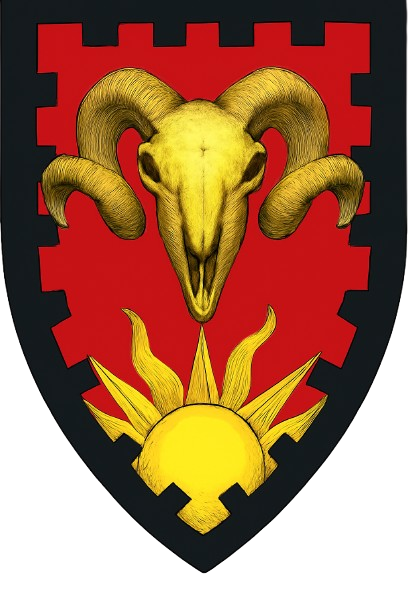
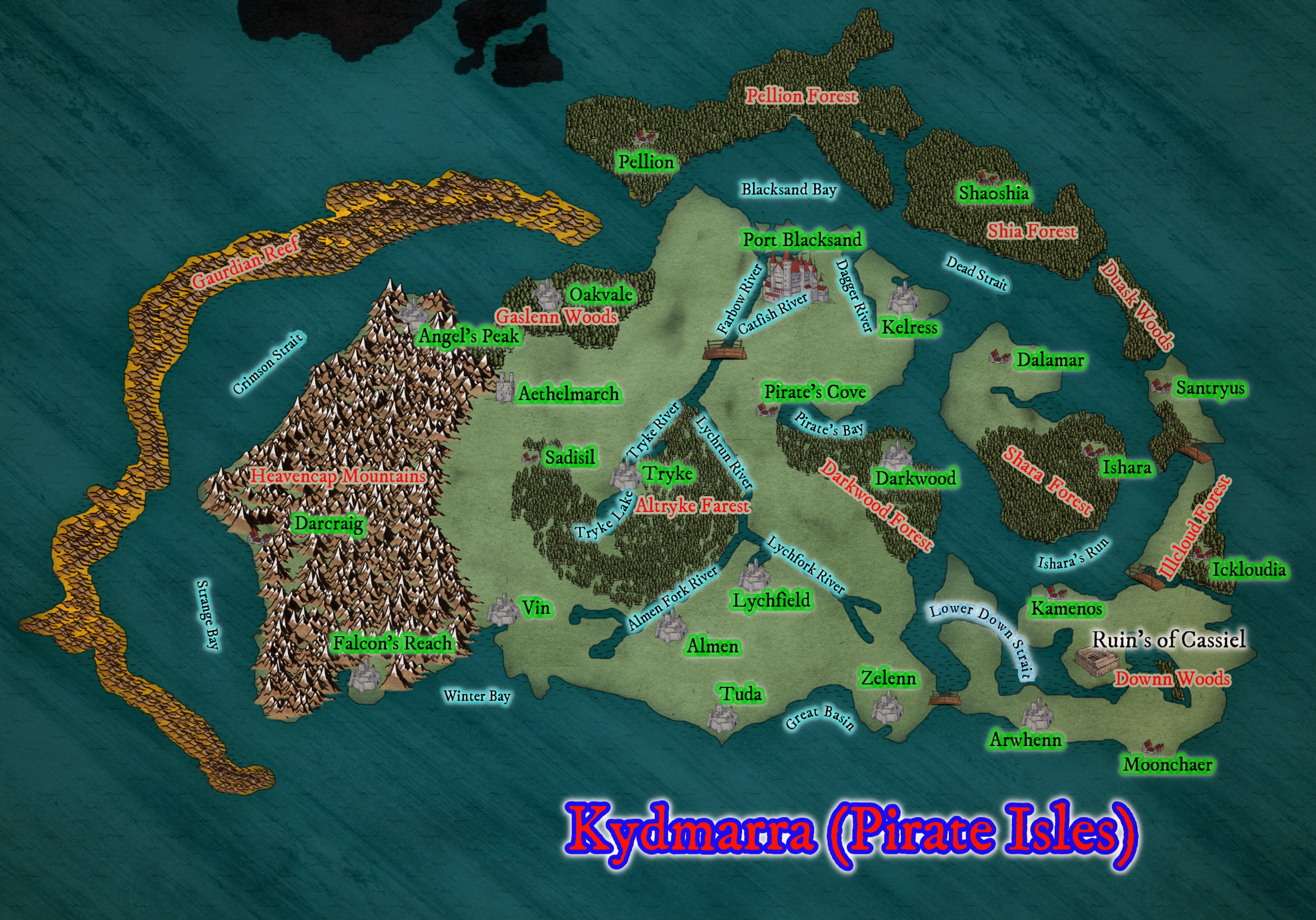 History of Kydmarra and Port BlacksandKingdoms and Cities do not spring up overnight. Every place is defined and shaped by its history, and it cannot escape the legacy of past events. The roots of the city lie deeper in the past than most Port Blacksanders suspect. The Empire of the SerpentsWhile the current city of Port Blacksand is less than three hundred years old, the site has been inhabited for much longer. Some 15 thousand years ago, the City, then called Carsepolis, was part of a much larger island kingdom. Stretching fifteen hundred miles south to north and fourteen hundred miles east to west, the Island, known as Valdossar, was the heart of a serpent people's empire. These sorcerous reptiles ruled vast swaths of territory when humanity was young, and they pioneered magic and science that paralleled the Elves in many ways. Scholars today often refer to Valdossar as an evil empire. While it is true their sorcerers used questionable methods to advance their art, Valdossar was no ally of dark powers. The mindset of the serpent people is difficult for humans or elves to understand, so malfeasance is often used to explain misunderstood evidence. For instance, although highly civilized, the Valdossarns had no concept of individual rights. If a high sorcerer required one hundred living test subjects to use in magical experiments, his request was fulfilled as long as the experiments were judged to be of importance to the empire as a whole. The Rotting Heart of the EmpireNo matter the moral compass used to judge the serpent people, their achievements cannot be denied. Valdossar flourished for millennia, and its influence spread, even into the planes. The empire resisted every outside threat, from barbarian incursions to infernal plagues to planar invaders. In the end, the true threat was internal. The Sekmis serpent people had long been worshippers of Ydersius, the great snake god. In the latter days of the empire, a cult dedicated to the worship of the Unspeakable One, a dread alien power, sprang up in the serpent people cities. Called the Brotherhood of the Red Sigil, the cult spurned the worship of Ydersiusand embraced the madness of the Unspeakable One. The leaders of the serpent people, too arrogant and vain to see past their high towers, allowed the cult to fester among the discontented. By the time the priests of Ydersiuswere roused to action, it was too late. The Brotherhood of the Red Sigil enacted a ritual to summon their dark god, and the Valdossarn Empire was smashed for all time. Wrath of the Mad GodNo witnesses survived to tell of the Great Old One's appearance, but evidence of his destruction abounds. The mighty island of Valdossar was rent asunder, and seawater rushed in to drown the serpent people by the millions. Those who survived were driven mad, losing their civilization and magic in one terrible moment. Nearly all of Valdossar slipped beneath the waves, leaving only the few islands now known as Kydmarra and the Delgwynth Empire as a testimony to the once-great empire. The mad serpent people fled underground, where their degenerate descendants currently live. A small number of sorcerers and priests of Ydersius survived the Unspeakable One's wrath with their sanity intact. Ydersius, slain by the Unspeakable One, became known as the beheaded. These few retreated into the shadows as the younger races created their own kingdoms and empires. All sekmins bow before the beheaded serpentine god Ydersius as their creator, though their methods of venerating him are varied and sometimes contradictory, fraught with heresies and cults of personality. As the centuries passed, few remembered the Valdossarn Empire or that serpent people had once been a civilized race. The Rise of Kydmarra, The Golden Age of Piracy (Circa 300 - 500 years ago)The Golden Age of Piracy marked a period when Kydmarra, a scattered collection of islands and pirate havens, thrived as the center of pirate activity on the high seas. Pirates, freebooters, and adventurers flocked to the islands, forming temporary alliances and networks. During this time, there was no formal government, only the law of the sea and the power of the most ruthless pirate lords who dominated through fear and force. Pirate families and factions often clashed over territory, control of trade routes, and plundered treasure. These factions operated independently, and while there were occasional alliances, the environment was anarchic and violent. The greatest wealth of this age was in the form of stolen treasures from rich merchant fleets, and the islands of Kydmarra became infamous as lawless, pirate-run havens where wealth and violence went hand in hand. The Great Raid and the Rise of the Captains' Council (Around 500 Years Ago)The Great Raid was a defining moment in Kydmarra's history, an event that began the shift from piracy as a loose collection of factions to a more organized society. This massive, coordinated raid saw pirates from across Kydmarra's islands band together to attack vast trade fleets from the mainland, securing enormous wealth and territory. The loot from this raid was so great that it threatened to upset the balance of power among the pirate lords, as smaller factions suddenly found themselves richer than ever, creating unequal power dynamics. In the aftermath of the Great Raid, the pirate lords recognized the need for order amid the chaos of their newfound riches and the growing number of rival factions. It was at this time that the Captains' Council was formed. The Captains' Council was initially a loose assembly of the most powerful pirate families and factions, with the purpose of regulating internal piracy, managing the division of spoils, and preventing full-scale war between the pirate lords. While still filled with political scheming and intrigue, the Council helped bring a level of stability to the fragmented pirate society of Kydmarra. In exchange for agreeing to terms of peace and trade with one another, the Council began to establish rudimentary laws that governed piracy, creating a semblance of order that had never existed before. The War with Organized Navies (Around 300 Years Ago) As piracy flourished in the wake of the Great Raid, organized navies from neighboring kingdoms and empires began to grow more determined to crush the pirate threat to their trade routes. This period marked a major shift in Kydmarra's history, as external pressure from naval powers began to outstrip the pirates' ability to continue their operations unchecked. Over the course of a century, Kydmarra's pirates faced a series of escalating naval confrontations with well-equipped fleets that slowly began to encircle the islands. The pirate lords of Kydmarra, led by the Captains' Council, were forced to defend their homes through a series of naval battles and covert raids. This war culminated in the Battle of the Burning Torches, a decisive conflict in which Kydmarra's fleet successfully repelled a large coalition of navies. However, despite their victory, Kydmarra's pirates realized that the old days of uncontested piracy were over. The increasing presence of formal navies and the growing demand for trade stability put Kydmarra in a difficult position. While the naval defeat was a tactical victory for Kydmarra, it was also a sign that piracy alone could no longer sustain the kingdom. Golden no longer, The Formation of Kydmarra's Formal Governance (Around 200 Years Ago)Following the war with the navies, the pirate society of Kydmarra underwent a dramatic transformation. Kydmarra is not a traditional kingdom, but rather a loose and often fragile confederacy of independent city-states. Each city and town within the archipelago governs itself, led by a Sea Lord who has sworn allegiance to the Pirate Code. These Sea Lords form the Captain's Council, a governing body that is meant to represent the collective will of the confederacy. At the helm of this council sits the High Sea Lord, a figurehead of sorts, who claims control over the council’s decisions, yet his power is often more symbolic than practical. While the Pirate Code serves as the ideological glue binding these cities together, the reality is one of constant political turbulence. The Sea Lords, who rule each of the confederate cities, have their own ambitions, rivalries, and personal agendas. Behind the scenes, the Captain's Council is less a forum of cooperation and more a theater of constant bickering and political maneuvering. Alliances are made and broken on a whim, with old grudges fueling endless intrigue and clandestine plots. At any given moment, the Pirate Code is invoked to keep the peace in public, but beneath the surface, the cities are often embroiled in feuds, trade wars, and territorial disputes. Ships from one city might raid another's shipping lanes, while Sea Lords covertly support mercenaries or pirates in an attempt to weaken their rivals. The High Sea Lord, though officially the leader, finds his influence checked by the rivalries among the Sea Lords, many of whom are as likely to undermine his authority as to follow his commands. The role of the High Sea Lord is a balancing act, keeping the confederacy from fracturing while maintaining an appearance of unity. Feuds often erupt over resources like access to trade routes, mining rights, or the control of strategic islands, and the cities themselves can shift allegiances like the tides. Some Sea Lords might ally with distant powers or other pirate factions, making deals that further splinter the already tenuous unity of the confederacy. The Sea Lords know well that maintaining power is not about outright war, but rather the delicate art of manipulation and backroom dealings. One wrong move, one misplaced alliance, and a Sea Lord’s influence could crumble faster than a ship in a storm. Despite the Pirate Code's emphasis on honor among thieves, the cities of Kydmarra thrive on the very chaos the Code seeks to control. The confederacy may call itself unified, but it is a land where the only certainty is the constant instability. The Council now acted not only as a governing body for pirates but also as the de facto government for Kydmarra. As the economy shifted from primarily raiding and plundering to trade and commerce, the Council formalized its role in regulating the kingdom's trade routes, taxation, and diplomacy with other nations. This period marked the beginning of Kydmarra's transformation from a pirate haven to a trade hub. While piracy was still a core part of Kydmarra's identity, it became increasingly organized, and the pirates began to act more like merchant lords than reckless freebooters. The Golden Age couldnt last forever. About two hundred years ago, the era of the rogue buccaneer came to an end. Lone ships faced increasing threats from organized navies. Where once a single ship could hunt merchantmen with impunity, now that same ship was a fox to the hounds of the naval squadrons. As crew after crew was hunted down and neutralized, the pirates of Kydmarra knew they had to change their ways. The people of Kydmarra realized it would take a navy to fight a navy, so the pirate captains decided to form a force of their own and raid en masse. But who should lead this great raid? After much bickering, the pirates settled on two captains for the fleet. Captains Drake Falconhand and Farrad Rockclam were fierce rivals, and the assembled captains believed anything the two could agree on would be a good decision. It was not an ideal situation, but the pirates had surprise and numbers on their side. The combined fleet went on a three-month raid that netted more money, valuables, foodstuffs, and booze than Kydmarra had ever seen. The Great Raid, as it was called, was a spectacular success, still remembered in the yearly celebration of Swagfest, and neither Drake Falconhand nor Farrad Rockclam was slow in claiming credit. Before long, each had declared himself a High Sea Lord of Kydmarra. Note - The Captains' Council of Kydmarra: The Captains' Council is the governing body that controls the vast pirate-fueled territories of Kydmarra. It is composed of all the pirate captains who command their fleets across the treacherous waters surrounding the islands. Each pirate captain, with their ship and crew, is granted a seat on the council, ensuring that all corners of Kydmarra's pirate-led society have a voice. The Sea Lords are the leaders of this council and rulers of the Individual towns and Cities that make up Kydmarra, chosen for their influence, power, and maritime prowess. These individuals, often the most cunning and feared captains, hold the authority to make decisions for the pirate alliance, settling disputes, dividing treasure, and establishing codes of conduct that govern Kydmarra's pirates. The High Sea Lord, the supreme ruler of Kydmarra, is the highest-ranking Sea Lord and sits at the pinnacle of the Captains' Council and rules Port Blacksand. The High Sea Lord is typically elected by the Sea Lords themselves, though this position can sometimes be claimed through force or political manipulation. The High Sea Lord holds ultimate command over Kydmarra's fleets, the defense of its waters, and any matters of diplomacy or war that involve the pirate kingdom. Under the High Sea Lord, the Sea Lords collectively govern the day-to-day affairs of Kydmarra, ensuring that the pirate nation remains a powerful force on the seas. War in KydmarraThe next ten years were tense ones in Kydmarra. The Great Raid set off a panic amongst the maritime nations. They spent vast amounts of money and resources building up larger navies, and the High Sea Lords were forced to fight battle after battle against determined foes. Kydmarra was assaulted on three separate occasions, but its defenses proved too strong for the attacking ships. This undeclared war had no clear victor. Kydmarra defended itself and inflicted several stinging defeats on its enemies, but attrition was high on both sides. In the end, the conflict petered out as the warring navies ran out of ships and men to hurl into battle. After ten long years of fighting, there was a lull, during which each side licked its wounds. During the war, adversity had kept the pirates united, but when the pressure eased, trouble was not slow in coming. The High Sea Lords had long hated each other, which ended in deadly consequences. After a series of provocations, fighting broke out in Kydmarra for the first time in its history. The men of Falconhand and Rockclam killed one another in the streets, shattering the pirate code that had bound Kydmarra together. Neither High Sea Lord gained an upper hand during the fighting. Before it could be resolved, word came of yet another fleet bound for Kydmarra. The pirates called a truce to defend the city, and the fleet sailed out, united once again. Or so it seemed Following the Great Raid, a massive event in which Kydmarra pirates raided and plundered a vast fleet of wealthy traders, two pirate lords, Drake Falconhand and Farrad Rockclam, declared themselves the new High Sea Lords of Kydmarra. However, the power struggle that followed their self-appointment as rulers was far from smooth. At the time of the Great Raid, both Drake Falconhand and Farrad Rockclam were powerful figures in Kydmarra's pirate hierarchy. Their competing ambitions to claim the title of High Sea Lord led to a brief period of co-rule. However, it is unclear whether their co-leadership was born out of necessity or mutual agreement. The term "neither Drake Falconhand nor Farrad Rockclam was slow in claiming credit" suggests that while both men sought to position themselves as the rightful rulers, it doesn't imply an equal partnership in governance. The question of how they maintained power during this period remains somewhat ambiguous. There was no formal agreement or division of authority between the two. Both declared themselves as the High Sea Lord, but their respective factions of pirates operated in parallel rather than in harmony. Drake Falconhand, known for his shrewd political maneuvering and military prowess, quickly gained a larger following, while Farrad Rockclam remained more focused on maintaining control over the traditional pirate fleets and mercantile routes. Rather than ruling together in true co-leadership, there was immediate tension between the two. The pirates under Drake Falconhand's command were far more organized, ruthless, and politically astute than those loyal to Rockclam. The Captains' Council, an informal but powerful ruling body of Kydmarra's pirate lords, quickly began to favor Falconhand's strategic vision, leading to a gradual consolidation of power under his leadership. Rockclam's influence, while significant, was more localized and tied to the old ways of piracy. His followers were primarily mercenaries and raiders, who were more interested in immediate profits than the long-term stability and expansion that Falconhand offered. The contrast in their leadership styles led to escalating tension between them, which would soon boil over into open conflict. It was through a series of brilliant military campaigns and calculated betrayals that Drake Falconhand ultimately consolidated his control. His strategic alliances with key figures in the Captains' Council helped him secure the loyalty of several influential pirate lords, while his aggressive raids against Rockclam's territories pushed the latter into a corner. The Big SelloutCaptain Drake Falconhand had realized that even with his victories and advantages, the a war on two fronts was not one that he could win easily or quickly. The only chance for him and his men was to enter secret negotiations with the nations set to destroy Kydmarra. He agreed to betray Farrad in exchange for a truce and recognition of Kydmarra as a sovereign state. The enemy leaders were only too happy to sign such an agreement, so they could end the ruinously expensive war. With no knowledge of his comrades duplicity, Captain Farrad Rockclam led his fleet to the attack. Once he was engaged, the ships of Captain Drake Falconhand simply sailed away. Exposed and without support, Farrad's fleet was surrounded and destroyed. In the meantime, Drake Falconhand sailed back to Kydmarra to announce the new city-state and his new regime. With Rockclam's downfall, Drake Falconhand was able to rule Kydmarra unchallenged. His victory over Rockclam not only marked the end of the power struggle but also the beginning of a new era. Under his rule, Kydmarra solidified its status as a dominant pirate kingdom, with a more formalized and centralized leadership under the High Sea Lord. Falconhand's influence continued to shape Kydmarra, eventually leading to the dynasty that continues to hold power in the region today, ensuring that his family's name would be forever linked to the kingdom's rise to prominence. Captain Drake Falconhand quickly consolidated his power over the city. He declared himself the only High Sea Lord of Kydmarra and moved against his remaining enemies before they could organize against him. Some of the remaining pirate captains left Kydmarra rather than serve Drake Falconhand. They blamed him for the ruination of the pirate code and for the betrayal of Farrad. The majority of the captains, however, seeing which way the salty wind was blowing, chose to remain and ride out the storm. As it turned out, Captain Drake Falconhand's rule was considerably less bloody than anyone had believed possible. Drake Falconhand was not joking about going legitimate. He set up trade routes with former enemies, cracked down on rogue pirates, and organized a Captains Council for the governance of the Kingdom. Drake Falconhand's word was still law, but the Captains Council was in charge of the day-to-day affairs of the city and also advised Drake Falconhand on matters of import. High Sea Lord Falconhand ruled Kydmarra with a firm hand for the next thirty years. In that time, he succeeded in turning a pirate haven into a trading hub of substantial importance. Kydmarra had always enjoyed a fortuitous position, and High Sea Lord Falconhand was not slow in making the most of it. Merchants used Kydmarra as a base for trade with the distant islands, and brave captains explored savage coasts. Gold, spices, and exotica flowed through Kydmarra, and High Sea Lord Falconhand made sure he got his cut. A Question of SuccessionOne question above all others haunted High Sea Lord Falconhand throughout his reign. Could Kydmarra carry on after his death, or would civil war tear the city apart? Kydmarra meant money, and money made people crazy. High Sea Lord Falconhand knew he had to take steps to safeguard the citys future. While High Sea Lord Falconhand fancied himself a king, he resisted the urge to take the title. He knew the people of Kydmarra would not submit to a monarch. It was too contrary to what they were. Similarly, he knew he could not found a dynasty. The rough and ready men of the Captains Council would not submit to High Sea Lord Falconhand's son. The boy lacked the experience of the salty dogs of the council. So High Sea Lord Falconhand chose another old hand, Captain Kromley, to be his successor. He even set into law that the High Sea Lords successor had to be approved by the Captains Council. He did this to ensure the survival of Kydmarra as an independent state. At the end of his life, he chose the interests of the city over his own glory, and for this, he is remembered as a great man in Kydmarra. Growth And CrisesThe next hundred years were profitable ones for Kydmarra. Port Blacksand continued to grow, which necessitated the building of a newer and larger city walls. Towns and Citys across Kydmarra where constructed. Merchants opened trade routes to the east, making Kydmarra even more important in the maritime world. When wars broke out on the Continent, Kydmarra was largely able to stay out of them, though the city did cement alliances with several important powers. All in all, it was a period of stability and growth, with a succession of competent High Sea Lords assuring the continued importance of Kydmarra. Only two incidents threatened Kydmarra's future. Checks And BalancesThe first crisis began thirty-two two years after Drake Falconhands death. The city, which had almost doubled in size, was in danger. A war raged on the Continent, disrupting trade and drawing away much of the city's navy. Kydmarra was in turmoil as food and other essential supplies became scarce, and angry riots were common. The High Sea Lord KorlyssKromleys successor, could barely keep order in the streets, even with the complete cooperation of the Captains Council. An ambitious and popular councilor named Sagan Narosette used this opportunity to increase the power and influence of the council. He politically outmaneuvered High Sea Lord Korlyss and was able to expand the size of the Captains Council from twelve members to thea Captain from each pirate fleet. Korlyss realized he had no choice but to agree to Narosette plan if he wanted the councilors help in stabilizing the city, but he insisted on personally choosing the men who would be added to the Captains Council. The Back Alley WarOnce Kydmarra turned from pirate haven into independent state, changes in its population and makeup were quick in coming. The number of pirates decreased, while the number of merchants and tradesmen increased. Many of these new citizens brought their institutions with them. Primary among them were the guilds. These trade and craft groups were new to Kydmarra, and the Captains Council was initially suspicious of them. The council was won over in time, though, once they saw the benefits the guilds brought to the city. There was never a problem with a guild until the reign of the fourth High Sea Lord, Vallarina Marsh. The first woman to become High Sea Lord, Vallarina Marsh had made her name as a privateer. She was known as a tough but honorable combatant. Her honor was to be sorely tested during the first years of her reign by a new force in Kydmarra: the Thieves Guild. No Honor Among ThievesThieves were certainly nothing new to Kydmarra, but in the early days, the pirate code had kept crime within the city to a minimum. Larceny was practiced largely at sea. When a gang of thieves from the Continent established a true guild in Kydmarra, it was a new experience. The city had known gangs before but not very organized ones. This group was experienced, professional, and ruthless. Inside ten years, they had gained complete control of Kydmarras underworld. At first, the Captains Council was unconcerned. The Thieves Guild was paying off most of the councilors, and the guildsmen kept their activities in the shadows. Soon after Vallarina Marshs rise to power, she uncovered an operation run by the Thieves Guild, in conjunction with a gang of orc pirates, the thieves had established a slave ring. In the beginning, High Sea Lord Marsh attempted to deal with the problem diplomatically. She sent word through discreet channels that slavery was forbidden in Kydmarra and that the guild had best cease its activities. They supposedly assented to the request, but several months later, Marsh learned the slave ring was still quite active. In fact, its scope seemed to have expanded even further than before. Again, Vallarina Marsh sent word to the guild. This time, the guild openly defied Marsh, daring her to take action. With the Captains Council in their pocket, the guild thought they were immune to the High Sea Lords meddling. They were quite wrong. A War on CrimeMarsh quickly began an undeclared war. Her guard began arresting known guildsmen and rooting out safehouses, while she sent a squadron of ships to hunt down the orc pirates. The Thieves Guild was caught by surprise and lost many of their number in the initial attacks, but they soon struck back. Three councilors on their payroll were assassinated for their failure to stop Vallarina Marsh. Several attempts also were made on the High Sea Lords life, all of which she survived with the aid of her bodyguards. The conflict, soon known as the Back Alley War, raged for three years. Vallarina Marsh proved herself an implacable foe. She attacked again and again until she broke the back of the Thieves Guild. All of its leaders were killed or imprisoned, and slavery was snuffed out in Kydmarra. The Year of Three High Sea LordsThe High Sea Lords of Kydmarra were known for their long, often improbable reigns, a stark contrast to the volatile nature of piracy that birthed the kingdom. However, after the death of Vallarina Marsh, the long-reigning High Sea Lord, the kingdom found itself in a year of unprecedented chaos. Three new High Sea Lords took power within a single year, each meeting a grisly fate. Farrow Rockclam, the first to rise, sought to cement his power by participating in the Great Hunt, a brutal tradition where the wealthiest and most powerful of Kydmarra compete for honor. A month into his reign, Farrow met a tragic end when a massive boar, driven into a frenzy by the hunt, mauled him to death. The second High Sea Lord, Cormac Dyver, was installed after Farrow's death. Wymer's rule lasted only six months, when he was poisoned at a feast held in his honor. The circumstances surrounding his poisoning remain a mystery, with many speculating that it was the work of rival pirate lords or the remnants of the old regime. Dyver's sudden and violent end left the kingdom in turmoil. Finally, the throne was claimed by Millson Kaxtar, a well-known figure in Kydmarra's merchant class. Though Kaxtar had been groomed as the rightful successor by Vallarina Marsh, his ascension was complicated by the immediate flight of the heir to Dyver's short-lived reign. Fearing for their lives, the heir fled Kydmarra, leaving Kaxtar to consolidate his power. His rise was not without bloodshed, and whispers of internal conflict within the Captains' Council suggested that Kaxtar's path was paved with assassination and intrigue. The Kydmarra - Delgwynth WarDuring Millson Kaxtar's reign, Kydmarra's merchants began exploring far-flung corners of the seas, seeking new trade routes to enrich the kingdom's coffers. Initially, it seemed as though these expeditions had simply been lost to the unforgiving waves of the ocean. But when a single surviving vessel returned, the truth came to light, Kydmarra's convoys had been captured by the Delgwynth Empire, a major northern power known for its involvement in the slave trade. The Delgwynth Empire, known for its brutal markets and vast slave labor force, had long been a thorn in the side of Kydmarra's pirate-controlled society. When Kydmarra learned that its ships had been seized and their crews sold into slavery, High Sea Lord Kaxtar was enraged. The very idea that his people had been enslaved by a foreign power was an affront to the kingdom's ethos, where freedom was paramount. Kaxtar initially sought diplomacy, sending an envoy with an ultimatum: return Kydmarra's citizens or face retribution. The Delgwynth Empire responded with mockery, suggesting that if Kydmarra wanted its people back, it should come and purchase them from the slave markets. Furious, Kaxtar marshaled the full might of Kydmarra's fleet. He knew that the Delgwynth Empire's fleet was a formidable opponent, but Kydmarra's pirates were cunning, and Kaxtar had honed his navy to a razor's edge. For nearly ten years, Kydmarra and Delgwynth waged war, with the final confrontation taking place at the Battle of the Burning Torches. The battle was a monumental clash of naval forces, where the masts of Delgwynth's ships were set ablaze under the night sky. Though Kydmarra was not able to conquer the Delgwynth Empire outright, the conflict ended with Delgwynth agreeing to pay reparations and return the surviving Kydmarra citizens. The two powers, while still rivals, have not had significant contact since the war, and Delgwynth's slave trade has taken on an almost mythical status in Kydmarra, with the Delgwynth slavers often used as bogeymen to frighten children. The Rise of High Sea Lord Azzur FalconhandSeventy-five years ago, a major turning point came when the infamous pirate Azzur Falconhand seized control of Kydmarra after a cunning and ruthless siege of the capital. His rise to power marked the moment when the Captains' Council was fully cemented as the central governing body. Under Azzur's rule, Kydmarra transformed into a kingdom dominated not just by piracy but also by trade, political intrigue, and military might. Azzur's influence also included forging alliances with races like Ogres, Trolls, and Drow, cementing his power with both brute strength and arcane magic. Azzur Falconhand was not born into a line of royalty, but rather into a legacy of pirates. Seventy-five years ago, he seized the throne after executing a bold coup against the incumbent High Sea Lord, Illios Valentis, a man who had long been a figurehead in Kydmarra's pirate society. Through a combination of military savvy, tactical brilliance, and ruthless bloodshed, Azzur took control of Port Blacksand, the kingdom's capital, and transformed it into the heart of Kydmarra's piratical empire. Azzur's rise was swift and brutal. After blockading Port Blacksand with his fleet and executing a well-planned assault, he overthrew Valentis and took control of the kingdom. However, Azzur's reign was not simply one of violent conquest, he united disparate pirate factions and established a unified rule that turned Kydmarra into a powerhouse of piracy, trade, and military might. Under his rule, Port Blacksand became a haven for pirates, smugglers, and traders alike, with the infamous Pirate Lords of Sadisil, Vin, and Tryke often meeting in secret to discuss new ventures, raids, and territory division. Azzur's reign was marked by lavish displays of power, with a new heraldry for the Kingdom, a ram's skull crowned by a golden sun, symbolizing both his dominance and the strength of Kydmarra. The deep red and black border of the crest stood as a constant reminder of his ruthless nature and the bloodshed that had brought him to power. High Sea Lord Azzur - The Pirate Witch of KydmarraHigh Sea Lord Azzur is a figure whose name strikes both fear and awe throughout the seas of Kydmarra. While many pirate captains are known for their ruthlessness and cunning, Azzur stands apart not only for his unparalleled skill on the waves but also for the dark and whispered rumors surrounding his rise to power. At 50 years old, Azzur was already a feared pirate and a seasoned commander, known for his brutal raids and uncanny ability to evade death. However, it was his dark pact with the Sea Demons that truly sealed his fate, and his future as the High Sea Lord of Kydmarra. The Pact with the Sea DemonsAzzur's dark pact with the Sea Demons remains one of the most whispered about tales in Kydmarra's history. Desperate to secure his power and extend his life, Azzur ventured into the deepest, most forgotten parts of the ocean, where the Sea Demons, ancient and malevolent gods of the deep, awaited. Azzur offered his firstborn son in exchange for immortality and supernatural power, a deal that would forever bind him to the abyss. The sacrifice of Azzur's son has been the subject of much speculation. Some say the boy was taken by the Sea Demons in a hidden, underwater temple, while others claim Azzur himself killed his son in a ritualistic ceremony. Whatever the truth, the pact granted Azzur unnatural vitality, allowing him to live far beyond the normal lifespan of a human. Even at the age of 57, Azzur shows no signs of aging, his appearance unmarked by time. His eyes are said to gleam with an otherworldly glow, a testament to his connection to the Sea Demons. This pact has not come without its price. Rumors abound that the Sea Demons continue to demand more from Azzur, and their demands are only growing. There are whispers that the day will come when their final price will be paid, and when it does, Kydmarra will face a terrible reckoning. The Fate of His SonThough it is never spoken of openly, it is known by the inner circle of the Captains Council that Azzurs firstborn son, the price demanded by the Sea Demons, was sacrificed to solidify the pact. Some say the boy was taken by the Sea Demons in a hidden, underwater temple, never to be seen again. Others claim that Azzur himself killed his son to fulfill the pacts terms, but the true nature of his sacrifice remains a subject of hushed speculation. In any case, since that fateful day, Azzur has ruled Kydmarra with an iron grip, his supernatural abilities making him a near-impossible foe. His powers are said to include weather manipulation, summoning sea creatures to do his bidding, and the ability to conjure dark, storm-wrought magic from the depths of the oceans. Those who oppose him often find their ships sunk by storms, or their crews lost to the deep in strange, unexplained disappearances. The Enigmatic High Sea LordThe Sea Demons hold over Azzur is undeniable, but it is not without its cost. Rumors swirl that the Sea Demons continue to demand more from him, and that their demands will grow as the years pass. Some fear that the day will come when Azzurs pact will demand a final, terrible price, a price that could bring disaster to all of Kydmarra. Still, Azzurs rule remains unchallenged. Few dare to question the High Sea Lord directly, as his dark powers and the loyalty of his captains ensure his position at the top of the pirate hierarchy. He commands a fleet of ships like no other, and his influence stretches far beyond the islands of Kydmarra. To oppose him is to challenge the Sea Demons themselves. Political and Economic PowerThough officially ruled by High Sea Lord Azzur, Kydmarra is far from a one-man show. The Kingdom is home to numerous factions and powerful families, each vying for power, wealth, and influence. These include the infamous Guild of Thieves, which operates in the shadows, and the powerful noble houses that represent the city's aristocratic elite, such as House Kobassis and House Hadrak. Azzur himself is a distant ruler, rarely seen outside his palace, but his control over the city's military and pirates is absolute. Economically, Port Blacksand is a center of trade, smuggling, and piracy. It serves as the primary port for Kydmarra, where the kingdom's pirates dock after successful raids across the seas. The Pirate Lords of Kydmarra use Port Blacksand not only for commerce but also as a central hub for forming alliances and sharing the spoils of their raids. The city is constantly in flux, with trade negotiations, pirate warfare, and political intrigue shaping its ever-changing landscape. Kydmarra's Growing InfluencePort Blacksand's rise as the heart of Kydmarra signals the kingdom's growing influence over the surrounding seas. With control over key trade routes and a powerful fleet, Kydmarra has become a kingdom not only of pirates but also of traders, mercenaries, and adventurers who find themselves aligned with the kingdom's goals. The Pirate Lords of Sadisil, Vin, and Tryke meet in secret, often discussing new ventures, raids, and the division of territories. These lords, and the underworld factions that support them, have helped turn Kydmarra from a series of isolated pirate havens into a kingdom with a terrifying reputation on the high seas. The Future of KydmarraKydmarra's future remains uncertain, as internal power struggles, external threats, and the chaotic nature of piracy continue to shape the kingdom. The rise of new pirate lords and the ambition of those under King Azzur's rule mean that Port Blacksand will likely remain the focal point of power in Kydmarra. However, with every pirate fleet that sets sail from its harbors, the threat of betrayal, infighting, and rebellion looms just as large as the open ocean itself. The pirate kingdom, with its mix of cutthroat politics, vast wealth, and strategic military might, continues to expand its influence across the seas, solidifying its place in the annals of history as one of the most infamous pirate nations ever to rule the waves. Population and Harmony:Kydmarra is a kingdom formed from a collection of islands, where diverse races and cultures have found a harmonious home. While the kingdom is predominantly Human, its society is enriched by the influence of various other races, creating a vibrant and unique blend of traditions, magic, and innovation. This melting pot of cultures fosters an environment of mutual respect and peaceful coexistence, with the people of Kydmarra striving for unity and shared prosperity.
The Evolution from Pirate Haven to Trade Hub
The transformation of Kydmarra from a pirate haven to a more formalized trade hub can be traced back to the Great Raid, the formation of the Captains' Council, and the eventual military confrontations with organized navies. In the centuries following the Battle of the Burning Torches, the pirate lords of Kydmarra realized that unchecked piracy could no longer sustain their power. The Captains' Council slowly evolved into a centralized government that balanced the interests of pirates, merchants, and military leaders. This shift was not immediate but was instead a gradual process in which the need for order, trade, and diplomacy began to outweigh the chaos of unregulated piracy. The timeline of Kydmarra's transition from a pirate haven to a more organized state is grounded in the formation of the Captains' Council and the external pressure from navies and the growing need for stability in an increasingly connected world. The Great Raid and subsequent conflicts played a pivotal role in uniting the pirate factions and setting the stage for Kydmarra's evolution into a powerful kingdom that blends piracy, trade, and military strength. The Captains' Council's transformation from a loose coalition to a formal ruling body marked the beginning of Kydmarra's shift into a more structured and influential entity on the high seas. Kydmarra's Population BreakdownKydmarra is a kingdom of unparalleled diversity. While humans make up the majority of the population, the kingdom is enriched by the presence of various races, including Elves, Orcs, Ogres, Trolls, and magical beings like the Fae. Despite the potential for internal conflict, Kydmarra is a place of relative harmony, where different cultures and races live side by side, each contributing to the kingdom's vibrancy. Kydmarra is a kingdom rich in diversity, and Elves play a significant role in its fabric, with approximately 10% of the population being Elven. Among them, the majority are Shadow Elves and Drow, whose presence in the kingdom is both essential and complex. Integration into Kydmarra's Society:
Elves and the Captains' Council: The Captains' Council is a collection of the most powerful pirate lords in Kydmarra, and while humans make up the majority of its members, Elves have not been excluded. In fact, the presence of Shadow Elves and Drow on the Council is both a necessity and a strategic asset. Shadow Elves often sit on the Council as advisors or clandestine representatives. Their role is typically linked to information gathering, intelligence networks, and magical support for Kydmarra's pirates. Their ability to read people, move unseen, and gather whispers from the shadows is invaluable in the often backstabbing political environment of the Council. Drow, on the other hand, rarely sit in an official capacity, but there are rumors of powerful Drow families who influence the politics of Kydmarra from behind the scenes. Some Drow lords have established secretive and lucrative trade deals with other factions, and their mastery of necromancy and illusion magic is often used to tip the scales of power when conflicts arise. It is said that one of the Drow lords may even control a shadow fleet, operating in secret and only emerging during the darkest nights to carry out covert operations for Azzur Falconhand.
While the role of Elves in Kydmarra's society may seem contradictory at first, given the inherently chaotic, lawless, and cutthroat nature of piracy, they are seen as necessary allies and master manipulators within the kingdom. Elves are not just traders or warriors but also masterminds of strategy. Their longevity allows them to weave long-term plans and alliances that span decades, often outlasting their human counterparts. In pirate circles, Drow and Shadow Elves are known to form secret alliances, both with humans and other Elven factions. The Drow, while keeping a low profile, are respected for their ability to control the underworld elements of Kydmarra. Their connections with other mysterious races, such as the Fae, provide them with valuable insight into magic and mystical secrets that few others can access. The Shadow Elves, conversely, form sly alliances with the more politically savvy pirate families, offering their skills in infiltration, subterfuge, and assassination in exchange for wealth, influence, and access to Kydmarra's trading routes. Many pirates, especially those aligned with Azzur Falconhand, find the Drow and Shadow Elves invaluable for maintaining control over the kingdom's vast wealth and territory.
Elves in Kydmarra, especially Shadow Elves and Drow, are deeply intertwined with the kingdom's political, military, and pirate culture. They are not just passive residents but active players in the kingdom's intricate web of power, operating from the shadows to maintain control over the kingdom's vast resources and trade routes. Their intelligence, mysticism, and strategic foresight make them key figures within the Captains' Council, often as advisors or shadowy benefactors, and their skills in subterfuge and magical manipulation are essential to the kingdom's survival in a world defined by betrayal and warfare.
Kydmarra's military might is a reflection of its pirate heritage and its constant need to defend its interests against both internal and external threats. The kingdom is home to a highly disciplined standing military, consisting of: Kydmarra is home to a wide array of religious beliefs, with a deep reverence for the gods and forces that shape their world. Kydmarra's economy is rich and diverse, driven by both its magical resources and practical industries. The kingdom exports a variety of unique goods: Port Blacksand, often referred to as the City of Thieves, is the beating heart of Kydmarra's economy, politics, and pirate culture. Situated at the Northern convergence of the Catfish River and the Ever`Span Ocean, Port Blacksand is a chaotic blend of commerce, crime, and seafaring culture. The city's dark alleys, narrow streets, and colorful yet decrepit buildings reflect the gritty, lawless environment where pirates, thieves, and adventurers thrive.
Founded on the ruins of an ancient city called Carsepolis, Port Blacksand began as a haven for pirates and brigands. It quickly grew into a thriving port as it was built atop the remnants of this lost city, leveraging its location to control sea routes and act as a safe harbor for those looking to evade the law.
|