Almen, Fortified City of the Pirate Kingdom of Kydmarra

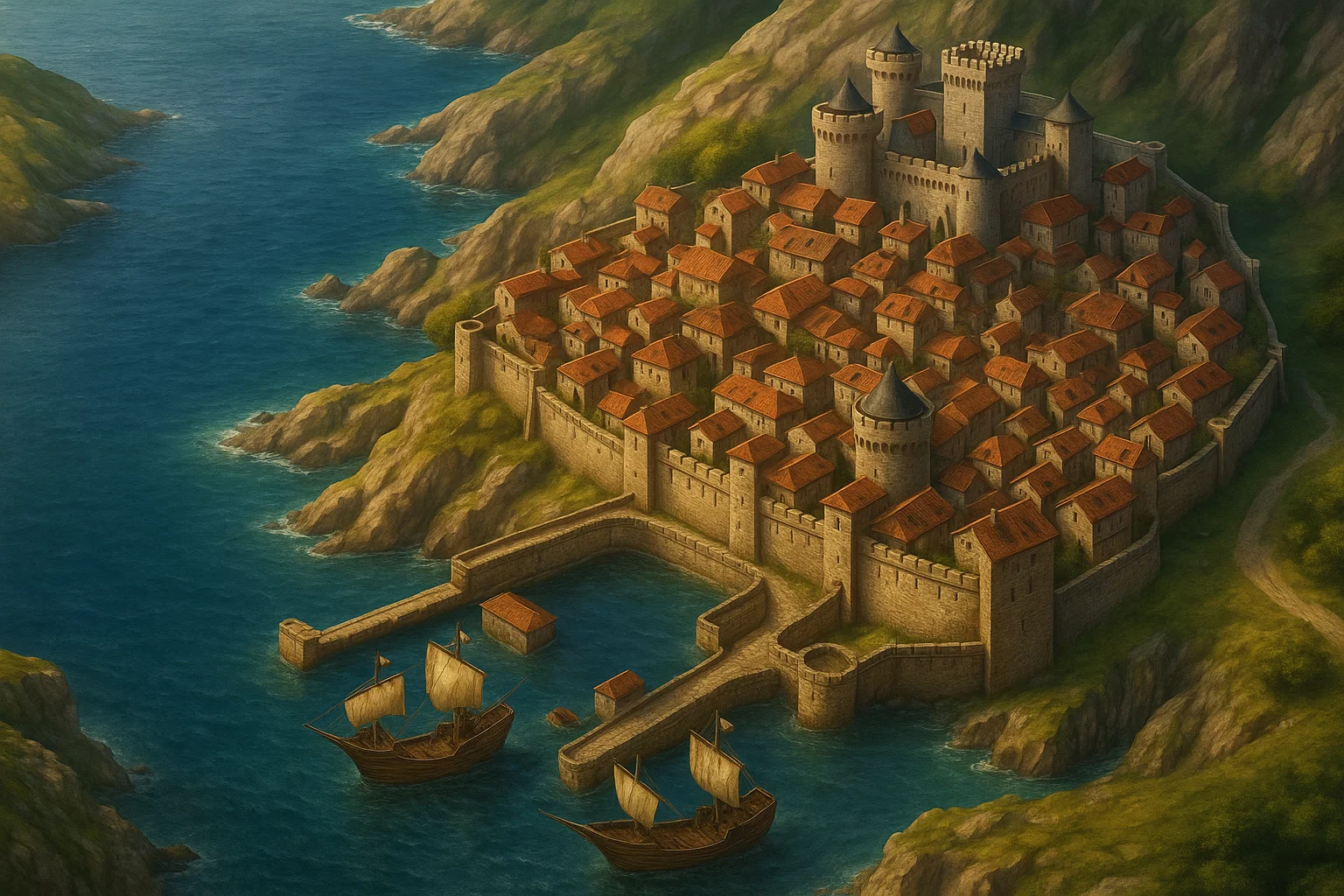
Almen rises from the vast plains of Kydmarra, an imposing fortress city perched along the winding Almen Fork river. The landscape surrounding it is open and unforgiving, flat, grassy stretches of land that stretch to the horizon, broken only by the occasional rise of a distant hill. There are no thick forests here to shield the city, no mountains to loom above it. Instead, Almen is exposed, a bastion in the open plain, where the elements are as much a part of life as the people themselves.
The city's imposing stone walls rise high against the unbroken expanse of the plains, built not just to protect from attackers but to control the flow of commerce and power that runs along the river. These walls are rough-hewn and aged, weathered by constant winds that sweep across the flatlands, carrying with them dust and the scent of the river. The Almen Fork flows lazily through the heart of the city, its banks lined with docks and warehouses where traders and smugglers alike bring goods from across the region. The river, winding through the plains, is both the lifeblood of the city and a constant reminder of its vulnerability, as it snakes through open terrain with no natural barriers to slow it.
The streets of Almen are gritty and practical, built for function rather than form. They run straight, with little regard for any sort of pattern, like veins feeding life into the heart of the city. The city itself sprawls, growing outward from the river in haphazard expansion, houses and buildings of weathered stone and wood clustered together in tight quarters. The farther from the river one moves, the more desolate and open the plains become, with the buildings growing sparse and spread out, often fading into the horizon. Almen's foundations, unlike the grand coastal cities, feel like they were forged from sheer willpower alone, existing in defiance of the open, empty plains.
In this land of open space and wind, the city breathes with an air of quiet tension. The horizon is never out of view, and there is always the threat of something, bandits from the plains, pirates from the river, or worse, the shifting allegiances of the people who call Almen home. The markets are full of life, with traders moving quickly between stands to keep their goods from being taken by thieves. The smell of fish, salt, and unwashed bodies fills the streets, mixing with the ever-present scent of river mud. The Tideworn Tavern, a rotting but well-guarded building near the river's edge, serves as the seat of Ioz Renson's power, a place where deals are struck, plans are made, and lives are bought and sold.
Almen's strength lies in its position on the river, where trade flows freely and the city acts as a key point of passage for those seeking fortune or refuge. The expanse of the plains offers no natural shelter, but it does provide an open highway of movement, where the swiftest and most cunning can thrive. The city reflects this raw pragmatism, tough, rough, and built to endure. Ioz Renson, as the Sea Lord of Almen, is a shadowy figure who rules not from the streets but from the hidden, whisper-filled halls of the Tideworn Tavern, where he manipulates the undercurrents of power.
Beneath the hard exterior of Almen, there is an underworld that thrives in the shadows, a network of smugglers, mercenaries, and traders who move goods across the plains and through the riverways. These people know how to survive in a world that offers no mercy. The Watchers, Ioz's enforcers, patrol the city with quiet intensity, ensuring that the law of Almen remains as cold and unyielding as the wind that sweeps across the plains. Outside the city walls, the land stretches out in all directions, flat and unbroken, a harsh landscape where only the most determined can survive.
Yet, Almen has a strange beauty in its starkness. The endless sky above, the constant hum of the river, and the way the sun sets over the plains, it's a place that doesn't offer the comforts of the coast or the shelter of mountains, but it has its own rugged strength. It's a city that endures by its own will, much like its ruler.

Ioz Renson, Sea Lord of Almen, was a man whose name once rang out across the seas like the thunder of a storm, feared, respected, and often cursed in equal measure. A pirate captain of unmatched cunning and brutality, Ioz carved his legend not with the pomp of royalty but with the blood-soaked cutlasses of his crew and the burning wreckage of his enemies. He ruled the waves with a cold, unyielding hand, no one daring to cross him without paying the price. Yet, as the years wore on and the winds of fate shifted, Ioz was drawn inland, abandoning the open sea for the rivers of Kydmarra. Here, in the city of Almen, he built an empire, a fortress standing on the banks of the Almen Fork river.
Though the sea no longer kissed his feet, its call never truly left him. He became the undisputed Sea Lord of Almen, not through fleets or massive armadas, but through secrets, whispers, and fear. Ioz had long learned that power was not just taken by the sword, but woven through the very fabric of deception and influence. His rule over Almen was shaped by shadow and trust, his influence extending through every smuggler's den, every clandestine deal, and every whisper of the wind that passed through the city's labyrinthine streets. In Almen, Ioz was more than just a ruler; he was a ghost who controlled the tides with a whispered word and a flick of his hand.
It was a city born of ambition, and under Ioz's leadership, it became a sanctuary for those who lived on the edge of the law, a crossroads for trade, espionage, and rebellion. Almen's walls, steeped in history and heavy with the secrets of its rulers, stood as a testament to his unrelenting will. But there were still shadows that lingered in Ioz's heart, shadows from a past he had buried deep. He was not just the Sea Lord of Almen; he was a man with a history of betrayals, bloodshed, and a life filled with haunting regrets. The sea had once been his kingdom, but now, a different kind of rule had taken root.
The truth of his bloodline had been concealed for years, hidden even from himself. When his son, Ren, came seeking the truth, seeking the legacy of piracy and power that ran through Ioz's veins, the world he had built in Almen began to unravel. Ioz had abandoned Ren years ago, convinced that the boy's life would be better untouched by the chaos of piracy, by the violence that had marred his own soul. But Ren, grown and eager to claim the legacy that Ioz had tried so hard to bury, arrived at the gates of Almen, determined to follow in his father's footsteps and, more importantly, to uncover the Thirteen Treasures of Rule.
Ioz, at first, mocked Ren's idealism and ambition. He scoffed at the idea of the Treasures, dismissing them as nothing more than fables. Yet, as Ren's unshakeable determination clashed with Ioz's hardened pragmatism, something began to change. Ioz saw in his son not just a reflection of his younger self, reckless, eager, and blind to the dangers of the world, but a chance to rewrite the ending of his own story. The years of isolation and hard lessons had forged Ioz into a man of deep contradictions, one who valued power but had long since lost the joy of it. In Ren, Ioz saw the possibility of reclaiming something he thought was gone, the possibility of becoming more than just a pirate, more than just a ruler of Almen.