The Inquisitor
Hand of Judgment, Voice of Doctrine, Shadow of the Faith
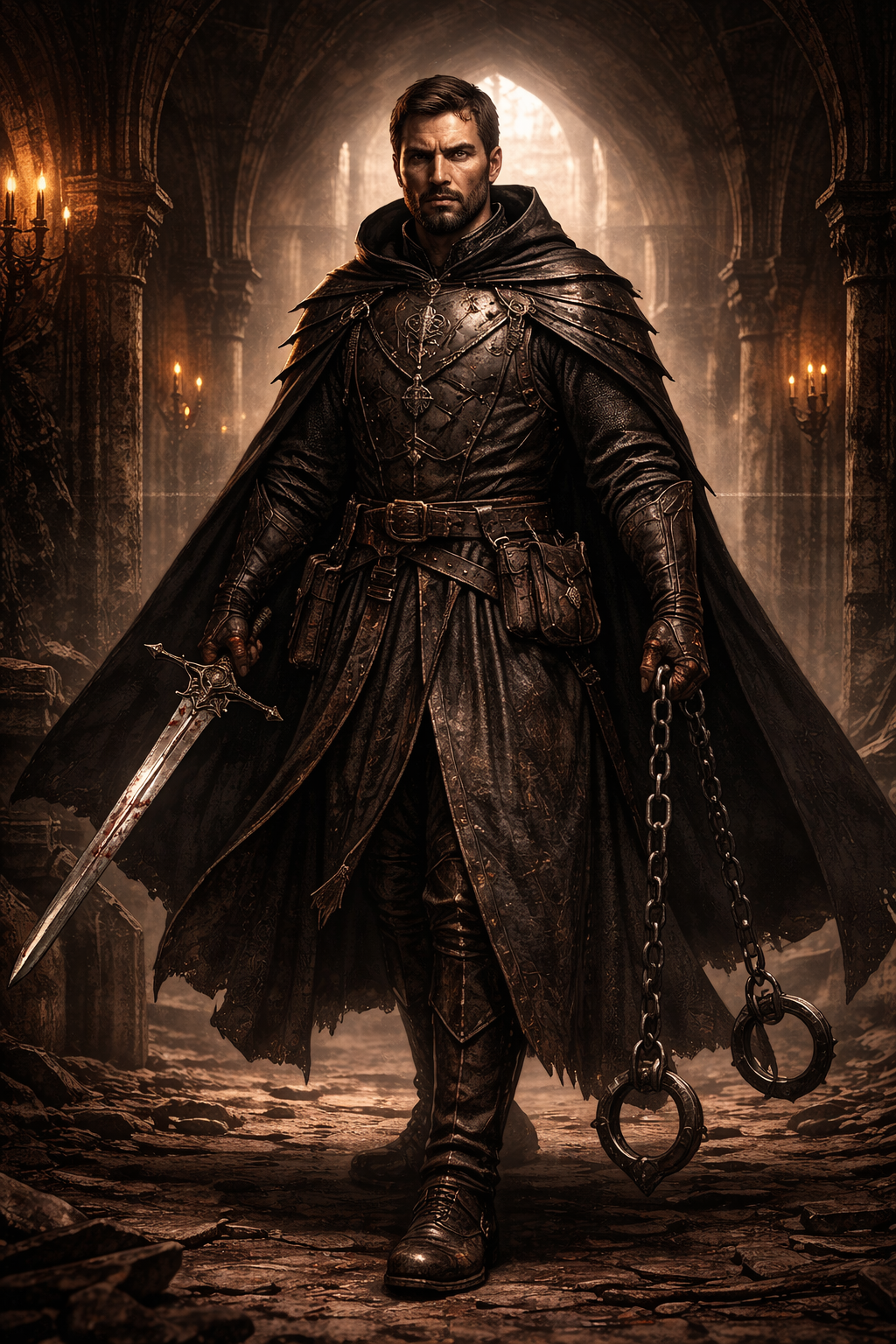
The Inquisitor is not a priest, nor merely a warrior. The Inquisitor is an elite agent of faith and authority, tasked with rooting out heresy, corruption, forbidden magic, and supernatural threats. Where priests preach and paladins defend, the Inquisitor hunts. He is the instrument of doctrine made flesh, a relentless seeker of corruption, forbidden magic, heresy, and supernatural taint. Unlike standard priests, Inquisitors operate independently, wielding both divine authority and martial force. They are feared interrogators, relentless hunters, and unwavering judges. Inquisitors move between temple and battlefield, city and wilderness, noble court and hidden crypt, rooting out the hidden rot that sermons, laws, and ordinary blades cannot touch. They are investigators, interrogators, executioners, and on rare occasion, redeemers. The Inquisitor is charged not simply with defeating evil, but exposing it, dragging it into the light, and ensuring it can never again take root. Hidden cults, corrupt nobles, demon-bound sorcerers, smugglers of cursed relics, undead infestations, and whispering conspiracies all fall within the Inquisitor's grim mandate.
Clad not always in shining vestments but often in travel-worn cloaks, muted armor, and the quiet authority of one who answers to powers greater than kings, the Inquisitor moves between worlds, between temple and battlefield, court and dungeon, city and wilderness. Their presence is rarely announced, yet always felt. Doors open for them, or are broken by them. An Inquisitor is not bound by comfort, nor softened by doubt. They are the embodiment of a singular truth:
That corruption must be found. And when found, it must be judged. To the faithful, the Inquisitor is necessary. To the corrupt, inevitable. To the innocent, often terrifying. They are feared because they ask not what is convenient, merciful, or politically wise, but only what is true, and whether the stain before them must be cleansed. The Inquisitor serves as one of the last lines of defense against cultic corruption, dangerous relics, hidden servants of evil, and the influence of darker powers that linger in lost groves, ancient ruins, and haunted noble houses. They are investigators, interrogators, executioners, and, on rare occasions, redeemers. They do not simply destroy evil; they expose it, strip it bare, and ensure it can never take root again. Whether facing a whispering cult in the slums of a great city, a noble secretly consorting with demons, or an ancient corruption festering in forgotten ruins, the Inquisitor approaches each with the same cold certainty.
Their eyes are trained to see what others miss.
Their minds are sharpened to resist deception.
Their will is forged into something unyielding.
To the faithful, they are necessary.
To the corrupt, they are inevitable.
To the innocent… they are often terrifying.
Because the Inquisitor does not ask if something is comfortable or merciful. Only if it is true… and if it is clean.
Background & History
The order of Inquisitors did not arise from peace, it was born of failure. In the early centuries following the great upheavals of the Elf/Dwarf War, and after the waning of ancient gods and the rise of fractured kingdoms, faiths spread rapidly across the lands. Temples rose. Priests gained influence. Doctrine became law. And yet, despite this expansion, darkness endured. Hidden cults of forgotten powers, Warlocks trafficking with entities beyond the veil, Nobles who sought immortality through forbidden rites. Even within the temples themselves, corruption began to take root. At first, the churches responded with sermons, then with knights, then with public purges. None of it worked. The enemy was not always visible. It did not march in armies. It whispered, tempted, hid. So the faiths adapted.
From within the priesthood and the warrior orders, a new path was forged, one that rejected hesitation, one that embraced investigation, secrecy, and decisive action. Thus, the first Inquisitors were created. Unlike priests, they did not chiefly minister. Unlike paladins, they did not ride openly as champions. They listened, watched, investigated, questioned, and when necessary, judged. Their effectiveness was undeniable. Cults collapsed. Heresies vanished. The magically corrupt, the possessed, and the damned were brought to heel. But the price of this effectiveness was fear, for power given in secret and exercised in certainty can become terrible.
Some Inquisitors became legends of justice, iron-willed but fair. Others became zealots, punishing suspicion as if it were proof, breaking the innocent to reach the guilty, and staining holy authority with cruelty. Yet no kingdom or church could wholly abandon them, for where the Inquisition withdrew, corruption returned. Thus the Inquisitor remains a necessary terror in the modern age: respected, watched, and feared in equal measure.
Elite Inquisitor Orders
The Argent Veil
“Truth is revealed in silence.” The Argent Veil are covert investigators and intelligence specialists. They prefer discretion, infiltration, close observation, and surgical justice over spectacle. They are commonly dispatched against hidden cults, corrupt officials, infiltrators, and fae tainted conspiracies. Bonuses: +10% Prowl, +15% Intelligence, +2 vs illusions and mind control.
The Order of the Cleansing Flame
“Burn the rot before it spreads.” This order is militant, public, and terrifying. They favor heavy armor, visible authority, purgation by fire, and uncompromising destruction of undead, plague cults, tainted relic caches, and corrupted settlements. Bonuses: +2D6 damage with fire attacks vs undead/demons, immune to normal fire, +4 save vs Horror Factor.
The Black Sigil
“Know the darkness to destroy it.” The Black Sigil are anti-magic inquisitors trained to oppose wizards, warlocks, cursed relic hunters, and students of forbidden lore. They study the very things they fight, often walking perilously close to corruption in order to better understand it. Bonuses: +20% Recognize Magic, +3 save vs spell magic, may suppress a minor magical effect 1/day at GM discretion.
The Crown Inquest
“The Crown's will is law. We are its edge.” These are state-aligned Inquisitors operating with crown sanction, especially in politically sensitive territories, border provinces, reclaimed lands, and noble investigations. They are feared as much for their legal reach as for their martial and doctrinal authority. Bonuses: +25% Trust/Intimidate, can command soldiers and officials when properly empowered, access to superior gear and transport.
The Veil of Ash
The Veil of Ash is a corrupted and heretical offshoot of the Inquisition. Centuries ago, a faction of Inquisitors concluded that evil could not be destroyed, only mastered. Instead of banishing demons they bound them. Instead of destroying cursed artifacts they hoarded and employed them. Instead of fearing corruption they embraced it as a tool of rule. Their doctrine is simple: purity is weakness, fear is law, and power justifies all methods. They are masters of coercion, dark rites, blood-bound pacts, and spiritual intimidation. Some lurk within the shadows of legitimate temples and orders, wearing righteousness like a mask. Others rule hidden cells in the wilderness, crypts, or ruined keeps where they experiment on captives, cultists, and captured supernatural beings.
The Inquisitorial Writ System
A Writ is an official document sealed by Church, Crown, or Order granting the Inquisitor legal and social authority in the field. In places where their authority is recognized, a Writ is not merely permission, but power made portable.
Authority Rating Total (A.R.T.):
| Level | Authority Bonus |
|---|
| 1-3 | +5% |
| 4-6 | +10% |
| 7-9 | +15% |
| 10-12 | +20% |
| 13-15 | +25% |
Authority Check: Base Authority + M.A. Trust/Intimidate bonus + Writ bonus. Roll percentile to compel compliance, gain records, command guards, or override local officials.
Types of Writs:
- Writ of Inquiry: Grants power to investigate, question witnesses, search public records, and enter common properties. Bonus: +15% Intelligence and Interrogation, +10% Trust/Intimidate. Cannot arrest or seize property without cause.
- Writ of Detainment: Grants power to hold suspects for 24-72 hours, confiscate suspicious items, and command local guards for temporary custody. Bonus: +20% Intimidate, +2 vs resistance during lawful restraint. Abuse invites review.
- Writ of Seizure: Grants power to confiscate magical items, heretical texts, cursed objects, and suspected contraband tied to corruption. Bonus: +15% Recognize Magic, +2 save vs curses while handling seized items.
- Writ of Sanction: Authorizes destruction or execution of confirmed supernatural or heretical threats. Bonus: Judgment Strike gains +1D6 damage, and +2 to strike vs sanctioned targets. Misuse carries severe consequences.
- Writ of Purge: Rare and extreme. Authorizes widespread eradication of corruption, including burning structures, commanding troops, and clearing entire sites. Bonus: +4 save vs Horror Factor and +2 attacks per melee for the duration of the sanctioned operation. Requires highest approval.
Rank & Writ Access:
| Rank | Authorized Writs |
|---|
| Novice | Inquiry |
| Field Inquisitor | Inquiry, Detainment |
| Senior Inquisitor | Inquiry, Detainment, Seizure |
| High Inquisitor | All standard writs including Sanction |
| Grand Inquisitor | All writs including Purge |
Role
The Inquisitor can be an ally, antagonist, patron, or grim recurring presence. The Inquisitor provides a natural bridge between faith, law, supernatural horror, political intrigue, and martial adventure. As player characters, Inquisitors walk the razor's edge between justice and fanaticism. As NPCs, they can be feared hunters of cults, ruthless government agents, secret protectors of the realm, or zealous threats whose methods may be as dangerous as the evil they seek to destroy.
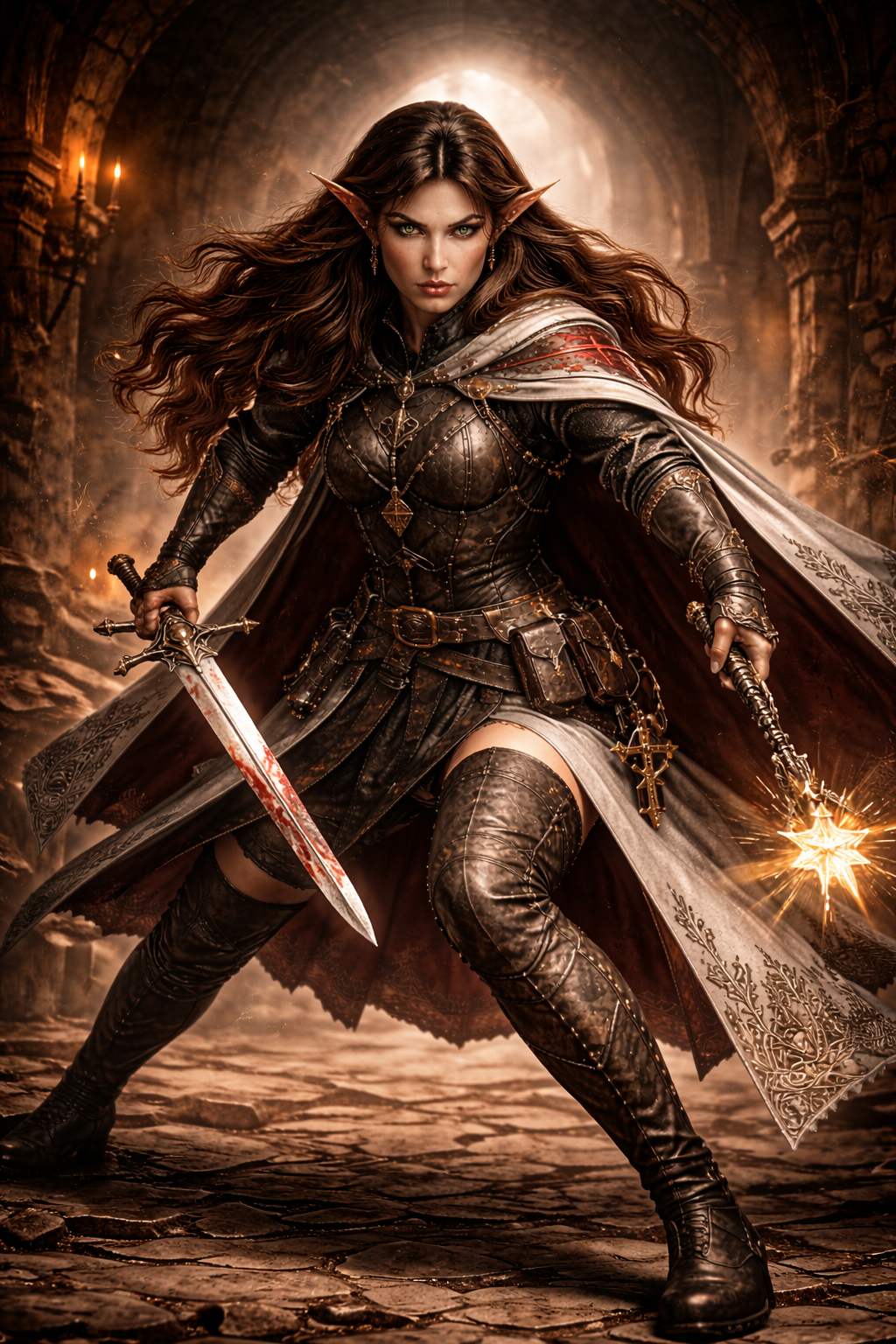
The Inquisitor O.C.C.
Attribute Requirements: I.Q. 10 or higher, M.E. 12 or higher, P.E. 11 or higher. A high M.A. is helpful, and a high P.P. or P.S. is also advantageous.
Alignment: Any, but most are Principled, Scrupulous, Unprincipled, or Aberrant.
Gender: Male or Female
Race: Any. Elves, Humans, and disciplined Half-Elves are particularly common.
O.C.C. Skills:
- Language: Native Tongue at 98%
- Language: Two of choice (+15%)
- Literacy: Native Tongue (+20%)
- Interrogation Techniques (+20%)
- Intelligence (+15%)
- Tracking (Humanoid & Supernatural) (+10%)
- Research (+20%)
- Streetwise (+10%)
- Public Speaking (+15%)
- Lore: Religion (+20%)
- Recognize Enchantment (+15%)
- Detect Concealment (+10%)
- Prowl (+5%)
- W.P. Sword
- W.P. Blunt
- W.P. Crossbow
- W.P. Shield
- Hand to Hand: Basic
O.C.C. Related Skills: Select a total of 8 other skills at level one, plus 1 additional skill at levels 3, 6, 9 and 12. All new skills start at level one proficiency.
- Communications: Any (+15%)
- Domestic: Any
- Espionage: Any (+15%)
- Horsemanship: General or Military
- Labour: Any (+5%)
- Magical/Religious: Any (+15%)
- Medical: First Aid only
- Military: Any
- Naval: Any (+5%)
- Performance Arts: Any
- Physical: Any except Acrobatics and Wrestling
- Rogue: Any
- Science: Math Only
- Scholar/Technical: Any
- W.P.: Any
- Wilderness: Any (+10%)
Secondary Skills: Choose 4 at level 1, plus 1 per level starting at level 2. All new skills start at Lvl. one proficiency. These are additional areas of knowledge that don't get the O.C.C. bonus.
O.C.C. Abilities & Special Training
- Sense Supernatural Evil: The Inquisitor can sense demons, undead, possessed individuals, cursed beings, creatures of magic, and supernatural evil within a 30 foot radius. This functions like a constant sixth sense when active threats are nearby.
- Aura of Authority: The Inquisitor carries the force of legal and religious office. He gains +20% to Intimidate and +10% to Trust in lawful societies that recognize his order or writ.
- Interrogator's Discipline: +25% to detect lies, contradictions, or deceit during questioning, +20% to formal interrogation efforts, +2 to save vs mind control and psionic domination.
- Fanatical Resolve: +4 to save vs Horror Factor, +2 to save vs possession, curses, and insanity, and complete immunity to ordinary fear.
- Judgment Strike: Three times per day the Inquisitor may make a specially focused attack against demons, undead, possessed beings, creatures of magic, and similarly profane enemies. This attack gains +4 to strike and inflicts an additional 2D6 damage.
- Authority of the Faith: The Inquisitor may requisition reasonable aid from temples, watch posts, clergy, and local officials in lands where his faith or order is recognized. This may include lodging, records access, horses, guards, and escort duties.
- Combat Bonuses: +1 attack per melee at levels 1, 4, 8 and 12; +2 to strike vs supernatural evil; +1 parry and dodge at levels 3, 6, 9 and 12; critical strike on 19-20 against demons, undead, and sanctioned heretics.
Divine Spell Progression
| Level | Spell Access |
|---|
| 1 | None |
| 2 | None |
| 3 | Detect Magic, Sense Evil |
| 4 | See the Invisible |
| 5 | Turn Dead |
| 6 | Negate Poison |
| 7 | Remove Curse |
| 8 | Protection Circle (Lesser) |
| 9 | Exorcism |
| 10 | Dispel Magic Barrier |
| 11 | Banish Lesser Entity |
| 12 | Sanctuary |
| 13 | Heal Wounds (Major) |
| 14 | Protection Circle (Greater) |
| 15 | Banish Greater Entity |
Inquisitors are not full priests. Their spell access is limited and highly specialized toward detection, purification, banishment, and protection.
Spell Strength:+1 at levels 4, 8, and 12.
P.P.E.: 2D6 + P.E. attribute number + 1D4/level.
Standard Starting Equipment:
- Set of Inquisitor robes or tunic in dark, neutral, or order colors
- Travel cloak with hood, weather-resistant
- Holy symbol, medallion, or order seal
- Satchel with investigation tools: ink, quills, parchment, wax seals
- Small journal or doctrine book
- Manacles or restraint chains
- Backpack
- Bedroll and 5 days of rations
- Flint and steel
- Waterskin
- 1D4 vials of holy water
- Interrogation kit
Weapons: The Inquisitor begins with one primary weapon, one secondary weapon, and one ranged weapon.
- Primary Weapon (choose one): Longsword (2D6), Warhammer (2D6), or Mace (1D6+2)
- Secondary Weapon: Dagger (1D6), often silvered if the order can provide it
- Ranged Weapon (choose one): Crossbow with 20 bolts or Short Bow with 30 arrows
- Optional: Wooden or steel shield
Armour: The Inquisitor begins with one of the following:
- Soft Leather Armour: A.R. 9, S.D.C. 30
- Studded Leather Armour: A.R. 12, S.D.C. 38
- Chain Mail (militant orders): A.R. 14, S.D.C. 55
Money: The character starts with 2D6x100 gold pieces plus 1D6x10 silver pieces. On formal missions, many Inquisitors may draw limited support from their church, order, or sponsoring authority.
Order-Issued Special Gear:
- Argent Veil: Investigation cloak; +10% Prowl
- Cleansing Flame: Oil flasks, torches, fire-starting kit
- Black Sigil: Minor anti-magic talisman; +1 save vs magic
- Crown Inquest: Official signet or writ case granting legal recognition
Experience Level Table
| Level | Experience Points |
|---|
| 1 | 0-2,200 |
| 2 | 2,201-4,500 |
| 3 | 4,501-9,000 |
| 4 | 9,001-18,000 |
| 5 | 18,001-35,000 |
| 6 | 35,001-70,000 |
| 7 | 70,001-120,000 |
| 8 | 120,001-180,000 |
| 9 | 180,001-260,000 |
| 10 | 260,001-360,000 |
| 11 | 360,001-480,000 |
| 12 | 480,001-650,000 |
| 13 | 650,001-850,000 |
| 14 | 850,001-1,100,000 |
| 15 | 1,100,001-1,400,000 |
Return Links
Return to Occupations and Skills
Return to Main Page
|