The Hedge Knight
A wandering knight without title, land, or lord, but still sworn to the virtues of knighthood.
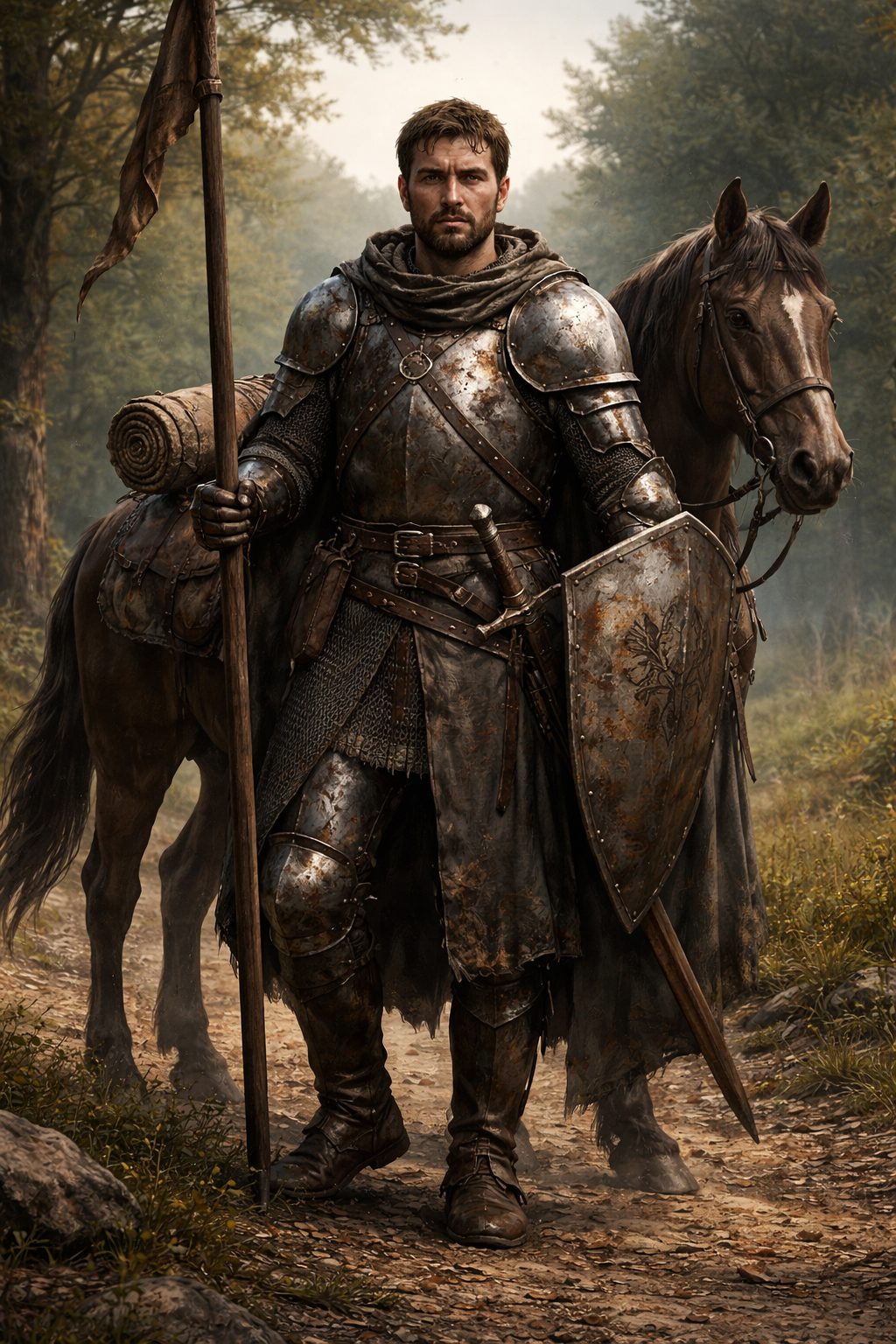
Hedge Knights are warriors who uphold the tenets of knighthood but lack the wealth, land, and status of their more established counterparts. They are often found traveling from village to village, offering their services as mercenaries, bodyguards, or champions of causes, whether noble or not. Their skills in combat, horsemanship, and honor are undiminished, though their lack of land means they may struggle more than a knight with a family fortune behind them. Despite this, they often have a strong sense of duty to right wrongs, protect the weak, and uphold the chivalric code wherever they go.
A Hedge Knight is no less skilled than a full knight in the art of war, but without the riches or land to show for their skills. They are humble, often dressed in worn but serviceable armor and traveling with a simple, well-trained steed. While they may carry the same weapons as their noble counterparts, a hedge knight's equipment is typically less ornate, more practical, and often shows signs of constant use.
Alignments and Knights: Any alignment is possible, but most Hedge Knights tend toward the Good alignment due to their adherence to the Code of Chivalry, though some may operate out of selfish reasons or personal codes of conduct.
Armour: Prefer Heavy types; Chain through Plate, usually needing maximum physical protection for combat situations.
Weapons: Standard issue is typically a Lance, Dagger, Sword or Weapon of choice. They may purchase any other weapons at their own expense.
Other Equipment: Standard starting equipment includes: Shield of choice marked with the Knight's Heraldry, Backpack, Belt with 2 Pouches, Boots, 2 sets of Clothing, a Robe, Cape or Cloak, Grooming Utensils, Holy symbol, Bed Roll, Tinder Box, 2 Large Sacks, 2 Small Sacks, Horse, Tack and Barding. Any other equipment can be bought at the knight's expense.
Hedge Knight Special Training
- The Way of the Horse: Horsemanship: Knight, see that skill description for full details regarding the character's riding prowess, combat bonuses while on horseback, and knowledge about horses. Knights are excellent horsemen, able to make jumps, perform tricks and make special manoeuver on horseback even in fullplate armour.
- The Way of the Lance: The Knight is skilled in the use of the Lance as a weapon in combat and for tournaments. The character gets the equivalent of W.P. Lance with the following abilities and bonuses: The roll of a natural 19 or 20 (unmodified die roll) means the lance strike inflicts triple damage (instead of double; an otherwise successful strike does normal damage, including bonuses for being on horseback) or the strike unseats his opponent. The player must announce his character's intention as to whether he intends to inflict damage or unseat his opponent.
Opponents unseated from horseback suffer 1d6 damage from the lance, are knocked off their horse and take an additional 1d6 damage unless they successfully roll with fall/impact. The fallen rider also loses initiative and one melee action/attack. An opponent who is not on horseback, but standing on the ground can be knocked off his feet and on his backside with the same result, except no additional damage from the fall.
In the alternative, the knight can try to disarm an opponent with the lance. Roll to strike as usual, but if the defender fails to parry or dodge, the knight successfully strikes him in such a way that he drops his weapon or shield. The player must announce his character's intension to disarm his opponent and make a called shot indicating what item he is trying to knock out of the opponents hands. This attack can also be used to knock off any hat or helmet that isn't bolted directly to the body armour. This attack is often used by knights for fun and games, as a warning, or an attempt to frighten away or discourage an opponent rather than engage in a battle to the death.
An opponent may also be unseated or disarmed with a modified strike roll (all bonuses included) that is 19, 20 or greater.
- Other O.C.C. Bonuses: +1 on initiative, +1 to pull punch, 25 S.D.C., and +1 to save vs. Horror factor at levels 1, 3, 4, 5, 6, 8, 10, 12, and 14.
- Other O.C.C. Bonuses: +1 on initiative, +1 to pull punch, 25 S.D.C., and +1 to save vs. Horror factor atlevels 1, 3, 4, 5, 6, 8, 10, 12, and 14.
- Hedge Knight's Family Background: A Hedge Knight's family background often reflects their humble origins, as they are typically warriors who have earned their title through valor rather than inherited nobility. While they might not have the wealth, titles, or lands that a traditional knight would, their family background still plays a crucial role in shaping who they are. Here's a deeper look into a Hedge Knight's potential family background:
- Peasant Origins: Many Hedge Knights come from humble, even peasant, backgrounds. These individuals were born to families of farmers, laborers, or craftsmen. Their parents might not have held any titles, but they instilled in their children a strong sense of work ethic, loyalty, and a certain ruggedness essential for survival.
Motivation: The drive to rise above their origins often stems from a desire for respect and the pursuit of a better life. They might have felt a calling for greater things or simply proven themselves in a moment of battle that elevated them to the rank of knight.
Challenges: A Hedge Knight from a peasant background may be looked down upon by the aristocracy or traditional knights. They face prejudice from noble houses, but they are also often seen as a symbol of meritocracy, where honor and bravery are valued more than birthright. - Family of Minor Landowners: Some Hedge Knights may come from families that were once landowners but have since lost their lands due to war, financial difficulties, or the shifting tides of history. These families may have been once respected but have fallen out of favor.
Legacy of Loss: Growing up, the Hedge Knight might have heard stories of family glory, but those days are long past. This fuels a deep desire to reclaim lost honor and restore their family's name.
Dual Identity: While their family may still own a small plot of land, it's not enough to be truly wealthy. A Hedge Knight with this background might still hold the same values and manners as the aristocracy but be forced to live the life of a wandering warrior due to the loss of family wealth or status. - Rising Through the Ranks: Some Hedge Knights are the result of families who were not noble by birth but gained their status through military service. These families could have been soldiers or mercenaries who fought for the right cause at the right time and earned their titles through deeds rather than inheritance.
Self-Made Warriors: Their family may not have had much before, but their role in securing victory in battle or defending a kingdom from invaders allowed them to rise. However, the wealth and land that usually accompany knighthood may still elude them, and so they wander, continuing their noble work as free agents.
Disdain from Nobles: While these Hedge Knights have proven their worth, they may still be looked down upon by those who are more "traditionally" noble. This can lead to a complex relationship with the nobility, resentment or admiration, depending on the individual. - The Warrior Family: Another type of family background is one where the Hedge Knight hails from a long line of warriors, mercenaries, or soldiers. Though they might not have been part of a noble house, these families have a long tradition of fighting for kings, lords, or causes they believe in.
Ingrained Martial Skills: The Hedge Knight's family may not be wealthy, but they are respected for their martial prowess. The background might include family members who served in wars or as part of personal retinues. This legacy might be what shapes the Hedge Knight's identity, as they are expected to live up to their ancestors' reputation.
Noble Virtues Without Titles: While they may not have the title, the values of honor, duty, and loyalty are taught from a young age. These values are ingrained in the Hedge Knight, who often carries the weight of their family legacy on their shoulders. - Adopted or Foundling Background: A Hedge Knight could also have grown up as an adopted child or even a foundling. Raised by a family with no noble title or land, they may have been taken in due to an act of kindness or because they were seen as having potential.
An Outsider's Perspective: Not knowing their true lineage, this Hedge Knight may possess an outsider's perspective on the world of nobility. They may be a staunch believer in the value of deeds over birthright, often rejecting the aristocratic structures that defined traditional knights.
A Sense of Independence: Raised without the expectation of noble inheritance, this Hedge Knight often values personal freedom and self-reliance. The family may have been simple folk, but the Hedge Knight's rise to knighthood is a story of perseverance, independence, and self-motivation.
Additional Skills: Note: Select 2 skills from the categories listed, in addition to O.C.C. skills; all get a +10% bonus. : Make selections from wilderness or physical categories, or may select botany and twoskills from the previously listed categories.
- Peasant Origins: Many Hedge Knights come from humble, even peasant, backgrounds. These individuals were born to families of farmers, laborers, or craftsmen. Their parents might not have held any titles, but they instilled in their children a strong sense of work ethic, loyalty, and a certain ruggedness essential for survival.
- The knight acquires a squire to his service starting at 4th level. Additional squires may be aquired at every other level.
Knights and the Code of Chivilry
A Knight is sworn to valour, both in intent and deed:
- He avenges the wrong
He defends the weak and innocent
He fights with honour
He never abandons a friend ally, or noble cause.
A Knight's heart knows only virtue and honour:
- He always keeps his word of honour
He always maintains his principles
He never betrays a confidence or comrade
He avoids deception
He respects life
His blade defends the helpless
His might upholds the weak
His words speak only truth
His wrath undoes the wicked
He lives his life so that it is worthy of respect and honour
A Knight is sworn to fair play:
- He will never attack an unarmed foe
He will never charge an unhorsed opponent
He will never attack from behind
He will avoid cheating
He will avoid torture
A Knight is sworn to nobility:
- He exhibits self discipline
He shows respect to authority
He obeys the law
He administers justice
He administers mercy
He protects the innocent
He respects women
A Knight is sworn to courtesy:
- He exhibits manners
He is polite and attentive
He is respectful of host, authority and women
A Knight is sworn to loyalty to his Gods, Sovereign, Kingdom, and the Codes of Chivalry.
Lack of Land and Wealth
Unlike a full knight, a Hedge Knight does not receive any land or titles. They may receive payment for their services, but most of their wealth comes from the occasional patron or their own ability to survive through mercenary work.
The Hedge Knight O.C.C.
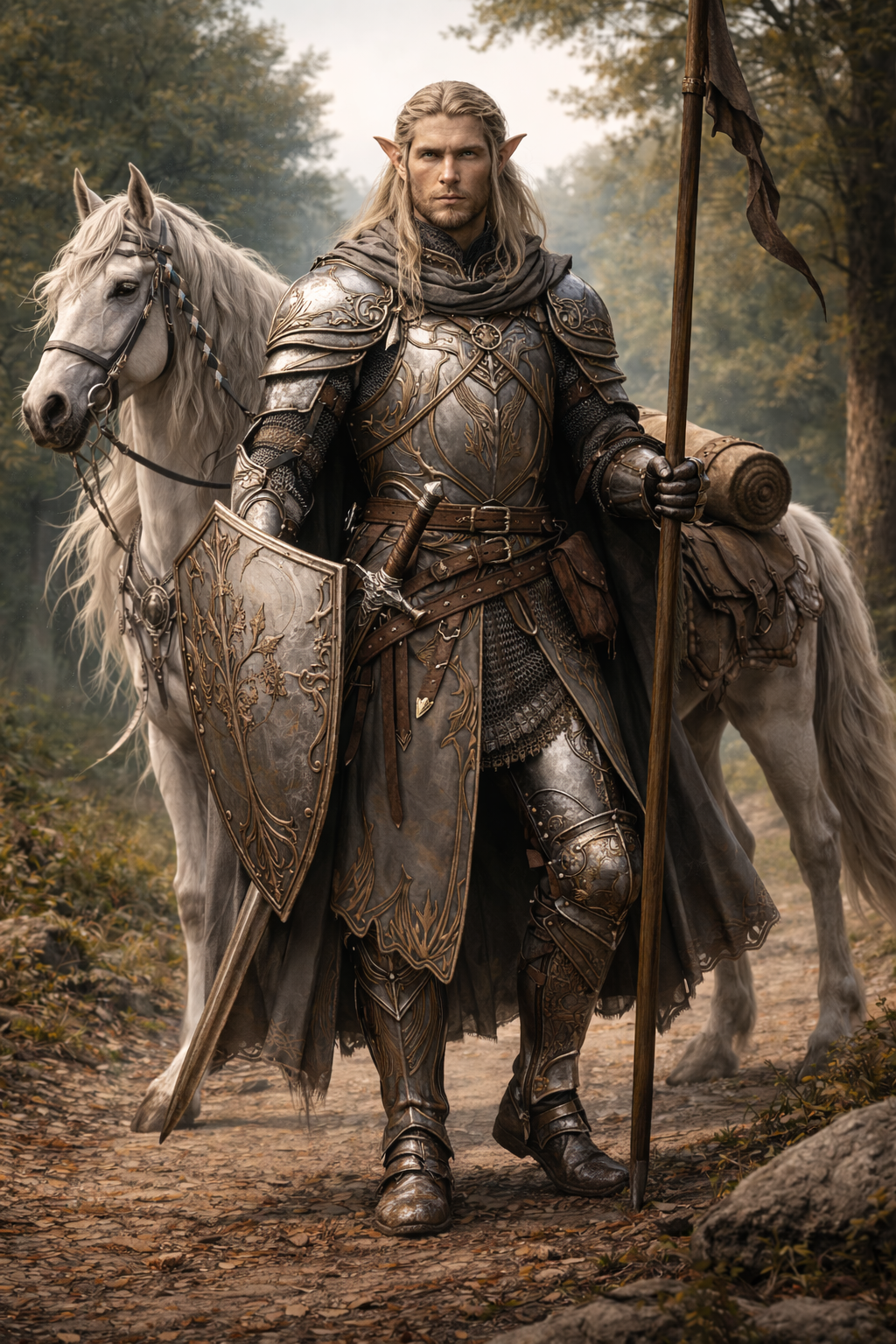
Attribute Requirements: I.Q.: 7, P.S.: 10, P.P.: 12, P.E.:10
Alignment: Any, but usually good
Gender: Male or Female
Race: Any
O.C.C. Skills:
- Dance (+15%)
Heraldry (+15%)
Horsemanship: Knight
Land Navigation (+10%)
Languages: Two of Choice (+15%)
Literacy: One Language of choice (+20%)
Military Etiquette (+15%)
Armourer (+5%)
Hand to Hand: Knight
W.P. Lance
W.P. Large Shield
W.P. Two of Choice
O.C.C. Related Skills: Choose 2 other skills form the Military skill category , 2 from Communications skill category, and 4 other skills at level 1 , plus 1 per level starting at level 2. All new skills start atLvl. one proficiency.
- Communications: Any
Domestic: Any
Espionage: Any
Horsemanship: Exotic Only.(+5%)
Labour: Any
Medical: First Aid Only.
Military: Any (+15%)
Naval Skills: Any
Preforming Arts: Any
Physical: Any
Rogue: None
Science: Any
Scholar/Technical: Any
Weapon Proficiencies: Any
Wilderness: Any
Secondary Skills: Choose 4 at level 1, plus 1 per level starting at level 2. All new skills start atLvl. one proficiency. These are additional areas of knowledge that don't get the O.C.C. bonus.
Experiance and Combat Table:
| Level | Experiance | Hand to Hand: Knight |
| 1 | 0-2,200 | 2 Attacks per Melee, +3roll |
| 2 | 2,201-4,400 | +2 to damage |
| 3 | 4,401-8,800 | +3 parry/dodge |
| 4 | 8,801-16,500 | +4 Damage |
| 5 | 16,501-25,000 | 4 Attacks per Melee |
| 6 | 25,001-35,000 | Kick Attack: 1-6 damage |
| 7 | 35,001-50,000 | Critical Strike: 17 to 20 |
| 8 | 50,001-71,000 | +6 Damage |
| 9 | 71,001-96,500 | 5 Attacks per Melee |
| 10 | 96,501-135,500 | Stun: 18 or 20 |
| 11 | 135,501-180,500 | +5 to Parry/Dodge |
| 12 | 180,501-230,500 | +4 to Strike |
| 13 | 230,5001-280,500 | 6 Attacks per Melee |
| 14 | 280,501-335,500 | Disarm: 18-20 |
| 15 | 335,501-400,500 | Death blow: Natural 20 |
Return to Occupations and Skills
Back to Arethane Main Page.