Stone Mason
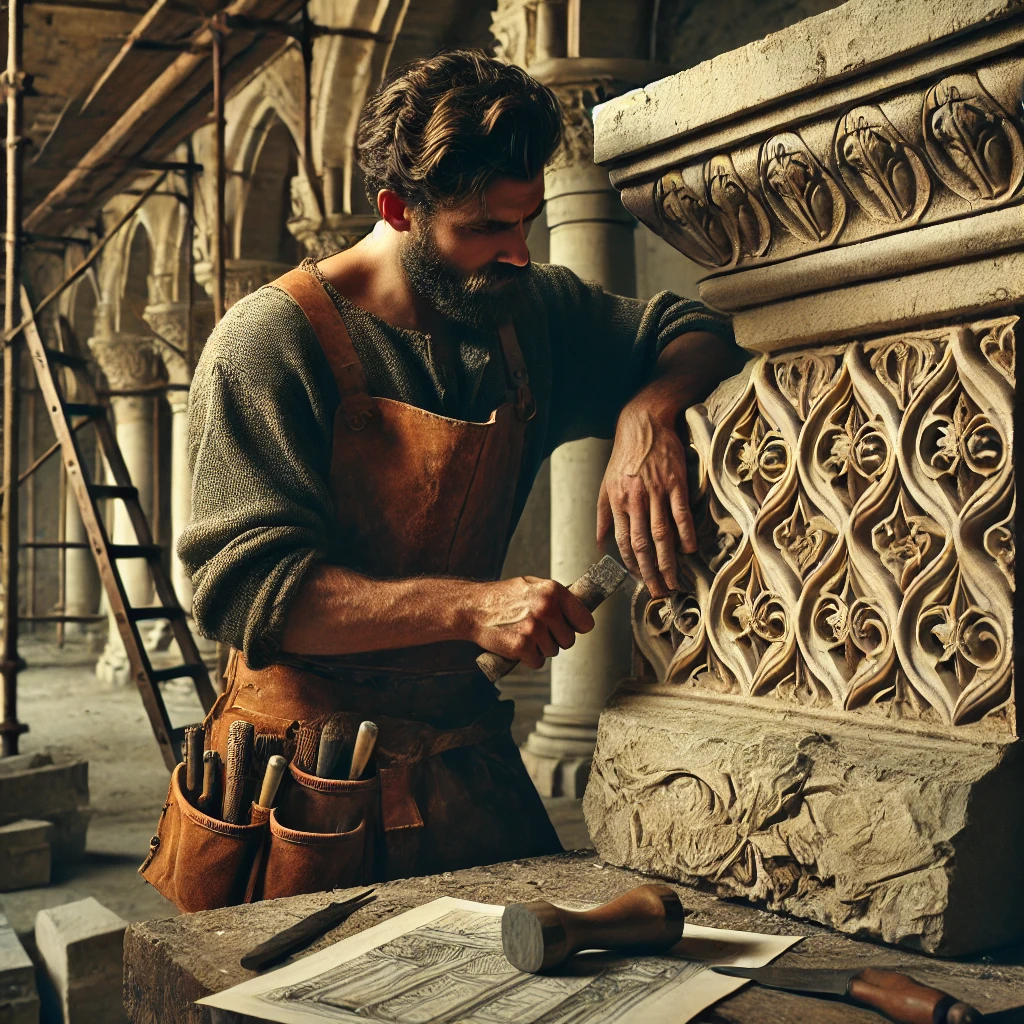
Stone Masons are revered artisans found in many societies, from the most primitive tribal cultures to highly advanced kingdoms. They are master craftsmen skilled in shaping stone for construction, sculpture, tools, and weaponry. Their expertise is essential for building fortifications, temples, shrines, statues, and intricate carvings. Their deep understanding of stone makes them indispensable for both practical and artistic endeavors.
These artisans possess an intimate knowledge of stone types, from the hardness of granite to the malleability of limestone, allowing them to craft everything from towering citadels to delicate reliefs. Their work not only provides structural integrity but also preserves the culture and heritage of their people through carvings, murals, and sacred monuments. In times of war, Stone Masons are crucial for reinforcing city walls, building fortresses, and creating hidden passageways. In times of peace, they sculpt statues of heroes, construct intricate bridges, and develop aqueducts that stand the test of time. Their influence spans generations, as their works remain long after their passing, serving as testaments to the skill and artistry of their craft.
In many societies, a Stone Mason's status is elevated, often second only to rulers and spiritual leaders. Their expertise is sought after by kings, warlords, and religious orders, ensuring that the foundations of power, both literal and symbolic, are built upon their craftsmanship. Some Masons even delve into the mystical properties of stone, carving protective runes or creating structures aligned with celestial movements, adding an almost divine quality to their creations.
In ancient civilizations, they are the architects of monumental wonders, designing grand palaces, towering citadels, and intricately carved temples that stand as testaments to their skill and ingenuity. In more primitive cultures, they are responsible for crafting sturdy dwellings, sacred monoliths, and defensive walls that protect their people. Regardless of the setting, a skilled Stone Mason is seen as a pillar of society, their expertise shaping not only structures but also the cultural identity of their people. Their legacy endures across generations, passed down through apprenticeships and guild traditions, ensuring that the secrets of stonecraft are never lost to time.
While some cultures restrict stone masonry to a specific gender, most recognize the craft as a respected profession open to all. In many settlements, Stone Masons are highly valued and protected, second only to spiritual leaders and rulers. Their ability to shape the land into tools and symbols of power makes them indispensable. The structures they create stand as testaments to their skill, endurance, and dedication, often lasting centuries or even millennia.
Many seasoned Stone Masons develop an almost instinctive grasp of geology, honing their ability to read the language of stone through years of hands-on experience. With a practiced eye, they can discern the subtlest variations in mineral composition, enabling them to locate valuable ore veins, identify the finest materials for sculpting and construction, and detect hidden fractures or weaknesses in both natural landscapes and man-made structures. Their expertise extends beyond mere craftsmanship, many become esteemed consultants, sought after by architects, engineers, and rulers who wish to construct enduring monuments, grand fortifications, and ambitious underground networks. The keen insight of a master Stone Mason can mean the difference between a crumbling edifice and a structure that withstands the test of centuries.
In certain regions, Stone Masons form powerful and exclusive guilds, where the secrets of their craft are safeguarded and passed down through rigorous apprenticeship programs. These guilds are more than just trade organizations; they are influential institutions that shape the very foundations of cities and civilizations. Holding sway over matters of fortification, city planning, and subterranean expansion, they often serve as trusted advisors to monarchs and councils. Some guilds even possess ancient, closely guarded knowledge of forgotten stone-working techniques, allowing them to reinforce structures against seismic activity, construct labyrinthine tunnels that remain cool and dry for centuries, or fashion ornate carvings imbued with hidden symbology. In times of war, their skills become even more invaluable, as they are called upon to reinforce castle walls, design impenetrable defenses, or uncover strategic weaknesses in enemy strongholds.
Whether working in solitude in the depths of a quarry or standing alongside rulers in the halls of power, Stone Masons shape more than stone, they shape history itself.
Role in Society
Stone Masons are the backbone of civilization, shaping the very foundations upon which cities and empires are built. Their mastery over stonecraft extends far beyond simple construction; they are artisans, engineers, and scholars of their craft, blending technical precision with artistic vision. Their role in society is multifaceted, encompassing a wide range of essential tasks:
- -Constructing walls, roads, bridges, and buildings: From towering fortifications and sprawling city streets to grand temples and intricate aqueducts, Stone Masons ensure that settlements are both functional and enduring. Their skill in engineering allows them to design structures that withstand the ravages of time and nature.
- Carving statues, reliefs, and monuments: Masons are not only builders but also sculptors, bringing history and culture to life through masterfully chiseled statues, elaborate friezes, and towering monuments that honor gods, rulers, and great achievements. Their artistry preserves the legacy of nations:
- Creating stone tools, weapons, and ornaments : Beyond construction, Masons craft essential tools and weapons from stone, supplying artisans, warriors, and hunters alike. Finely wrought stone jewelry, amulets, and decorative elements also serve as symbols of status, faith, and power.
- Assessing and selecting high-quality stone for various purposes: A skilled Mason understands the unique properties of different stone types, ensuring that the right materials are chosen for each project. Whether selecting granite for an indestructible fortress, marble for a temple’s elegance, or limestone for intricate carvings, their expertise is invaluable.
- -Maintaining and repairing stone structures: Time, weather, and conflict take their toll on even the strongest edifices. Masons are responsible for reinforcing aging buildings, restoring crumbling monuments, and ensuring that roads and bridges remain safe for generations to come.
- Advising rulers and leaders on structural integrity and resource management: Due to their deep knowledge of geology and architecture, Stone Masons often serve as trusted advisors to kings, architects, and city planners. Their insights guide the expansion of cities, the fortification of castles, and the efficient use of stone resources to sustain growth and prosperity.
They are often integral members of artisan guilds, tribal councils, or prestigious royal workshops, where they not only practice their craft but also mentor the next generation through rigorous apprenticeships. These institutions safeguard centuries of accumulated knowledge, ensuring that the secrets of stonework, whether in precision cutting, advanced masonry techniques, or the mystical properties of certain stones, are preserved and refined over time.
In many cultures, Stone Masons hold positions of great esteem, working alongside architects, scholars, and engineers to push the boundaries of artistry and construction. Their contributions shape the skylines of great cities, reinforce the strongholds of powerful rulers, and carve the very identity of a civilization into the land itself. Some are even revered as visionaries, capable of transforming raw stone into enduring masterpieces that blend form, function, and beauty. Whether building grand cathedrals, subterranean cities, or towering citadels, their influence is etched into history, one chisel stroke at a time.
Racial Considerations & Bonuses
While any race can master the art of stoneworking through dedication and training, some races have an innate connection to stone due to their physiology, heritage, or deep-rooted traditions. These races gain unique bonuses when pursuing the craft of masonry, reflecting their specialized knowledge and expertise.
- Dwarves: Dwarves are the undisputed masters of stonecraft, having perfected their techniques over countless generations. Their structures are known for their unparalleled durability, precision engineering, and intricate carvings, often lasting for centuries without degradation. Dwarven Stone Masons receive a +15% bonus to all stone-related skills, including masonry, carving, and geological assessment. Their expertise in fortifications and underground strongholds makes them highly sought-after architects and engineers.
- Kobolds: Small but ingenious, Kobolds are natural tunnelers and architects of elaborate underground lairs. Their intimate knowledge of subterranean construction allows them to create extensive tunnel networks, hidden chambers, and defensive structures with remarkable efficiency. Kobold Stone Masons receive a +10% bonus to identifying and working with stone in subterranean settings and a+5% bonus to trap-making using stone, making them adept at crafting cunning defenses and intricate underground passages.
- Grey Elves: Unlike their forest-dwelling kin, Grey Elves have a deep appreciation for the permanence and artistry of stone architecture. They combine their innate magical prowess with masterful craftsmanship, creating structures that seamlessly blend arcane enchantments with intricate masonry. Grey Elf masons receive a +10% bonus to ornamental stone carving andmagical glyph inscription on stone surfaces, allowing them to craft breathtaking monuments, enchanted fortresses, and ethereal citadels that defy time.
- Drow (Dark Elves): Masters of the underdark, the Drow are experts in working with stone in the most hostile subterranean environments. Their structures are designed to blend seamlessly with natural cavern formations, incorporating bioluminescent elements and intricate gothic carvings. Drow Stone Masons receive a +10% bonus to crafting reinforced stone structures in underground settings and a+5% bonus to integrating magical defenses into stonework, allowing them to create both aesthetically stunning and highly functional hidden fortresses deep beneath the surface.
- Other Races: While many races lack a deep cultural connection to stonework, they can still become skilled Stone Masons with proper training and dedication. Some human civilizations are known for their imposing stone fortresses and sprawling cathedrals, while certain Orc and Lizardfolk tribes carve immense idols and monolithic structures that serve religious or strategic purposes. Though they may not receive innate bonuses, individuals of any race can achieve mastery in stoneworking through perseverance and practice.
O.C.C. Abilities
Stone Masons are master artisans whose expertise extends far beyond simple construction. Their deep understanding of geology, engineering, and craftsmanship allows them to shape civilizations with their work.
- Master Stoneworking (Base: 40% +5% per level): This skill encompasses all aspects of working with stone, from quarrying raw materials to shaping and refining them into functional or artistic forms. A skilled Stone Mason can:
- Cut and shape stone with precision, creating building blocks, sculptures, and decorative elements.
- Carve intricate reliefs, statues, and ornamental designs.
- Utilize advanced stone-cutting techniques to maximize efficiency and minimize waste.
- Repair damaged stone structures and sculptures.
- Work with a variety of stone types, recognizing their strengths and weaknesses for different applications.
- Architectural Mastery (Base: 35% +5% per level): A deep understanding of structural integrity and engineering principles, allowing the character to design and reinforce buildings, fortifications, and underground spaces. This skill includes:
- Designing earthquake-resistant buildings, arches, and domes.
- Constructing and reinforcing fortifications, including walls, towers, and keeps.
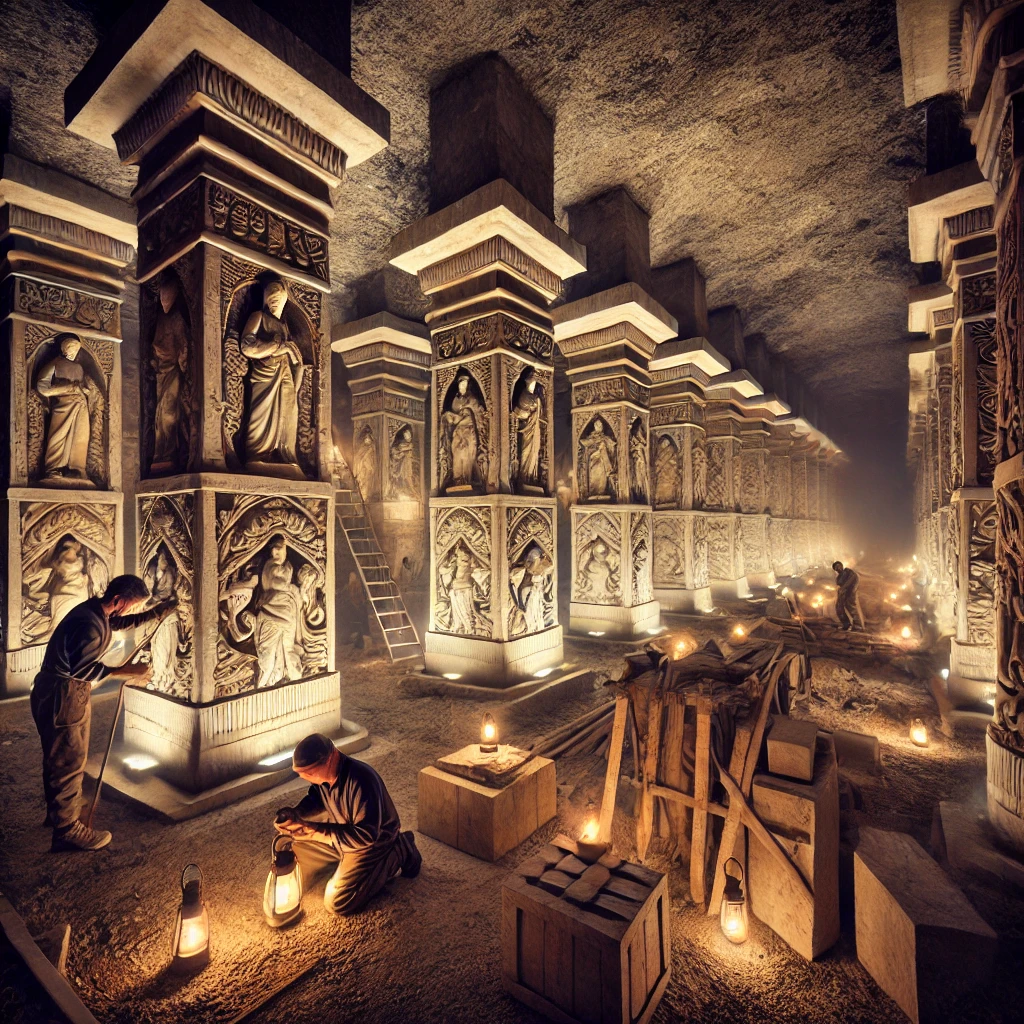
- Designing and maintaining underground structures such as tunnels, catacombs, and hidden chambers.
- Ensuring that buildings are stable, well-balanced, and resistant to environmental damage.
- Advising rulers and architects on large-scale construction projects.
- Stonecraft Weaponry & Tools (Base: 35% +5% per level): The ability to craft stone-based weapons and tools that rival metal in durability and effectiveness. A master of this skill can:
- Create stone weapons, including axes, clubs, arrowheads, spearheads, and even throwing stones.
- Balance and sharpen stone tools and weapons for maximum efficiency.
- Reinforce weapons with additional materials, such as leather bindings or metal inlays.
- Repair or reshape damaged stone tools and weapons.
- Identify the best types of stone for crafting weapons and tools, ensuring durability and effectiveness.
- Stone Appraisal & Geology (Base: 45% +5% per level): A keen ability to assess, analyze, and identify the quality, rarity, and usefulness of various stones, minerals, and gems. This skill covers:
- Identifying the best stones for construction, sculpting, or crafting.
- Recognizing flaws, weaknesses, and stress points in stone.
- Assessing the purity and value of gems and minerals.
- Locating and identifying valuable mineral deposits, including rare or magical stones.
- Differentiating between authentic and counterfeit gemstones or stonework.
- Masonry Secret Techniques (Base: 30% +5% per level): This skill represents advanced and often hidden knowledge passed down through guilds, master masons, or lost civilizations. It includes:
- Designing and constructing hidden chambers, secret doors, and concealed pathways.
- Creating interlocking stone structures that require no mortar yet remain stable for centuries.
- Developing techniques for crafting stonework resistant to earthquakes, erosion, and magical tampering.
- Understanding ancient and forgotten masonry techniques used in lost civilizations.
- Inscribing magical glyphs, runes, or symbols into stone for protective or aesthetic purposes (if applicable in the setting).
Stone Masons are not just builders, they are the architects of history, ensuring that their works endure for generations to come.
The Stone Mason O.C.C.
Also Known As: Stonewright, Master Mason, Rockshaper, Artisan of Stone, Builder of Ages, Earthsculptor
Alignment: Any, but most commonly Principled, Scrupulous, or Anarchist. Masons who work on fortifications and grand structures for rulers tend to follow disciplined alignments, while those who focus on hidden chambers or ancient ruins may lean toward Unprincipled or even Aberrant alignments.
Attribute Requirements: I.Q. 10, P.S. 12, P.E. 10, A high M.A. is useful for negotiating contracts, but not required.
Gender: Any. While historically dominated by men in some cultures, many societies recognize skilled stoneworkers regardless of gender. Some elven and dwarven traditions hold that female masons are especially gifted in detailed ornamental carving.
Race: Any, though certain races have a natural affinity for stoneworking:
- Dwarves – The most famous stoneworkers, renowned for their precision and endurance.
- Kobolds – Masters of subterranean construction and stone trap-making.
- Grey Elves – Skilled in ornamental stonework and magical inscriptions.
- Drow – Experts in underground fortifications and secret chambers.
- Humans – Capable of mastering all aspects of masonry, especially in large civilizations.
Attribute Requirements: M.A. 12, P.S. 10 and P.E. 10.
O.C.C. Bonuses:The character has a one-time bonus of +1 dodge and +1 on initiative, +3 to save vs Horror Factor, +2 to save vs magic, +10% to save vs coma/death, and is impervious to disease and poison
O.C.C. Skills:
- Masonry (+25%)
- Architectural Mastery (+20%)
- Stone Cutting & Carving (+20%)
- Stonecraft Weaponry & Tools (+15%)
- Stone Appraisal & Geology (+20%)
- Basic & Advanced Engineering (+15%)
- Fortification Design (+15%)
- Underground Construction (+20%)
- Mathematics: Basic (+10%)
- Identify Minerals & Gems (+15%)
- Mining & Quarrying (+10%)
- Wilderness Survival (+10%)
- Land Navigation (+10%)
- Languages: Native Tongue at 98%, plus two of choice (+5% each)
- W.P. Hammer, W.P. Pickaxe, and one of choice.
- Hand to Hand: Basic (Hand to Hand: Basic can be changed to Hand to Hand: Expert or Assassin (if evil) for the cost of two "Other" skills, or Martial Arts for the cost of one "Other" skill.)
O.C.C. Related Skills
Select six other skills at level one, plus one additional skill at levels 3, 6, 9, and 12.
- Communications: Any
- Domestic: Any
- Electrical: Basic Electronics only
- Espionage: None
- Mechanical: General Repair and Maintenance only
- Medical: First Aid only
- Military: None
- Physical: Any
- Pilot: None
- Rogue: None
- Science: Archaeology, Anthropology, or Geology only
- Technical: Any
- W.P.: Any, but limited to non-energy weapons
- Wilderness: Any
Standard Equipment
Stone Masons typically carry:
- Weapons: One weapon for each W.P., plus a heavy stone hammer (2D6 damage) and a chisel (1D4 damage).
- Armor: A suit of leather armor for labor, plus a medium or heavy suit of armor. Select one of the following: chain mail, double mail, scale, or splint armor.
- Tools of the Trade: A full set of masonry tools, including a hammer, chisels, trowel, plumb line, measuring rods, and a hand saw.
- Personal Items: A belt with two pouches, a pair of sturdy leather gloves or gauntlets (pick one), a pair of reinforced boots, and two sets of durable work clothing.
- Backpack & Travel Gear: A hooded cloak, water skin, grooming utensils, one medium sack, 10 sticks of incense, two candles, a tinder box, and flint.
- Crafting Materials: A small block of quality stone for practice or minor repairs.
- Religious & Cultural Symbols: A small engraved holy symbol or guild insignia (if part of a guild).
- Steed: A strong mule or draft horse with saddle and saddlebags, used for carrying tools and materials.
- Optional Magic Items: A dwarven-made mason's hammer (+5% to stoneworking tasks) or a set of enchanted chisels (granting increased precision and durability).
Income and Wealth
Stone Masons are well compensated in societies that value their work. Their earnings vary based on the civilization they serve:
- Tribal societies: Paid in food, shelter, and trade goods.
- Small towns: 10-40 gold per project.
- Kingdoms or noble patrons: 100+ gold for larger monuments or fortifications.
Experience Table
| Level | Experience Points |
|---|---|
| 1 | 0 - 1,850 |
| 2 | 1,851 - 3,700 |
| 3 | 3,701 - 7,400 |
| 4 | 7,401 - 15,000 |
| 5 | 15,001 - 30,000 |
| 6 | 30,001 - 60,000 |
| 7 | 60,001 - 120,000 |
| 8 | 120,001 - 240,000 |
| 9 | 240,001 - 400,000 |
| 10 | 400,001 - 600,000 |
| 11 | 600,001 - 850,000 |
| 12 | 850,001 - 1,200,000 |
| 13 | 1,200,001 - 1,600,000 |
| 14 | 1,600,001 - 2,000,000 |
| 15 | 2,000,001+ |