Drow City of Nwalme

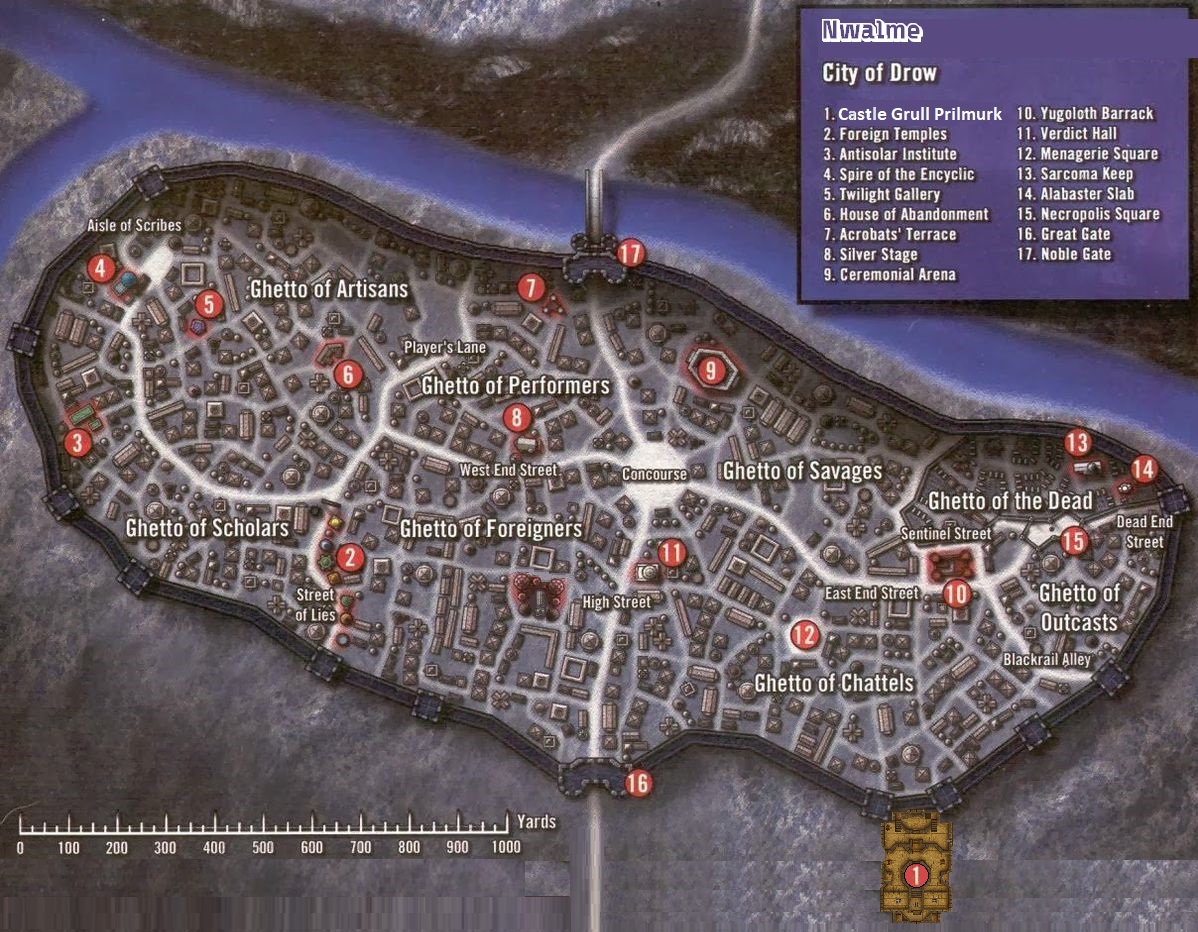
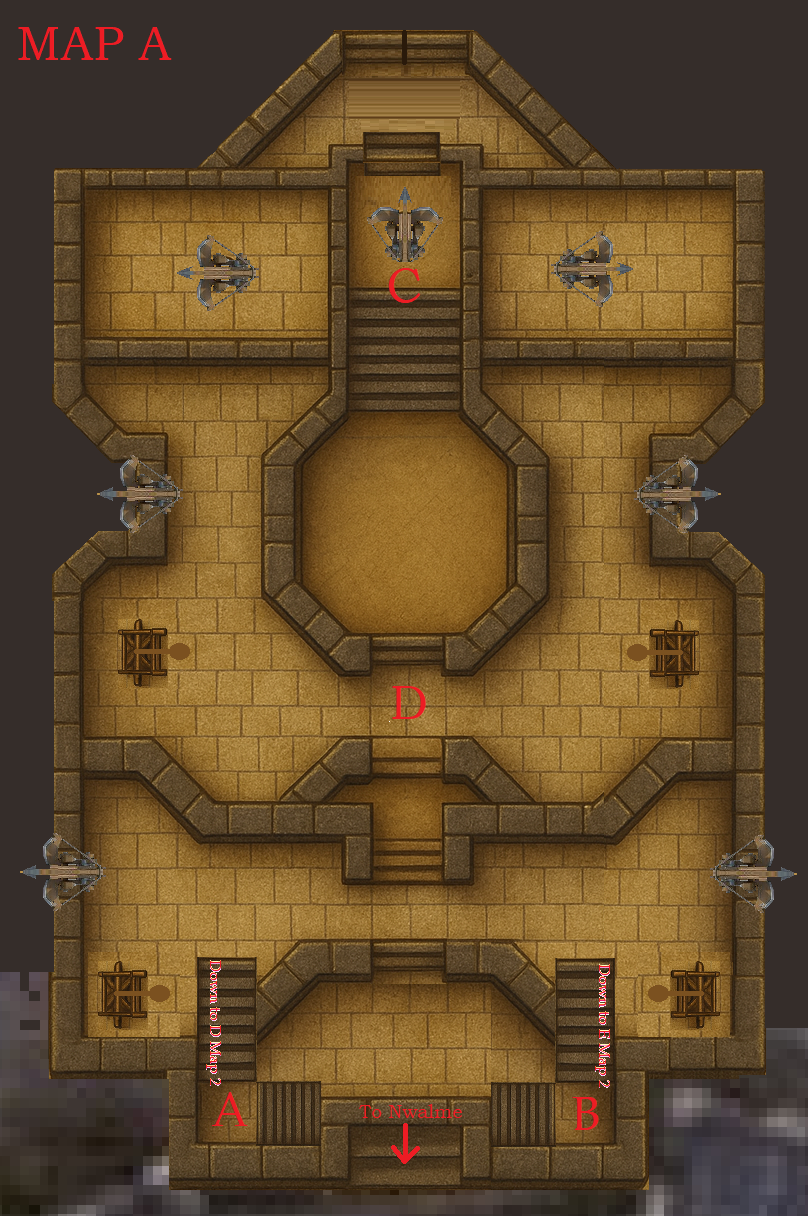
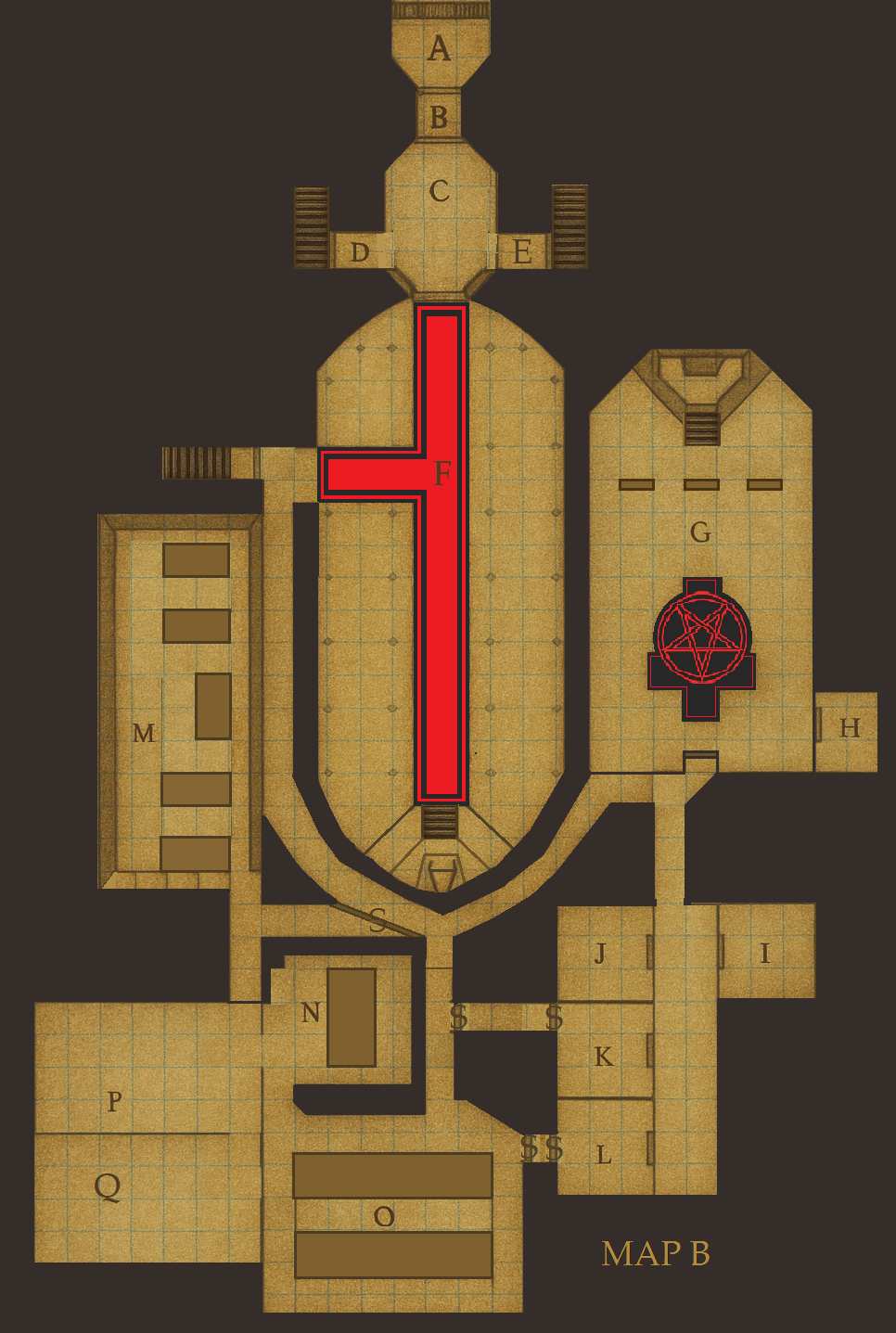
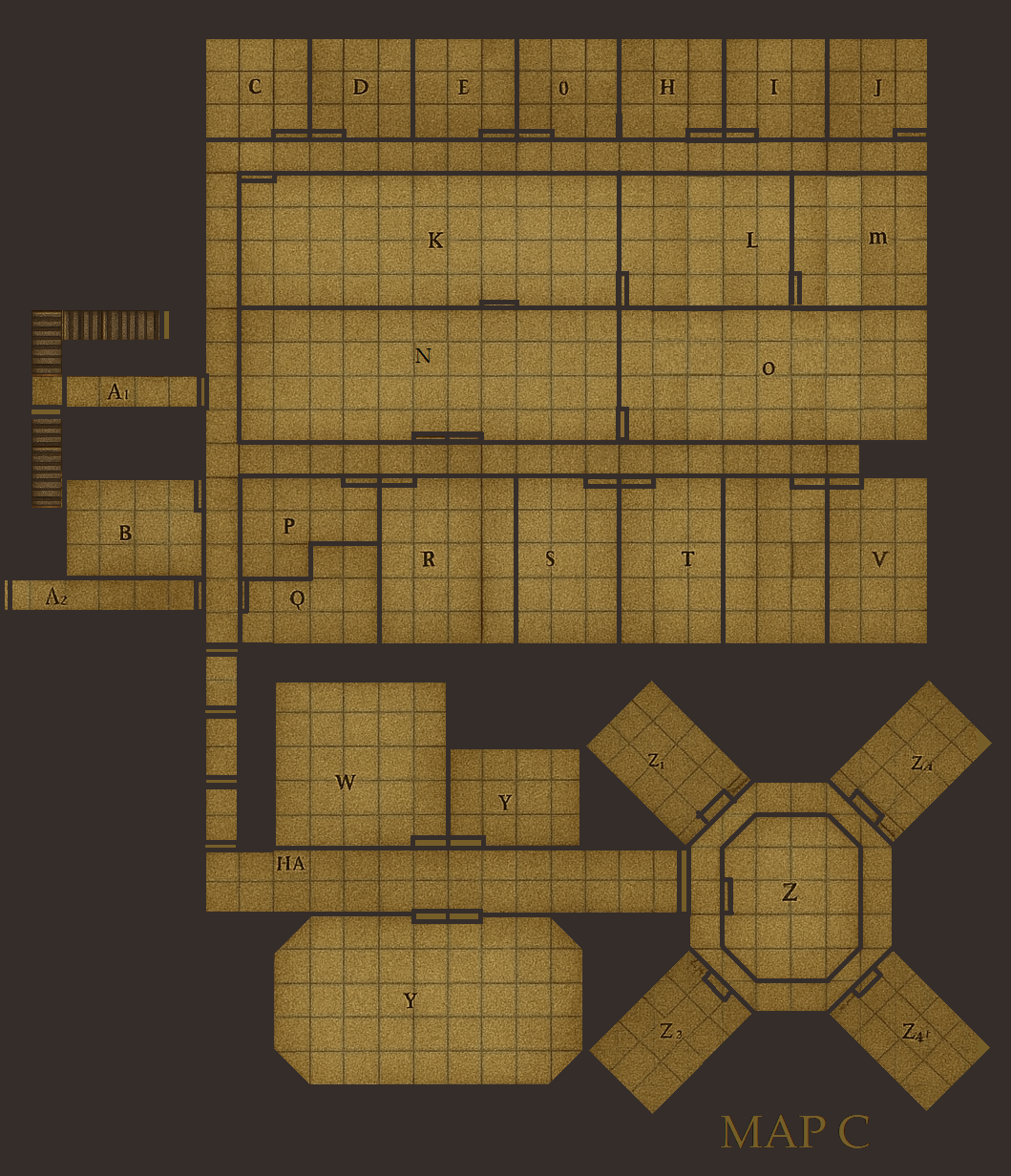
The ancient City of Drow, known as Nwalme, is a sprawling and intricately structured metropolis where the stark divisions between various social, professional, and even existential classes are made evident. The map you provided presents a highly stratified society, where every district, labeled as a "ghetto", serves as a distinct hub for specific groups, professions, or cultural practices. The design of Nwalme seems to embody a strong sense of hierarchy, with power, wealth, and status concentrated in the central areas, while marginalized and oppressed groups are relegated to the outer, more secluded districts. Key Locations and Features1. Castle Gruul PrilmurkSeat of Power and Tyranny, Castle Gruul Prilmurk, the heart of Nwalme, is a towering, malevolent fortress of obsidian, standing as an unyielding symbol of the Drow elite's unrelenting control. It is carved from the very ground and seems to tremble with an eerie, necrotic pulse, an unsettling rhythm that mirrors the dark power coursing through the city's veins. The castle's architecture is a twisted amalgamation of gothic and ancient Drow design, with endless spirals of sharp angles, spires that seem to grow organically from the stone, and walls that ooze with dark, tar like substance. It seems almost alive, as if it is a being in its own right, feeding on the very fear and despair it instills in the hearts of its inhabitants. Atmosphere of Oppression and Fear: The atmosphere surrounding Castle Gruul Prilmurk is thick with a palpable sense of dread. The air feels heavy, infused with a deep, unrelenting chill, as though the very atmosphere is tainted by the dark magic that permeates every stone and passageway. The castle is constantly shrouded in an unnatural fog, the swirling mist thickening in the corners, distorting light and vision, casting everything in shadows. The dark energies that flow through the stone are not only a physical manifestation of necrotic power but an embodiment of the corruption that runs through the veins of Nwalme itself. The castle's interior is no less foreboding. The grand halls, once meant for celebrations and state affairs, are now cold and silent, dominated by the whispered conversations of courtiers and the clattering of boots on black stone floors. Gargoyles and statues of Drow deities line the walls, their hollow eyes seeming to watch every movement with silent judgment. In the most secret chambers, hidden deep within the labyrinthine corridors, rituals of dark magic are carried out in the dead of night, performed by the most loyal of the Darklord's followers. These chambers are bathed in an eerie, flickering light, the glow coming from pools of enchanted blood, cursed artifacts, and the tormented souls of the Drow's enemies, bound eternally to the walls. Map A
Map B
Map C
Lord's Family Wing
Map D
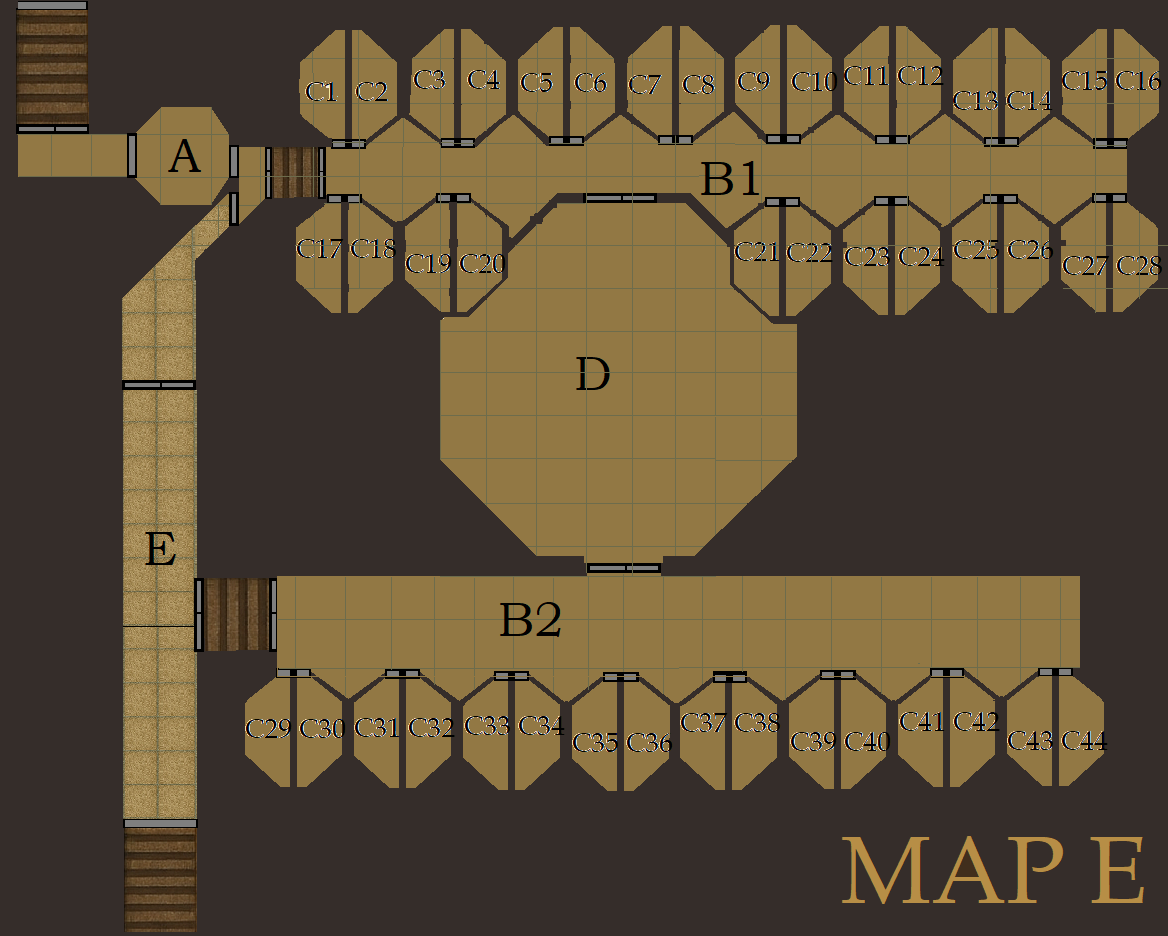
Map E
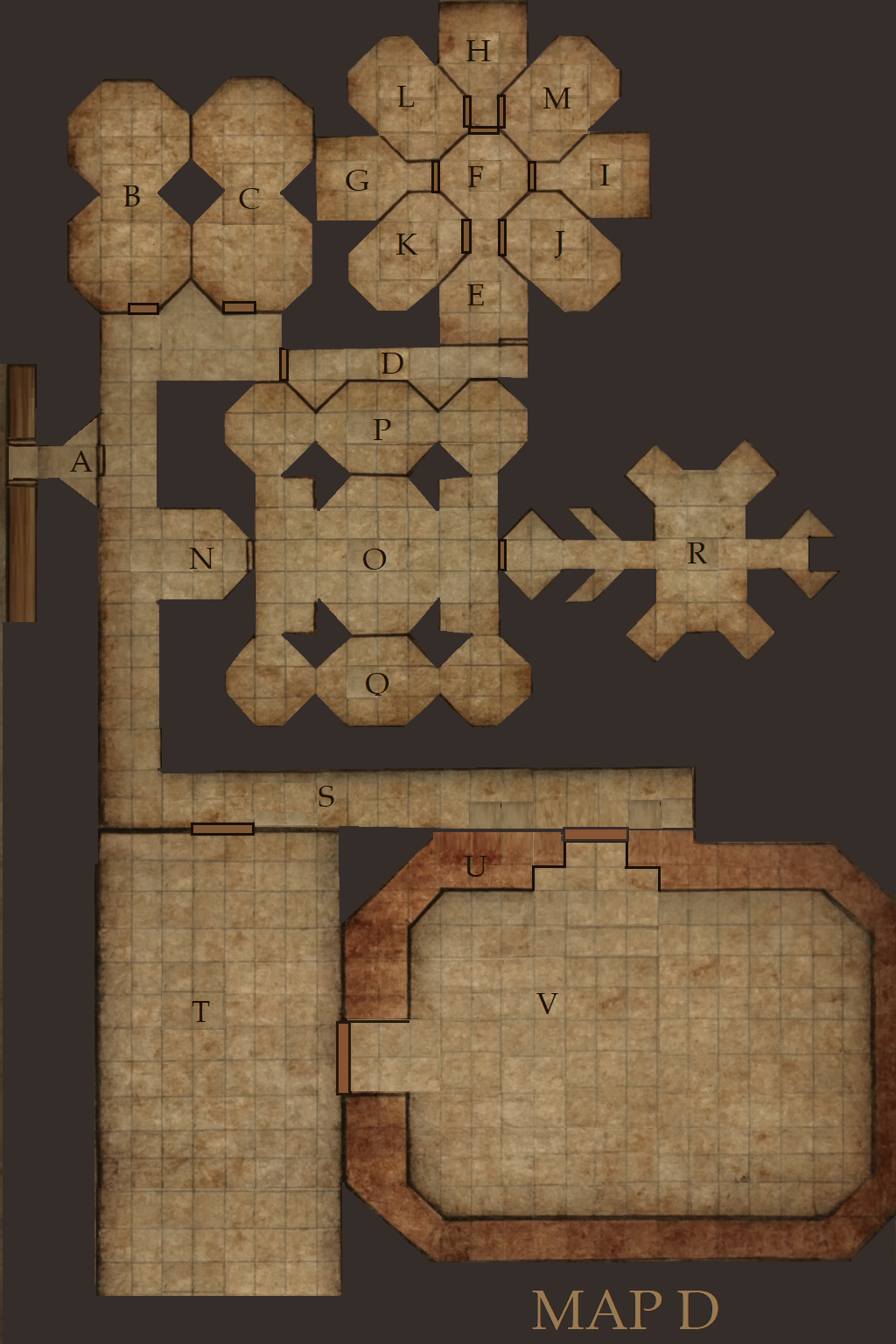
a/ Entrance: The Descent GateA reinforced ironbound door with sliding peepholes and a triple bolt mechanism. A guard station sits beside the landing with a lantern that barely pushes back the cold that rises from below.
b/ Main Hallway: The Spine CorridorA long corridor running the length of the level. Lantern sconces burn every 20 feet; the arched ceiling and ribbed stonework give the hallway a cathedral like resonance where each step echoes unnaturally.
c/ Cells (44 total): The Holding RowsTwo wings of identical stone cells with barred fronts and heavy locks. Each cell is sparse: a stone slab or cot, a bucket, and a small vent for air. Bars are adamantine reinforced iron; doors use a two key system.
d/ Torture Chamber: The Chamber of QuestionsA circular room lined with implements both mundane and arcane. Designed to break bodies and minds, it contains suspension chains, an iron table with restraints, rune etched branding irons, and crystal phials for extracting essence.
e/ Entrance to Lower Chamber: The Black DescentA rune carved arch marks the threshold to older, darker architecture below. The stone here feels older and smoother, almost grown rather than cut. Cold drafts and distant echoes rise from the steps.
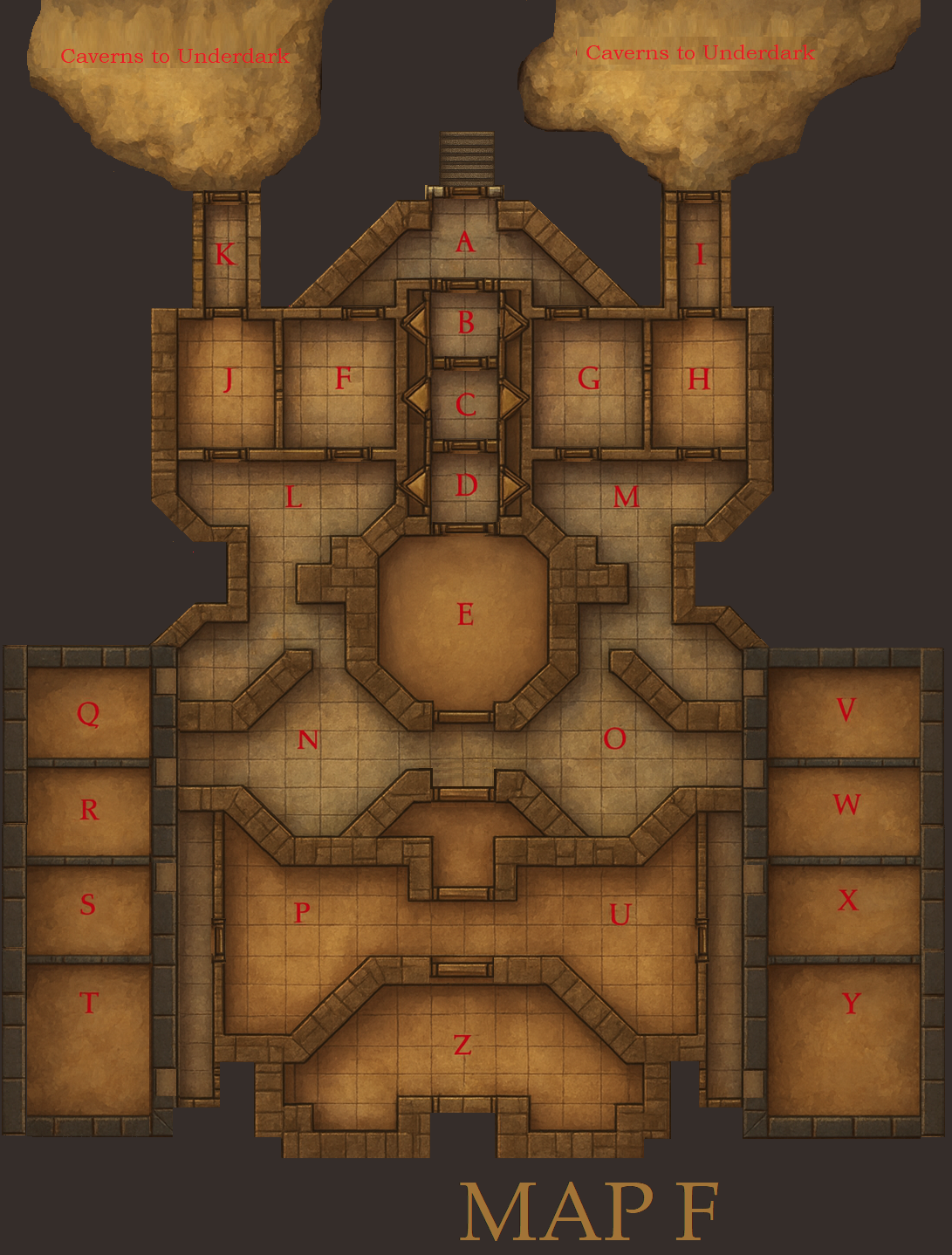
Map F
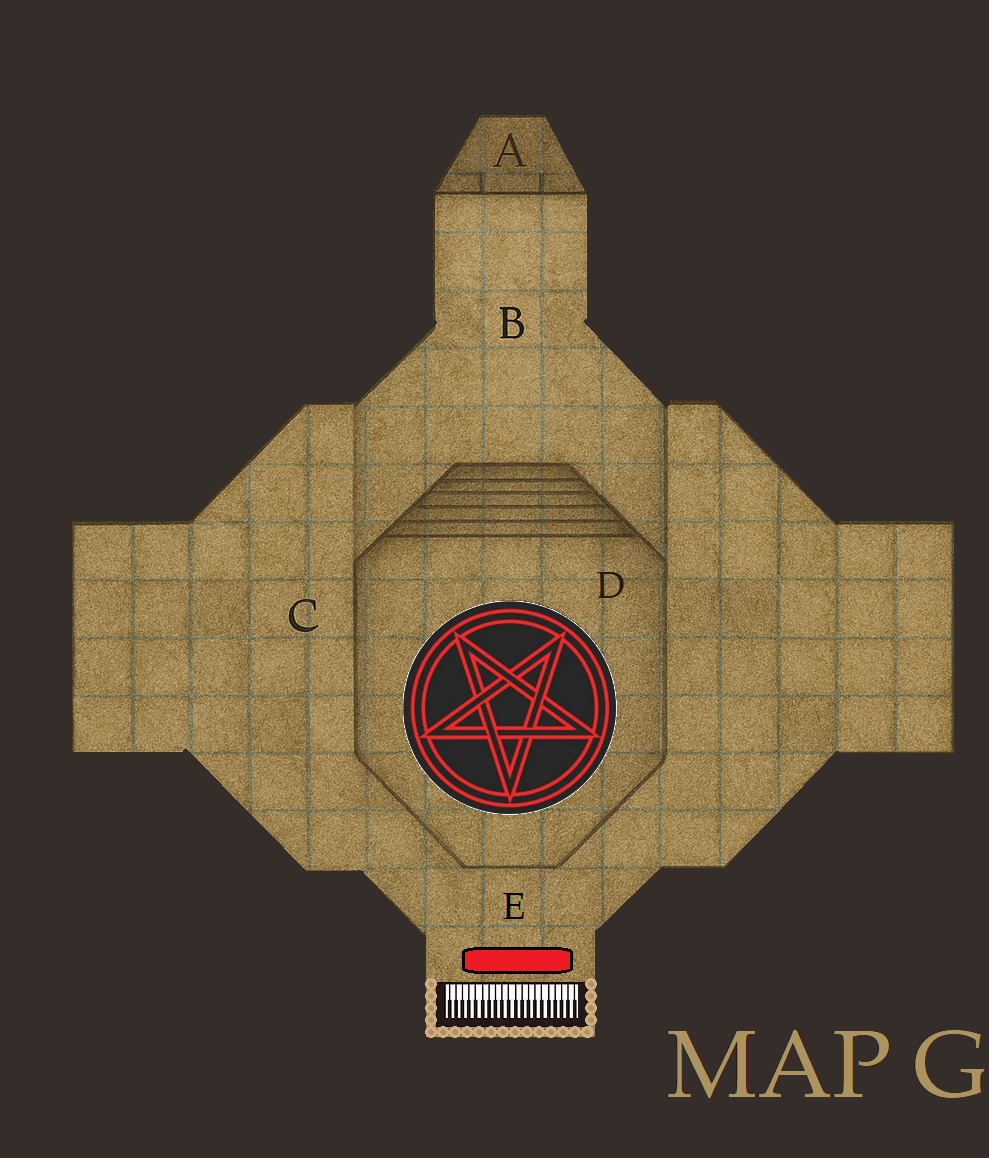
Map G
The City
2. Foreign TemplesReligious Diversity: The district of Foreign Temples is a unique and vibrant enclave within the city, serving as a sanctuary for a wide variety of religious practices from outside of Nwalme. This area is home to a collection of temples dedicated to gods, spirits, and deities that originate from far off lands, each offering a distinct set of rituals, beliefs, and cultural expressions. While the term "foreign" suggests these faiths are not native to the city, the temples are an integral part of the social and spiritual fabric of the city, especially for immigrants and outsiders who bring their own traditions and deities with them. Unlike other districts where local customs dominate, the Foreign Temples serve as a space of both religious freedom and separation, allowing these diverse faiths to coexist, albeit in their own spaces. The very presence of this district reflects a certain level of religious tolerance or, at the very least, a pragmatic understanding of the need to accommodate different belief systems. However, this coexistence is not without tension, as some of the native population may view these foreign practices with suspicion or disdain, creating an undercurrent of social friction. Cultural Exchange: The Foreign Temples district not only serves as a spiritual home for the city's immigrant communities but also as a crossroads of cultural exchange. These temples are often more than just places of worship; they are vibrant hubs where cultural practices, arts, and traditions from various lands are shared, traded, and celebrated. Pilgrims from distant lands may travel to these temples to honor their gods, while local residents curious about foreign customs might attend festivals, ceremonies, or teachings held in the temple courtyards. In this district, the melding of diverse traditions, whether through art, music, food, or language, creates an atmosphere that is rich with contrasts and cross cultural influences. This interaction can lead to the blending of religious practices, with some local customs slowly being incorporated into foreign rituals, and vice versa. Markets surrounding the temples might offer exotic goods, rare herbs for ritual use, sacred relics, and artifacts that draw people from all over the city. The Foreign Temples also serve as a place of diplomacy, where representatives from distant lands or regions might meet with the city's leaders or other religious figures to discuss matters of trade, alliances, or even theological differences. These exchanges are essential to the city's role as a melting pot of ideas and beliefs, highlighting the dynamic nature of the city's cultural identity. For those who follow the native deities, the presence of these foreign temples may be seen as both a source of fascination and concern. While some are curious and open to the foreign influences, others may view these temples as symbols of foreign influence encroaching on their own religious traditions. The district may, at times, be a battleground for ideological and religious debates, with clashing opinions on the role of foreign practices in the city's life. 3. Antisolar InstituteScientific and Magical Research: The Antisolar Institute is a prestigious and enigmatic institution that stands at the forefront of both scientific inquiry and arcane exploration. It is a place where scholars, magicians, and even those on the fringes of society gather to study celestial phenomena, with a particular focus on solar cycles, eclipses, and the mysterious forces that oppose the sun itself. This institute is dedicated to the understanding of phenomena that transcend ordinary knowledge, be it solar phenomena, astral alignments, or the arcane secrets of light and shadow. The term "antisolar" suggests a fascination with the forces that oppose the sun's natural order, hinting at a more complex and possibly dangerous pursuit of forbidden knowledge. The institute is a place where knowledge is not bound by conventional morality or social norms, often pushing the boundaries of what is understood as "safe" scientific or magical practice. While much of the work here may be considered groundbreaking, it often delves into areas deemed taboo or dark. Researchers at the Antisolar Institute may be investigating ancient prophecies about eclipses that could signal world altering events, or exploring esoteric magic that harnesses the power of the moon, shadows, or the very absence of light. The studies conducted within its walls not only challenge established understanding but may also push the boundaries of what is considered acceptable, resulting in ethically ambiguous practices. As a result, the institute carries with it a reputation for harboring controversial experiments and dangerous magical endeavors, where the thirst for knowledge often outweighs the potential risks. Powerful Artifacts: Within the Antisolar Institute's vast, secretive vaults, it is rumored that rare and powerful artifacts are studied, contained, or even created. These artifacts, tied to the celestial or anti solar forces, could be relics of forgotten civilizations, relics with the power to influence or alter the natural world in profound ways. They might be objects capable of harnessing the energy of eclipses, controlling the flow of light and shadow, or even manipulating time itself. The institute may also harbor forbidden tomes, scrolls, and magical implements that hold dangerous knowledge, the kind that could potentially unravel the very fabric of reality if used recklessly. The nature of these artifacts is both alluring and terrifying. Scholars and magicians alike are drawn to the promise of unlocking these powerful relics, but at what cost? These items, said to be imbued with ancient and otherworldly energies, may carry dark curses or have unforeseen consequences when wielded by those who are unprepared or careless. The power that the Antisolar Institute commands makes it a place of both great opportunity and inherent danger, with those who seek its knowledge often walking a fine line between genius and madness. Influence on Society: The Antisolar Institute holds considerable influence within the city, especially among the intellectual elite and those seeking arcane power. Its findings and discoveries shape both scientific and magical thought, attracting ambitious students, scholars, and powerful figures who seek to understand the mysteries of the cosmos. However, the institute's pursuit of knowledge is not without its critics. Many see it as a hub of dangerous magic, where the pursuit of forbidden knowledge comes at the expense of ethics and moral boundaries. Its work could provoke fear and distrust among the general populace, especially if its discoveries begin to manifest in ways that threaten the natural order or the balance of power within the city. 4. Spire of the EncyclicKnowledge Repository: The Spire of the Encyclic stands as one of the most awe inspiring structures in the city, a towering monument dedicated to the endless pursuit of knowledge. Rising high above the surrounding landscape, this towering spire houses vast, labyrinthine libraries, magical archives, and scrolls filled with arcane lore, scientific treatises, and ancient texts. It is a place where the written word and the arcane meet, preserving the accumulated wisdom of countless generations. Scholars, wizards, philosophers, and researchers from every corner of the city, and beyond, flock to the spire in search of answers to questions both profound and obscure. Within its walls, there are countless volumes, from texts that delve into the mysteries of the cosmos to those that explore the darkest corners of forbidden magic. Its shelves are said to contain books whose pages whisper with ancient power and whose ink may shift with the tides of time. The spire is not merely a library, however. It serves as a dynamic center for intellectual discourse, attracting the brightest minds who engage in heated debates, collaborative research, and philosophical inquiries. Every level of the spire is dedicated to different fields of study, with rooms designed for solitary meditation, group discussions, or intensive magical experiments. Here, the line between academic knowledge and mystical understanding is often blurred, with researchers constantly pushing the boundaries of both. In this sacred space of learning, knowledge is pursued not just for practical use but also for the pure joy of uncovering the mysteries of the universe, regardless of the dangers it may uncover. Religious and Academic Intersection: The term "encyclic" derives from the word "encyclical," which refers to something universally applicable or all encompassing. This suggests that the Spire of the Encyclic is not just a place for secular scholarship but also a symbolic intersection of religious and academic thought. It is a place where scholars of various faiths and philosophies come together to explore the deeper meanings of existence, the divine, and the nature of the cosmos. The spire may house temples, shrines, or chambers dedicated to specific deities or spiritual beliefs, blending the study of religion with the pursuit of knowledge in a harmonious way. Here, religious scholars engage in theological debates, while philosophers challenge the very nature of existence itself. The spire serves as a bridge between the material and the divine, where the study of sacred texts and arcane knowledge go hand in hand. Priests, wizards, and philosophers alike come to the spire seeking to understand the greater mysteries of the world, with no subject beyond the reach of inquiry. The blending of the academic and the divine in this structure is a testament to the city's belief in the importance of both intellectual pursuit and spiritual understanding. The spire encourages the idea that true knowledge cannot be compartmentalized into just one domain, it must be universal, encompassing both the physical and the metaphysical. Guardian Scholars and Custodians: The Spire is also protected by a select group of scholars known as the Guardian Custodians. These individuals are tasked with safeguarding not only the knowledge contained within the spire but also the integrity of the knowledge itself. They are both protectors and curators, ensuring that the information stored within the spire is not misused or tampered with. The Guardian Custodians are revered not only for their intellectual prowess but also for their strict adherence to ethical codes regarding the use of knowledge. Their role as gatekeepers is crucial, as some of the research and texts within the spire hold the potential for immense power, or even catastrophic consequences, if used irresponsibly. Symbol of Unity and Division: In the city, the Spire of the Encyclic stands as both a symbol of unity and division. On one hand, it represents the city's dedication to the pursuit of knowledge, where different fields of thought come together to form a cohesive whole. It is a place where collaboration across disciplines is not only encouraged but is the very foundation of its purpose. On the other hand, the spire's lofty ideals can also create a sense of division, as the pursuit of knowledge here is often seen as a privilege reserved for the most learned and those with access to its higher echelons. While many scholars and magic users may gain entry, the common folk are often left to wonder about the secrets contained within its towering walls. The spire's design reflects its dual nature, its architecture is grand and open, symbolizing transparency and accessibility to all who seek knowledge, yet its towering height and vast size suggest that the pursuit of knowledge is a lofty endeavor, attainable only by those who can dedicate themselves to the long, arduous path of learning. The Spire of the Encyclic, in this way, serves both as a beacon of intellectual achievement and as a reminder of the complex, sometimes exclusionary nature of true understanding. 5. Twilight GalleryArtistic and Cultural Hub: The Twilight Gallery is one of the most vibrant and dynamic districts in the city, serving as a central hub for artistic expression, cultural exploration, and intellectual discourse. This district is home to a wide array of galleries, exhibition halls, and performance spaces, where artists, musicians, dancers, and intellectuals converge to showcase their works, exchange ideas, and push the boundaries of creative expression. The name "Twilight" itself is evocative, suggesting a place where the interplay between light and shadow is explored both literally and metaphorically. It is a space where the ethereal and the grounded meet, where the boundaries between day and night blur, and where the fleeting moments of transition are celebrated through various forms of artistic expression. Within the Twilight Gallery, visitors are often greeted by works of art that explore the dualities of life, light and darkness, joy and sorrow, reality and illusion. The district is known for its avant garde exhibitions that challenge conventional ideas, provoking thought and conversation on topics ranging from politics to personal identity. The atmosphere is one of constant creative tension, where emerging artists rub shoulders with established masters, and new forms of art are constantly being birthed. Here, traditional mediums like painting, sculpture, and music exist side by side with experimental art forms, interactive installations, and performance art, creating a constantly evolving landscape of creativity. Public Engagement: The Twilight Gallery is not just a private sanctuary for the elite or the avant garde; it is deeply integrated into the fabric of the city and serves as a place of public engagement. Public ceremonies, festivals, and performances are regularly held in the district, blurring the lines between art, entertainment, and civic duty. These events are often grand spectacles, designed to both entertain and inspire, but also to reflect the social and political dynamics of the city. Whether it's a theatrical production that challenges the status quo, a musical performance that evokes deep emotional response, or a street performance that brings art directly into the lives of the common people, the Twilight Gallery ensures that art remains accessible to all, not just a privileged few. In addition to public performances, the gallery also serves as a space for political and philosophical discourse. It hosts forums, lectures, and debates where artists, scholars, and citizens alike gather to discuss the pressing issues of the day. This blending of art and civic life makes the Twilight Gallery an essential part of the city's cultural and political landscape, where artistic expression is not just a form of entertainment, but a powerful tool for social change, reflection, and dialogue. The gallery becomes a mirror for the city's soul, a place where the public can see both the beauty and the struggles of their society reflected in the art around them. Themes of Dusk and Transition: The name "Twilight" is not only symbolic of the district's aesthetic and atmosphere but also reflects its thematic focus. The Twilight Gallery is a place dedicated to the exploration of liminality, the space between one state and another. It is a place where transitions occur, whether that be the transition between day and night, youth and age, life and death, or innocence and experience. The art here often focuses on these moments of change, capturing the ephemeral nature of existence and challenging the viewer to confront their own understanding of time, identity, and transformation. The district itself reflects these themes of transition in its design, with winding, labyrinthine streets that seem to shift and change as one moves through them. The architecture blends elements of both the past and the future, with ancient stone structures sitting alongside modern, experimental designs. The twilight hours, when the city is neither fully day nor fully night, seem to imbue the district with a sense of mystery and anticipation. It is in these moments that the most thought provoking art is often created, as the boundary between the known and the unknown becomes blurred. Legacy and Influence: The Twilight Gallery is a place of great cultural importance, not just within the city, but in the broader artistic world. The works produced and displayed here often resonate far beyond the walls of the district, influencing the cultural landscape of neighboring cities and regions. Artists who make their mark in the Twilight Gallery are often regarded as trailblazers, setting trends and challenging the norms of their respective artistic fields. As such, the district holds a place of immense prestige in the creative world, with many aspiring artists and performers hoping to have their works displayed or performed here. The influence of the Twilight Gallery stretches across generations, shaping not only the current artistic landscape but also the future of creativity itself. 6. Aisle of ScribesRecord Keeping and Literacy: The Aisle of Scribes is a vital district dedicated to the preservation of knowledge and the maintenance of the city's written legacy. This area is home to scribes, record keepers, historians, and writers, all of whom play an essential role in ensuring that the city's history, laws, and culture are meticulously documented and passed down through the generations. The district is a bustling center of intellectual labor, where the written word holds immense power and importance. Here, the art of writing is revered, and literacy is seen as the foundation of both social order and intellectual advancement. The scribes of the Aisle are tasked with recording everything from legal contracts and royal decrees to personal letters and public speeches, preserving the city's identity and ensuring that its history is never forgotten. The Aisle of Scribes is a district where every piece of parchment, every scroll, and every inked page carries the weight of the city's legacy. The scribes themselves are highly respected members of society, their skills in reading and writing considered indispensable for maintaining the structures of governance, law, and communication. Literacy is not only a tool of personal advancement in this district but also a critical means of maintaining the stability and cohesion of the city. The work of the scribes is seen as sacred, for through their efforts, the stories of the city's triumphs and tragedies, its rulers and commoners alike, are preserved for future generations. Official Documents: The Aisle of Scribes serves as the repository for the city's most important documents. Here, legal records, governmental decrees, sacred texts, and official correspondence are written, stored, and safeguarded in massive archives and scroll chambers. The district houses public scribes who are responsible for drafting laws, treaties, and contracts that govern the daily lives of the city's inhabitants. It is also home to the keepers of the city's sacred texts, religious scriptures, divine laws, and sacred rituals are carefully transcribed by scribes dedicated to the preservation of spiritual and divine knowledge. These texts are revered not only for their content but also for the manner in which they are written, often in beautifully ornate scripts or illuminated with intricate designs, reflecting the importance of these works to the city's culture. These documents are stored in vast libraries, vaults, and protected chambers, where they are meticulously organized and kept secure. Only the most trusted scribes and archivists are allowed access to these sacred vaults, ensuring that the most critical pieces of the city's history and governance are protected from corruption, theft, or damage. In a city where the written word holds such immense power, the scribes are seen as the gatekeepers of truth and knowledge, trusted with the task of recording not only what has been, but also what is to come. The importance of their work is reflected in the reverence with which they are regarded by the city's elite, and in the careful preservation of every document they create. Intellectual Labor and Scholarly Pursuit: The Aisle of Scribes is not merely a district for record keeping and documentation but also a center for intellectual inquiry and scholarly pursuits. Within its confines, scholars and philosophers gather to engage in the exchange of ideas, debating topics of law, philosophy, and governance. The scribes themselves often play a role in these debates, serving as recorders of these intellectual exchanges, ensuring that the fruits of their discussions are preserved for posterity. The Aisle is a place where the written word is not only used to preserve history but also to shape it, where new ideas are written down, debated, and refined, contributing to the ongoing evolution of the city's culture and intellectual life. The scribes also act as advisors to the ruling elite, their knowledge of the city's laws, history, and traditions making them invaluable in shaping the decisions of the government. Their role as both recorders of the past and interpreters of the present makes them a powerful force within the city, their influence felt in every aspect of civic life. The district is a place where the past and present are constantly in dialogue, with scribes acting as the link between them, ensuring that the lessons of history are never lost. Public and Private Life: While the Aisle of Scribes is most often associated with formal and governmental record keeping, it also plays a significant role in the daily lives of the city's citizens. Many people visit the district to have their personal matters written down or transcribed, letters, wills, contracts, and petitions are all services provided by the scribes to the common people. The Aisle is a place where the personal and public intersect, where the stories of individuals are preserved alongside the grand narratives of the city's rulers and leaders. Through their work, the scribes give voice to both the elite and the commoner, ensuring that every story, no matter how small, is documented and remembered. Legacy of the Scribes: The legacy of the Aisle of Scribes is built upon centuries of careful documentation and intellectual labor. It is a district that prides itself on its role in preserving the collective memory of the city and its people. The work done here is not only practical but deeply cultural, it shapes the identity of the city, keeping the knowledge of its ancestors alive and ensuring that future generations have access to the lessons of the past. The scribes of the Aisle are more than mere documenters; they are the guardians of the city's history, and their work provides the foundation upon which the future of the city will be built. 7. Ghetto of ArtisansCraftsmanship and Trade: The Ghetto of Artisans is a bustling and industrious district where the heart of the city's craftsmanship thrives. It is home to a diverse range of skilled workers, blacksmiths, tailors, carpenters, weavers, potters, glassblowers, and countless other craftsmen who have honed their trades over years, if not generations. This district is a place where raw materials, wood, metal, fabric, clay, and more, are skillfully transformed into valuable, practical, and artistic goods that are highly sought after across the city. The air is thick with the sounds of hammering metal, the rhythmic click of weaving looms, and the scent of freshly cut wood and dye. Each artisan brings their unique skills to life, creating everything from simple tools to intricate works of art, such as finely crafted armor, embroidered garments, decorative pottery, and furniture that blends beauty with function. The Ghetto of Artisans is a true testament to the value of labor and craftsmanship, where hands on work is celebrated as a form of art. The district is filled with workshops, many of which open their doors to customers, allowing the public to see firsthand the dedication and expertise required to produce these goods. Every piece that leaves the hands of an artisan tells a story of mastery, perseverance, and creative vision, and the artisans are deeply respected for the skill and precision they bring to their work. This district is a hub of creative ingenuity, where practical needs are met with an artistic touch, and the raw material of the city is transformed into something of lasting value. Economic Backbone: The Ghetto of Artisans is not just a center for craft and creativity, it is also a vital part of the city's economic engine. The goods produced here are essential to the functioning of both the lower and upper classes. The artisans provide everyday tools, utensils, clothing, and furniture that are necessary for life in the city. Additionally, their creations also serve as luxury items for the wealthy elite, fine fabrics, intricate jewelry, and ornate weapons or armor. This diversity in production makes the district an indispensable part of the city's economy, supplying both basic necessities and high end luxury goods. The economy of the city relies heavily on the Ghetto of Artisans, as it is the primary source of the goods that fuel both daily life and trade. The district's artisans often trade their creations with neighboring districts or even across borders, with some goods becoming coveted exports. The workshops in this area may also supply the military, nobility, and merchants with specialized items, ranging from weaponry and armor to finely crafted wares used in ceremonies or celebrations. The level of craftsmanship in the Ghetto of Artisans is unparalleled, and the goods produced here are often seen as status symbols, adding prestige to the buyers and reinforcing the artisans' position as pillars of the city's economy. Social Structure and Identity: Although the Ghetto of Artisans is home to skilled laborers and workers, the artisans are far from being considered lowly or unimportant. The work they produce is of such high quality that they are regarded as an essential part of the city's identity. In many ways, they are the backbone of the city's social and material infrastructure. The artisans take great pride in their work, and there is a deep sense of community and solidarity among the people of the district. It is not uncommon for families to pass down their trade from generation to generation, with young apprentices learning the skills of their elders in the bustling workshops that line the streets. This familial approach to work creates strong bonds between the artisans, and the Ghetto of Artisans has a distinct, close knit atmosphere where everyone knows each other and contributes to the prosperity of the district. Despite the respect given to their skills, however, the artisans are still often considered a separate class within the city's broader social hierarchy. They work tirelessly to support both the commoners and the elite, yet they remain physically and socially separated from the higher echelons of society. The Ghetto of Artisans, while essential to the city's economy, is a place that has been shaped by labor and industry, and while it holds pride in its work, it often does not share in the wealth and luxury enjoyed by the ruling classes. Innovation and Tradition: The Ghetto of Artisans is a district where innovation and tradition coexist in harmony. While the craftsmen here are deeply rooted in the time honored techniques of their trades, they are also constantly experimenting and pushing the boundaries of what is possible. New methods of production, innovative designs, and cutting edge technology may be developed within the district's workshops, keeping the artisans at the forefront of their respective crafts. Whether it is a new type of armor, a more efficient way of weaving, or a fresh approach to pottery design, the artisans are always looking for ways to improve their craft and meet the ever changing demands of the city. This blend of innovation and tradition ensures that the Ghetto of Artisans remains a vibrant and evolving district, where the pursuit of excellence is balanced with a respect for the past. In many ways, the district symbolizes the strength of the city itself, rooted in its history, yet constantly adapting to the future. The Ghetto of Artisans is a place where the skills of the past meet the possibilities of the future, creating a rich, dynamic community that contributes to the life and soul of the city. 8. Ghetto of PerformersCultural and Artistic Expression: The Ghetto of Performers is a vibrant, energetic district where creativity and talent converge to form the cultural heartbeat of Nwalme. This district is dedicated to the arts in all its forms, musicians, dancers, actors, acrobats, poets, and other performers find their home here, giving rise to a dynamic environment of constant artistic expression. Streets are lined with open air theaters, impromptu stages, and performance spaces, where artists can showcase their talents to the public. The atmosphere is alive with music, movement, and the sound of applause, as crowds gather to witness impromptu performances, street plays, and musical concerts. The Ghetto of Performers is not just a place to create art, it is a living canvas where every corner, every alley, and every open space becomes a stage for artistic expression. Public festivals, theatrical productions, dance recitals, and concerts are regular occurrences in this district, drawing spectators from all walks of life. The artistic energy here is palpable, with performances often spilling into the streets, creating a vibrant tapestry of color, sound, and movement. Whether it's a dramatic street performance exploring political themes, a folk dance that tells the story of the city's history, or a musical concert blending traditional and contemporary sounds, the Ghetto of Performers is a place where art comes to life, constantly evolving with the spirit of the people. More than just a district, the Ghetto of Performers represents a living, breathing reflection of Nwalme's cultural identity. Here, the boundaries between different art forms blur as musicians collaborate with dancers, actors work alongside poets, and all forms of expression come together to create a unique cultural fusion. It is a district that thrives on diversity, encouraging artistic experimentation and the celebration of the city's rich cultural tapestry. Social Mobility: Despite the rigid class divisions that define much of the city, the Ghetto of Performers offers a rare opportunity for social mobility. In a society where status and birth often determine one's place in life, performers have the potential to rise above their social class through talent, charisma, and hard work. The streets of this district are filled with aspiring artists hoping to gain recognition and build a reputation. Those who manage to capture the attention of influential patrons, noble families, or even the general public can see their fortunes change overnight. For the talented, the Ghetto of Performers can serve as a launchpad for greater opportunities. A dancer's graceful movements or a singer's captivating voice might catch the ear of a noble patron, leading to performances at lavish events or even an invitation to perform before the city's elite. Actors and playwrights might rise to fame through their performances in grand theaters or on the city's public stages, eventually gaining fame and wealth that allows them to transcend the limitations of their birth. These success stories are often the subject of city gossip, inspiring hope among the district's residents that talent and perseverance can lead to greater recognition and influence, even in a city defined by rigid social structures. However, the road to social ascent is not easy, and the Ghetto of Performers is filled with those who have struggled for years to be noticed, many of whom live in obscurity despite their exceptional talents. The fierce competition and the transient nature of fame mean that only a few ever achieve lasting success. Yet, the dream of rising above one's station is what fuels the artistic energy in this district. Every performance is a chance for an artist to prove themselves, and every show could be the one that changes their life. Cultural Exchange and Innovation: The Ghetto of Performers also acts as a melting pot of cultural influences. Performers from different regions, backgrounds, and traditions come together in this district, bringing with them unique artistic forms and styles. This exchange of cultural practices and ideas leads to the creation of innovative performances that blend different artistic traditions. Dances from distant lands are fused with local music, theatrical performances incorporate diverse storytelling techniques, and poetry reflects the various dialects and languages spoken across the city. In this district, experimentation is encouraged, and the blending of cultures fosters new forms of expression that are unique to Nwalme. Artists here are not bound by tradition, they are free to challenge norms, innovate, and create something entirely new. The district is constantly evolving, driven by the creativity and openness of its performers. This spirit of innovation is what makes the Ghetto of Performers a vital part of the city's cultural landscape, as it consistently pushes the boundaries of artistic expression and brings new ideas to the forefront of public life. A Hub of Entertainment and Political Influence: While the Ghetto of Performers is first and foremost a district of art and culture, it also has an undeniable influence on the political and social fabric of the city. Performances often touch on important societal issues, whether subtly or directly, and can serve as a form of social commentary. The Ghetto of Performers, in its creative freedom, becomes a platform for discussing politics, power, inequality, and injustice. Performers often use their art to critique the status quo, challenge the ruling classes, and give voice to the voiceless. As such, the district serves not only as a center of entertainment but also as a place of political influence. Performances that critique the nobility or the ruling elite can lead to public discourse and even political action, with artists sometimes becoming unexpected leaders of social movements. The Ghetto of Performers has, in the past, sparked revolutions and protests, with its artists leading the charge for change through the power of performance. Though this influence is often subtle, it is nonetheless an important part of the district's legacy. 9. Ceremonial ArenaPublic Rituals and Events: The Ceremonial Arena is one of the most imposing and symbolic structures in the city, serving as a grand venue for a wide array of public ceremonies, rites of passage, and celebrations. This arena is the focal point where the city's most important events are brought to life, offering a space for both solemn rituals and extravagant spectacles. From the coronation of rulers to the celebration of annual festivals, the arena is a place where the public gathers to witness moments of collective significance. Whether it is the honoring of a hero, the commemoration of a historical event, or the public declaration of new laws, the arena serves as the stage for the city's most important moments. The arena is also the site of more intense and dramatic displays of power, such as gladiatorial contests, military parades, and public trials. These events not only provide entertainment but serve as demonstrations of the strength, control, and authority of the ruling powers. Gladiatorial combat, where combatants engage in brutal and often fatal combat, is a highly anticipated event, drawing crowds who seek both the thrill of bloodsport and the reaffirmation of the power held by those in charge. Public executions may also take place in the arena, offering a grim reminder of the consequences of defying the law, with the spectacle of punishment reinforcing the authority of the state. In this arena, the line between entertainment and statecraft is often blurred. The arena becomes a powerful tool in the hands of the rulers and elites, where they can manipulate the masses, distract them from social issues, or simply reinforce their status. The grand scale of the arena itself, its towering walls, elaborate seating, and the vast space in the center, symbolizes the power and influence that the ruling class wields over both the city and its people. For the citizens, the arena represents both the thrill of participation in the grandeur of public life and the reminder of their place within the city's rigid social hierarchy. Religious Significance: In addition to its role as a center for political and social events, the Ceremonial Arena also holds significant religious importance. The arena's grandeur and central location make it an ideal space for religious rituals, festivals, and ceremonies. These events may blend elements of both religious observance and public spectacle, serving as powerful tools for reinforcing religious and political unity. The arena could host sacred rites associated with the worship of the city's deities, where priests and clergy perform elaborate ceremonies designed to honor the gods and seek their favor for the kingdom's prosperity and security. Religious festivals often bring together the masses in celebration of the gods, with processions, music, dancing, and sacrifices performed in the heart of the arena. These ceremonies are not merely acts of devotion, they are also public affirmations of the city's spiritual health and the divine legitimacy of its rulers. By hosting such events in the arena, the leadership can draw a direct link between divine favor and political power, making the arena a site of both spiritual and secular authority. The blending of politics, religion, and entertainment creates a unique spectacle that unites the people in a shared experience, reminding them of the interconnectedness of their civic and spiritual lives. The religious significance of the arena is further underscored by its symbolic design. The arena's architecture may be built to represent the cosmic order, with its central space symbolizing the heart of the world or the universe, and the surrounding seats representing the people, the gods, or the forces of nature. The arena thus becomes a microcosm of the world, where both earthly and divine forces are believed to come together, reinforcing the idea that the power of the state is divinely ordained and unassailable. Political and Social Impact: Beyond the spectacles and ceremonies, the Ceremonial Arena plays an essential role in the city's social and political life. It is a site where the rulers can engage directly with their people, presenting themselves as powerful, just, and connected to the divine. Public ceremonies allow the ruling elite to reinforce their authority, with the audience's collective participation in the events serving to strengthen their loyalty and sense of unity with the state. However, the arena is also a place where political power is often on display in more subtle ways. During festivals or important political events, speeches may be made from the center of the arena, where the leaders directly address the people, solidifying their control over the city's narrative. The arena, in this way, is as much a tool of political propaganda as it is a site for religious devotion or entertainment. The spectacle itself becomes a form of governance, where the leaders ensure that their power is visible and unquestioned in the eyes of the public. Moreover, the arena plays a crucial role in reinforcing the social order. Gladiatorial games, public trials, and executions serve as reminders of the consequences of defying the law or challenging authority. The events in the arena act as both a tool for social control and a spectacle for the masses, reinforcing the city's hierarchy and reminding the population of their place within it. In this way, the Ceremonial Arena is not just a physical space, it is a critical aspect of the city's political machinery, designed to both entertain and control. 10. Ghetto of ScholarsIntellectual Hub: The Ghetto of Scholars is the heart of intellectual activity in the city, housing its brightest minds, researchers, philosophers, academics, and theorists, who are dedicated to the pursuit of knowledge, enlightenment, and the exploration of new ideas. This district is home to libraries filled with ancient manuscripts, rare tomes, and arcane texts that attract scholars from all corners of the city. Within the Ghetto, one can find lecture halls, study chambers, and forums where ideas are exchanged, debated, and challenged. It is a space where knowledge is both revered and questioned, and where scholars push the boundaries of what is understood, from the natural world to the metaphysical, from scientific inquiry to the study of philosophy and the arts. The Ghetto of Scholars is not merely an academic district but a vibrant intellectual community, united by the shared goal of discovering the unknown and exploring the mysteries of existence. The district itself is a labyrinth of winding streets, lined with towering libraries and quiet study halls, each offering a place of contemplation and inquiry. Here, silence is revered, broken only by the soft murmur of debate or the scratching of quills against parchment. The intellectual elite of the city gather in this space to read, write, and converse, contributing to the ongoing flow of ideas that shape the city's culture. The Ghetto of Scholars is as much about the intellectual energy that permeates its streets as it is about the physical buildings and institutions, it is a place where ideas are born, tested, and refined. Philosophical Divisions: Within the Ghetto of Scholars, the pursuit of knowledge is not without its divisions. Scholars are often organized into different schools of thought or philosophical factions, each with its own set of beliefs, methods, and areas of focus. These factions, ranging from schools of scientific reasoning to those of mysticism and metaphysics, engage in constant intellectual sparring, with each group striving to prove the validity of its approach to understanding the world. Debates are frequent, and the exchange of ideas is as much a form of intellectual combat as it is a collaborative effort. Scholars may find themselves aligned with certain traditions or ideologies, but new schools of thought are constantly emerging, and old ones are challenged, reshaped, or abandoned in the light of new discoveries and ideas. The intellectual divisions within the Ghetto of Scholars create a dynamic and ever evolving landscape of thought. Some scholars might focus on the natural sciences, seeking to uncover the laws of the universe through observation and experimentation, while others might delve into the mystical arts, exploring the hidden forces of magic and the arcane. Still, others may concentrate on philosophy, law, and ethics, wrestling with the nature of reality, the human condition, and the principles that govern society. These factions not only shape the way knowledge is pursued within the district but also influence the larger society, as their ideas often spill out into public life, shaping politics, religion, and culture. In addition to these philosophical factions, the Ghetto of Scholars is home to a number of prestigious academic institutions, each with its own specialized focus, be it astronomy, alchemy, literature, or the study of ancient civilizations. These institutions act as hubs of learning, attracting the best minds from across the city and beyond, and are often at the forefront of new discoveries and ideas. The scholars who emerge from these institutions are regarded as the intellectual elite, and their works, whether in the form of published treatises, lectures, or experiments, are highly influential in shaping the intellectual direction of the city. Centers of Learning: The district is home to numerous libraries, each specializing in different fields of study. Some libraries are vast, containing entire collections dedicated to one particular subject, while others are smaller, focused on niche topics. The largest and most renowned library in the Ghetto of Scholars is the Archon Library, a colossal structure that houses an unparalleled collection of manuscripts, scrolls, and magical texts. Scholars travel from all over to consult its vast resources, and the library itself is considered a pilgrimage site for those seeking the highest levels of knowledge. Other institutions in the district, such as the Academy of Arcane Arts or the Philosopher's Forum, are also centers of specialized learning, offering lectures, workshops, and seminars to further intellectual inquiry. These centers of learning play a vital role in both educating the next generation of scholars and fostering ongoing research that drives the city's cultural and intellectual evolution. Intellectual Freedom and Tension: The Ghetto of Scholars is a place where intellectual freedom thrives, yet it is also a space filled with tensions. The freedom to question, challenge, and explore new ideas is seen as the foundation of scholarly pursuit, and within the Ghetto, these principles are upheld above all else. However, this freedom can lead to friction, both between factions and between scholars and the ruling powers. Some ideas, especially those that challenge traditional beliefs or the status quo, can be seen as dangerous or subversive. Scholars who push the boundaries too far may find themselves censored, exiled, or persecuted, especially if their theories or discoveries conflict with the political or religious authorities. Despite these challenges, the Ghetto of Scholars remains a space where ideas, no matter how controversial, can flourish, and where intellectual thought is both a source of power and risk. Legacy of Knowledge: The Ghetto of Scholars holds a significant place in the city's history and future. It is the birthplace of ideas that shape not only the academic landscape but also the cultural, political, and spiritual fabric of the city. The legacy of the scholars who pass through this district, whether in the form of written works, teachings, or innovations, continues to influence the city long after their lifetimes. The Ghetto of Scholars represents the city's commitment to the pursuit of knowledge, and its role in shaping the minds that will lead the city into the future. 11. Ghetto of ForeignersCultural Segregation: The Ghetto of Foreigners is a district set apart from the rest of Nwalme, dedicated to those who are considered outsiders to the city's dominant culture. This district is home to non natives, immigrants, expatriates, and those who do not fully belong to the city's primary cultural and social norms. Here, people from distant lands have built their own communities, preserving their unique customs, languages, and traditions. The district serves as a sanctuary for those seeking refuge or a new life, but it also reflects the city's deep rooted divisions between the native population and those who have come from outside its walls. Within the Ghetto of Foreigners, life is shaped by the customs and practices of its inhabitants. Markets are filled with exotic goods, spices, textiles, and artifacts from distant regions, offering a sensory journey into foreign lands. Festivals and religious observances native to these communities are celebrated openly, with colorful processions, songs, dances, and rituals that stand in stark contrast to the mainstream celebrations of the city. The district is alive with the sounds of different languages, offering a stark reminder of the city's diverse, multicultural makeup. Despite their segregation, the foreigners in this district continue to honor their ancestral traditions, creating a rich tapestry of culture and history that adds to the city's diversity. However, this cultural segregation is not without its challenges. While the Ghetto of Foreigners offers a sense of community and belonging to those within it, it also serves as a reminder of the exclusion that these people face. They are separated from the broader cultural, political, and economic life of the city, often relegated to lower social and economic status due to their outsider status. As a result, the district remains a site of both cultural preservation and marginalization, where the residents live side by side but remain physically and socially distinct from the native population. Ethnic and Social Divisions: The Ghetto of Foreigners is not only a place of cultural preservation but also one of social and economic inequality. While the district allows immigrants and expatriates to maintain their traditions, it is also a clear reflection of the city's broader ethnic and social divisions. Foreigners in this district often find themselves restricted to low paying, manual labor jobs, contributing to a deep seated economic stratification between the native population and those who live in the ghetto. The gap between the privileged few and the marginalized masses is stark, with the foreigners in the ghetto facing prejudice, discrimination, and limited access to resources that would allow them to integrate fully into the city's mainstream society. The divide between the foreigners and the native population is not only economic but also social. Foreigners are often viewed with suspicion or disdain by the native elite, with stereotypes and biases playing a role in the treatment they receive. While some may be able to rise above these barriers through exceptional talent or wealth, the majority remain confined to the ghetto, their opportunities limited by the very nature of their status as outsiders. This creates a clear demarcation between the two groups, where even the most basic acts of everyday life, such as shopping or attending public events, are experienced differently by the natives and the foreigners. Despite these divisions, the Ghetto of Foreigners remains a place of resilience and resistance. The diverse communities that call the district home often band together in solidarity, supporting one another in times of need and creating a network of mutual aid and protection. While they may be excluded from the broader social order, the people of the ghetto find strength in their shared experience and in the rich cultural identities that unite them. This sense of unity becomes a powerful force in the district, allowing its residents to weather the social and economic hardships they face and continue to preserve their heritage. Economic Role and Trade: The Ghetto of Foreigners plays an important role in the city's economy, even if it is often overlooked or undervalued by the elite. The district is a hub of trade, with foreign merchants offering goods that cannot be found elsewhere in the city. Spices, textiles, handcrafted items, and rare commodities are frequently traded within the ghetto, and the goods produced here often serve as vital components of the broader city's economy. While foreigners in the ghetto may struggle to access the highest levels of wealth and power, their labor and trade contribute to the prosperity of the city as a whole, particularly in the areas of craftsmanship, textiles, and food production. The ghetto, though segregated, is far from an isolated or insignificant part of the city, it is an integral, albeit often invisible, component of its economic engine. Assimilation and Conflict: Over time, some members of the foreign communities in the ghetto may seek to assimilate into the wider city, attempting to shed their outsider status in exchange for greater acceptance and opportunities. This can lead to tension within the district, as the desire for integration clashes with the deep ties to heritage and tradition that many foreign residents maintain. The attempt to assimilate often forces individuals to choose between loyalty to their cultural roots and the promise of a better life within the broader city. These tensions can lead to inner conflicts, both for individuals and the communities as a whole, as they navigate the complexities of belonging, identity, and survival. Moreover, there is always the threat of rising resentment or xenophobia within the city. The foreign population, despite its contributions to the city's wealth and diversity, is often treated as a symbol of “otherness,” which may fuel further divisions and conflict. Some native citizens may perceive the ghetto as a “dangerous” place, viewing the foreigners with suspicion or hostility, which can lead to clashes between the two groups. The Ghetto of Foreigners, in this sense, is not only a physical space of cultural and ethnic separation but also a site of political struggle, as the residents seek recognition and equality in a society that often marginalizes them. Legacy and Cultural Influence: Despite the hardships faced by its residents, the Ghetto of Foreigners contributes significantly to the city's cultural diversity and vibrancy. The unique traditions, languages, foods, and artistic expressions of the foreign communities influence the broader culture of the city, adding layers of complexity to its identity. Over time, elements of foreign culture, whether in the form of cuisine, fashion, music, or language, find their way into the mainstream of city life, enriching the city's cultural tapestry and challenging the dominance of the native culture. While the residents of the ghetto may be excluded from the city's elite circles, their contributions to the cultural and social fabric of the city cannot be denied, and their legacy, shaped by perseverance and resistance, continues to shape the city's identity. 12. Ghetto of SavagesMarginalized and Rejected: In a city like Nwalme, where order, sophistication, and intellectual achievement define the core of society, the Ghetto of Savages is a dark and forbidden corner of the urban landscape. This district is home to those who, for various reasons, have been cast out or pushed to the fringes of drow society. These may be individuals from lesser houses, outcasts who do not conform to the city's rigid hierarchy, or foreign individuals from primitive or barbaric backgrounds, be they surface dwellers, renegade dark elves, or tribes of subterranean creatures. The ghetto is a place for those who fall outside the ideal of the city's elite: those whose behavior, beliefs, or origins mark them as undesirable or unworthy of the esteemed status that Nwalme upholds. Stigmatization: The Ghetto of Savages is a place where the city's elite cast their unwanted aside. The residents of this district are looked upon with disdain, seen as a stain on the grandeur of Nwalme's nobility. Their language, whether it be the guttural, broken dialects of surface dwellers or archaic drow tongues long out of use, is foreign and alien to those in power. Their customs, often influenced by tribal or primal rituals, are viewed as beneath the refined, often ruthless sophistication of drow society. They are marked by their differences, whether in appearance, clothing, or their refusal to embrace the strict, insidious social order that governs the city. These outcasts may be covered in tribal markings, adorned with primitive jewelry, or dressed in clothing that marks them as outsiders. To the elite of Nwalme, they are "savages," symbols of everything that is wild, untamed, and undesirable. However, this stigmatization does little to silence the spirit of the ghetto's inhabitants. Far from being subjugated, the people of the Ghetto of Savages have built a defiant culture, one that cherishes its differences from the rigid social order above. What the city's upper echelons view as backwardness, the ghetto's residents regard as strength, strength that has endured in the face of persecution and isolation. While the rest of Nwalme prides itself on its intellect and dark arts, the Ghetto of Savages holds onto a different kind of power, one rooted in survival, resilience, and the ancient ways of the drow that are dismissed as inferior by the city's elite. Rebellion and Resistance: The Ghetto of Savages is not simply a place of poverty and exile, but a hotbed of resistance. Many of the outcasts are not content with simply surviving in the shadows, they are actively seeking ways to disrupt the status quo, to reclaim power from those who have cast them aside. These individuals often band together in secretive, underground factions, united by their shared resentment for the city's aristocracy. Whether through subversive acts of sabotage, shadowy dealings, or forbidden rituals, the ghetto's inhabitants work quietly to undermine the power of the ruling houses. To the highborn drow of Nwalme, the ghetto represents a simmering cauldron of danger, a reminder that beneath the veneer of civility lies a fierce, untamed spirit that could one day rise up to challenge their rule. Living Conditions: Life in the Ghetto of Savages is harsh, unforgiving, and gritty. The district is a maze of dark, winding alleys and crude, hastily constructed dwellings built from salvaged stone and wood, in stark contrast to the opulent, polished architecture of the city's noble quarters. The air is thick with the scent of smoldering incense, sweat, and the musty dampness of the Underdark, where mold and fungus thrive. Street markets sell a mixture of forbidden goods, exotic substances, and relics from ancient drow cultures that are no longer seen in mainstream society. The residents of the ghetto rely on barter, trading goods and services, as they have little access to the wealth and resources of the upper city. Crime and danger are rampant, with rival factions and gangs vying for control of the district's limited resources. Yet, in spite of these hardships, there is a fierce sense of community in the ghetto, an unspoken bond that ties the inhabitants together in their shared struggle for survival. Societal Divide: The divide between the Ghetto of Savages and the rest of Nwalme is a symbol of the city's deeply entrenched hierarchy. The ruling houses view the ghetto as a necessary evil, an unclean but inevitable consequence of their meticulous social structure. They allow the ghetto to exist, but only as a way to keep the "undesirable" elements of society contained, far from the prying eyes of the city's nobility. To the elite, the Ghetto of Savages serves as a reminder of what happens to those who fail to rise within the ranks, those who do not prove their worth. The drow aristocracy's reliance on their webs of intrigue, politics, and manipulation ensures that the divide remains, those who are born in the ghetto may never hope to rise, for the city's rigid class structure offers little chance for upward mobility. For the city's elite, the ghetto's existence is a way of maintaining control, by keeping the unwanted on the fringes, they ensure that the power dynamics remain unchanged. Underground Power: In the shadows of Nwalme's society, the Ghetto of Savages also houses those who wield power in less conventional ways. While the city's nobility controls the material wealth and political intrigue of the city, the outcasts of the ghetto often control the networks of smuggling, espionage, and black market magic. Some residents of the ghetto are skilled in forbidden magics that the ruling class deems too dangerous or primitive, arts long lost to the rest of the city but preserved in the deepest parts of drow culture. It is within these hidden depths of the ghetto that some of Nwalme's most potent threats lie, waiting to be unleashed. Despite the oppression, the Ghetto of Savages endures. It is a place of both suffering and pride, a place where the drow who have been cast out from Nwalme's polished surface can still retain their sense of identity, culture, and strength. The city's elite may call them "savages," but the people of the ghetto know the truth: they are survivors, and their day may yet come. 13. Ghetto of the DeadNecropolis or Burial Grounds: The Ghetto of the Dead is a district unlike any other in Nwalme, an eerie and somber place where the boundary between life and death is blurred. Here, the dead are honored, entombed, and venerated through elaborate burial rites and ancient ritualistic practices. This district serves as Nwalme's necropolis, a place where the ancestors of the city's noble houses are laid to rest in grand mausoleums, tombs, and crypts. Yet, unlike the polished mausoleums of the ruling elite, the tombs in the Ghetto of the Dead are often humble, weathered by time and neglect. Within this shadowy domain, spirits are not merely honored, they are believed to linger, their presence felt in the creaking of old stone, the flickering of lanterns, and the rustling of wind through the abandoned halls of forgotten tombs. For many, this district represents the final resting place of the city's ancestors, the spirits who guide and protect the living, but it is also a place where the dead's power continues to influence the living world. Unsettling Atmosphere: The atmosphere in the Ghetto of the Dead is thick with unease. The streets, winding and narrow, are lined with statues of forgotten deities, cracked memorials, and weathered gravestones that stand as silent sentinels over the deceased. The air is heavy with the scent of incense and myrrh, the lingering essence of offerings made to the dead. The district is illuminated by the soft glow of dim lanterns and flickering candles, casting long, dancing shadows on the cobblestones. Despite the reverence with which the dead are treated here, there is an unmistakable sense of foreboding, a haunting feeling that the spirits of the dead are never truly gone. Every corner seems to hold a whisper, and every shadow, a presence. For some, the Ghetto of the Dead is a place of reverence and spiritual connection, but for others, it is a place of fear and dark memories, where the city's oldest secrets may be buried. It is said that the souls of the departed still wander through this district, their restless energy ever present. This creates a strange dichotomy: while many of Nwalme's inhabitants come here to seek the favor of the dead, to commune with the spirits of ancestors or revered heroes, others avoid the district entirely, too fearful of the lingering eyes of the dead watching from the crypts, or the whispers that seem to emanate from the walls themselves. Those brave enough to enter the district are often greeted by the cold touch of an unseen hand or the faintest echo of voices long silenced, as if the spirits are ever vigilant over their tombs and crypts. Rituals and Spiritual Practices: Life in the Ghetto of the Dead revolves around death as a living, breathing force. The district is home to the necromancers, priests, and shamans who specialize in the rites of death, communication with spirits, and the dark arts of necromancy. These practitioners serve as both guardians of the dead and keepers of forbidden knowledge. Rituals are held regularly to honor the dead, some involving quiet prayers and offerings, others much darker and more dangerous, where the dead are summoned back into the world of the living, if only for a brief moment. Blood magic, spiritual divination, and communion with the souls of the departed are common practices here, as the residents seek to harness the power of the deceased in their own ways. Burial rites in the Ghetto of the Dead are particularly elaborate and sacred. Families of the deceased, particularly those from lesser houses or distant branches of noble families, often gather here to bury their dead with great care and reverence. The dead are laid to rest in stone carved crypts, each tomb a miniature mausoleum with its own rituals and protections. It is said that the more elaborate the tomb, the stronger the bond between the living and the dead. Some families even practice the dark tradition of embalming their dead and creating spiritual vessels, ensuring that their ancestors' power lingers on, guiding the family in the living world. Dangerous and Forbidden Magic: Though it is a place of reverence, the Ghetto of the Dead also harbors darker forces. Necromantic magic flows through the very earth here, and the unspoken rules of the district caution against disturbing the dead, unless one knows the proper rites. Many visitors are drawn to the Ghetto of the Dead not for its solemnity but for its potential power. Necromancers, forbidden scholars, and power hungry individuals seek to harness the spirits of the dead for their own purposes, often to disastrous results. There are whispers of forbidden rituals being conducted beneath the cover of night, where the souls of the dead are not honored but enslaved or used as tools for personal gain. It is said that some individuals, too desperate for power or too consumed by grief, attempt to bring back the dead, sometimes unleashing horrors that plague the district for years to come. Social Isolation and Mystery: The Ghetto of the Dead remains a place of isolation, not just from the rest of Nwalme, but even from the other districts that form the heart of the city. Those who live and work here are often seen as outcasts, their lives tied to the realm of the dead in ways that most drow fear or reject. Few outsiders venture into the district willingly, and even fewer are trusted by the residents. Those who work with the dead are often regarded with a mix of awe and fear, seen as both protectors and manipulators of the power of death. Within the district, a strange subculture has emerged, a blend of somber religious devotion and dark necromantic experimentation. The residents here live on the fringes of drow society, often misunderstood by the outside world, but finding strength in their connection to the dead. A Place of Peace... and Horror: Despite the eerie atmosphere and unsettling practices, the Ghetto of the Dead is also a place of peace for many. It is the final resting place for those who have passed, and in death, they find a kind of sanctuary. The district is serene, even in its darkness, with an air of finality that brings closure to the grieving. For those who seek solace in the presence of the dead, it is a place of quiet contemplation, where the worries of the living fade away, replaced by the weight of eternity. But for others, it is a reminder that death is never truly absent from life, it lingers, constantly watching, waiting for its turn to claim the living. 14. Ghetto of OutcastsExile and Marginalization: The Ghetto of Outcasts is the shadowy heart of Nwalme, a district set apart from the rest of the city by a wall of social stigma and physical distance. This district is home to those who have been discarded by society, those who have committed crimes, violated the city's strict codes, or been deemed undesirable by the ruling powers. It is a refuge for the broken and the discarded: thieves, rebels, political exiles, and individuals who, for one reason or another, no longer fit within the rigid structures of drow society. In the eyes of Nwalme's elite, the outcasts are a necessary evil, hidden away in a corner of the city, far from the wealth and power of the ruling houses. Here, in the Ghetto of Outcasts, these individuals form a marginalized community where the law is flexible, and survival is paramount. Self Sufficiency: Life in the Ghetto of Outcasts is harsh, but its residents have learned to rely on one another for survival. The district is built on mutual aid, with its inhabitants forming tight knit communities bound by necessity and shared hardship. Those who live here have few options for making a living, so they often trade in illicit goods, smuggle wares across the city's borders, or engage in informal labor that exists outside the city's official economy. The streets are lined with makeshift stalls selling all manner of things, from forbidden books and ancient relics to black market potions and trinkets. The residents, though isolated from the city's wealth, have developed a kind of rough self sufficiency that makes them resilient in the face of adversity. In this district, survival often comes down to resourcefulness. For many, living here is a daily struggle against poverty and hunger, but also against the cruelty of the city's elite. The outcasts have created their own economy, one that thrives on the fringes of legality and morality. Families rely on old drow traditions passed down through generations, while those who are not bound by the city's rigid rules form groups based on shared skills, knowledge, or needs. Each group has its own set of rules, a code that governs interactions and ensures mutual survival in a city that has left them behind. Subcultures and Rebellion: In the Ghetto of Outcasts, life is lived outside the norms of the city. The district is a melting pot of ideas, ideals, and ideologies that challenge the established order of Nwalme. Former criminals, exiled political figures, renegade scholars, and even defectors from the noble houses come together to create new identities and new ways of life. The Ghetto of Outcasts is home to radical thinkers who question the rules of the drow society, as well as those who simply wish to escape the ever watchful eyes of the city's elite. Many of the outcasts here form secretive, underground organizations that challenge the power structures in Nwalme. These groups may not always be focused on rebellion, but they often represent an alternative to the political status quo. Some of the outcasts are intent on dismantling the hierarchy that keeps them oppressed, while others seek to carve out their own space within the city, outside the reach of the ruling powers. These subcultures may be anarchistic, spiritual, or even nihilistic, but all share a distrust of the city's authorities and a desire for freedom from the rigid social expectations of the elite. Isolation and Resentment: The outcasts may be cut off from the city's wealth and power, but they are not without resentment. The Ghetto of Outcasts is a place where bitterness brews, and the ruling powers of Nwalme are constantly under scrutiny. Many of the district's inhabitants feel wronged by society, whether due to their past crimes, their perceived inadequacies, or their lack of birthright, and they nurse a deep sense of injustice. This resentment fuels many of the district's subversive activities, as well as its culture of defiance. Outcasts often hold secret gatherings where they discuss their shared grievances, trade information, and plot their next moves. While they may be out of sight, they are by no means silent. Some of these feelings of resentment are directed at the city's rulers, who the outcasts see as callous and indifferent to the struggles of the lower classes. For the outcasts, Nwalme's grandeur and beauty are nothing more than a thin veneer covering a deeply corrupt and broken system. The district becomes a breeding ground for rebellion, where young idealists clash with hardened criminals, and exiled politicians whisper of overthrowing the ruling powers. Though their efforts are often small, the Ghetto of Outcasts is a simmering cauldron of revolutionary potential. Danger and Lawlessness: The Ghetto of Outcasts is a place where the rule of law barely exists. The district is ruled by survival instincts and informal codes rather than the strict laws that govern the rest of Nwalme. While some outcasts form protective alliances or live under the jurisdiction of old, revered leaders, the district is rife with violence, crime, and lawlessness. Gangs operate openly in the streets, controlling various parts of the district and claiming dominance over certain businesses, markets, and smuggling routes. Duels and challenges are common, and the most dangerous members of the outcast community, those who have nothing to lose, often rise to positions of power through sheer force of will and violence. The Ghetto of Outcasts is a land where trust is hard to come by, and betrayal is always a possibility. While alliances are often forged out of necessity, they can quickly dissolve when survival is at stake. The lawlessness that pervades the district ensures that no one is safe for long, and those who rise to power in the Ghetto of Outcasts do so by their cunning and strength. To survive here, one must be both resourceful and ruthless, for the outcasts know that the city's rulers are always watching, waiting for a reason to reassert their control over the district. A Place of Freedom and Conflict: Despite the hardships, the Ghetto of Outcasts offers its residents a sense of freedom that is otherwise unknown in Nwalme. Here, away from the gaze of the ruling houses, people are free to define their own identities, form their own communities, and live by their own codes. For many, this freedom is worth the price of exile. Yet, it is also a place of constant conflict, both internal and external, as the outcasts struggle to survive, to redefine themselves, and to challenge the powers that have cast them aside. The Ghetto of Outcasts may be a place of rejection, but it is also a place of strength, where the oppressed carve out a space for themselves in a world that refuses to give them a chance. 15. Ghetto of ChattelsServitude and Slavery: The Ghetto of Chattels is the most oppressed and dehumanized district in Nwalme, a grim place where servitude and slavery define the lives of its inhabitants. This district is populated by individuals who are bound to their masters or owners, existing not as citizens or free people, but as mere property. They are the chattels of the city, slaves, indentured servants, and those who have been forcibly bound to the will of their masters. In Nwalme, where power and status are built on manipulation and control, this district serves as a necessary part of the city's structure, ensuring the labor required to maintain the wealth and comfort of the elite. Whether through inheritance, capture, or debt, those who live in the Ghetto of Chattels have little choice but to submit to the whims of their masters, with their every action, movement, and labor controlled by those who own them. Economic Exploitation: The labor of those in the Ghetto of Chattels is the lifeblood of Nwalme's economic engine. Those bound to servitude here perform a wide range of tasks that fuel the lifestyles of the city's upper classes, domestic services, manual labor, construction, and menial tasks that are beneath the notice of the ruling houses. Slaves serve in the opulent households of the noble houses, cleaning, cooking, and caring for the families, their lives little more than an extension of their masters' needs. Others work in the forges, in the city's sprawling markets, or in the fields, providing the physical labor necessary to maintain the city's grand infrastructure and economy. The Ghetto of Chattels is the foundation on which the city's elite build their wealth, and it is a place where the labor of the downtrodden ensures the prosperity of the powerful. The work in the Ghetto of Chattels is brutal and unrelenting. Slaves are often forced to work long hours, with little respite, their lives dictated by the needs of those who own them. Many slaves in the district are passed down through generations, their families forever tethered to their masters. Those who are able to escape or resist are often punished severely, either by their masters or by the city's enforcers, ensuring that rebellion is a rare occurrence. This constant exploitation, while hidden from the eyes of the city's aristocracy, is a pervasive force that sustains the economic prosperity of Nwalme. Dehumanization and Control: Life in the Ghetto of Chattels is defined by an overwhelming sense of powerlessness and dehumanization. Those who live here are seen not as individuals but as tools, existing solely to serve the whims of their masters. This is reflected in their treatment: they are often marked with collars, brands, or other symbols of ownership that identify them as property. The constant reminder of their status strips away any sense of individuality, making them a part of the larger machinery of the city's social and economic system. The masters who hold dominion over the chattels do so with a combination of brute force, psychological manipulation, and legal means, ensuring that the cycle of servitude remains unbroken. Children born into the Ghetto of Chattels are often raised to serve, ensuring that the population of slaves remains a permanent underclass. While some slaves may find a modicum of solace in their fellow chattels, there is little opportunity for escape or advancement. Any attempt at rebellion or escape is harshly punished, and the constant surveillance of the city's enforcers ensures that no hope of freedom exists for those trapped within the district. The social and psychological toll on those in the Ghetto of Chattels is immense, with many losing any sense of hope or agency as they resign themselves to their fate. Physical and Social Conditions: The Ghetto of Chattels is a dark, oppressive district marked by overcrowding, poverty, and neglect. The buildings here are small, cramped, and poorly constructed, often little more than hovels where the chattels are kept. There is little access to food, water, or healthcare, and those who live in this district often struggle to survive on meager rations and the occasional charity from sympathetic individuals. The streets are narrow, winding, and poorly lit, with little to no sanitation, and disease runs rampant. Children grow up in the shadow of servitude, with little hope of escaping the system that binds them. The Ghetto of Chattels is a place where the lowest of society are left to fend for themselves, their lives held in thrall by the whims of those who own them. The constant presence of armed enforcers, overseers, and guards ensures that the district remains under tight control. These individuals patrol the streets, watching for any signs of discontent or rebellion. They are quick to respond to any signs of resistance, punishing those who step out of line with swift and brutal retribution. While the Ghetto of Chattels is a place where the powerless live, it is also a place of constant tension, where every day is a struggle for survival under the ever watchful eyes of those in control. Hope and Resistance: Despite the overwhelming oppression of the Ghetto of Chattels, there are occasional glimmers of resistance, though they are few and far between. Some chattels, often in small groups, plot escape, hoping to flee the district and find freedom elsewhere in the city, even at great risk to their own lives. These rare acts of defiance are often met with extreme punishment, but they serve as a reminder that even in the darkest corners of the city, the will to be free burns brightly. Some groups may form underground movements, spreading word of the possibility of freedom and teaching their fellow chattels the ways of resistance. These movements are fragile and constantly in danger of being discovered, but they represent the hope that one day the chattels might rise up and break the chains that bind them. A Necessary Evil: The Ghetto of Chattels serves as a dark mirror to the opulent wealth and power of Nwalme. It is a place that the ruling elite would prefer to keep out of sight and out of mind, but one that is, nonetheless, essential to the functioning of the city. The Ghetto of Chattels is a grim reminder that the wealth and luxury of the aristocracy are built on the backs of those who have no choice but to serve. It is a district where the worst of Nwalme's social ills are concentrated, where those who are nothing more than property live in the shadows, struggling to survive in a system that has stripped them of their humanity. The Ghetto of Chattels is a place where the city's underclass are forced to exist, forgotten and oppressed, but it is also a place where hope, resistance, and the will to break free continue to flicker in the hearts of those who are bound. 16. Necropolis SquareFunerary Rites and Memorials: Necropolis Square is one of the most solemn and revered spaces in Nwalme, a grand open square dedicated entirely to the sacred rituals surrounding death. Unlike the Ghetto of the Dead, which is a district filled with tombs and crypts, Necropolis Square is a formal space where the living come to honor the departed with ceremonies and offerings. It serves as a focal point for the city's commemorative rites and the public remembrance of both great and humble figures. Here, the grandeur of the drow's funerary practices is on full display, with massive statues, intricate memorials, and sacred altars built to venerate the dead and maintain their presence in the living world. In the heart of the square stands the Obelisk of Remembrance, a towering monument covered in runes that recount the deeds and legacy of Nwalme's most revered ancestors. Surrounding the obelisk are several smaller shrines, each dedicated to different deities or prominent figures within the city's history. These memorials serve as focal points for mourning families and the city's populace, who gather here to reflect on the passage of time, the impermanence of life, and the power of the ancestors to influence the living world. It is a place where individuals can come to lay their offerings, whether in the form of incense, carved figurines, or blood sacrifices, as a token of respect and remembrance. Public and Private Mourning: Necropolis Square is a place where the boundaries between life and death blur, and the city's residents gather to grieve, celebrate, and honor their deceased. Funerary rites, ranging from public memorials to private rituals, are conducted here with great reverence. High ranking officials, nobility, and clergy often hold public ceremonies, where masses of drow gather to mourn and remember fallen heroes, important leaders, and the city's ancestors. These events are marked by elaborate rituals, music, and chanting, invoking the blessings of the gods of death, such as Khalor, the deity of the underworld, or Laethis, the goddess of the eternal cycle. In contrast, many families also come to Necropolis Square for private rituals, where they can perform intimate rites to honor their own departed. The square offers a sacred space for families to express their grief, celebrate the lives of those they have lost, and seek the favor of the dead through offerings and prayers. The air is thick with the scent of flowers, incense, and the faint remnants of spells cast to guide the spirits of the deceased into the afterlife. For the drow, it is not just a place of mourning, it is a space for communion with those who have passed, a reminder that the deceased remain a powerful force in the world of the living. A Sacred Gathering Place: Necropolis Square serves as a spiritual hub for Nwalme, drawing crowds of mourners, seekers of wisdom, and practitioners of necromantic arts. While the district surrounding the square is somber and steeped in death, the square itself is often filled with life, priests, scholars, and mystics who come here to meditate, offer guidance, or conduct esoteric studies. It is a place where the mysteries of the afterlife are explored, where ancient texts and forgotten rites are examined by those who seek to understand the balance between the living and the dead. Some come here to consult the sacred texts carved into the obelisks, while others gather in smaller groups to discuss the deeper meaning of death and the afterlife in drow culture. Scholars of necromancy, death magic, and divination often convene here to trade knowledge and perform rituals to communicate with spirits or seek guidance from those who have crossed over to the other side. The Great Rite of Passage: The most important event held in Necropolis Square is the Great Rite of Passage, a ceremony held every five years, during which the city commemorates the transition of souls from the living world to the realm of the dead. This sacred event is a time of solemn reflection, where the drow honor their ancestors and reaffirm their commitment to the gods of death. During the Great Rite, all residents of Nwalme are expected to participate in the ceremony, making offerings, reciting prayers, and engaging in the ancient dances that honor the departed. The rite culminates in a grand feast, where the souls of the dead are symbolically invited to join the living in celebration, their spirits welcomed back into the fold of the city. The ceremony is said to bring blessings and protection to the city for the coming years, ensuring that the dead remain an active part of the drow's lives. Enigmatic and Sacred Space: Despite its role as a public space, Necropolis Square retains an air of mystery and reverence. Only a select few have access to the most sacred areas within the square, such as the Crypt of Eternal Sleep, a hidden tomb beneath the obelisk where the most revered of Nwalme's rulers and religious figures are interred. The entrance to this crypt is guarded by powerful wards, and only those with the blessing of the high priests or the ruling houses are allowed to enter. It is believed that the souls of those interred within the crypt continue to watch over the city, and some claim to hear their voices on quiet nights, whispering ancient secrets or offering guidance to those who seek their counsel. Symbolism of Life and Death: Necropolis Square serves as a constant reminder of the balance between life and death that governs the drow worldview. The square's design, with its towering obelisks, circular shrines, and open spaces, is meant to symbolize the eternal cycle of life, death, and rebirth. The drow believe that death is not an end, but a continuation of the journey, a passage from one form of existence to another. The square reflects this philosophy, blending somber mourning with celebration, as the living honor the dead and the dead continue to influence the living world. The rituals and offerings made here are as much about reinforcing the power of the dead as they are about ensuring that the living remain connected to their ancestors, whose influence can still be felt in the world of the living. A Sacred Place of Reflection: For many in Nwalme, Necropolis Square is not only a place of ritual and remembrance but also a space for personal reflection on mortality. Those who are in search of inner peace or spiritual guidance often come to the square to meditate on their lives, their choices, and the inevitable passage of time. The square's serene atmosphere, filled with the sounds of distant chants and the scent of incense, provides a rare moment of quiet amidst the hustle and bustle of the city. Here, individuals can commune with their ancestors, find solace in the rituals of the dead, and prepare themselves for the day when they, too, will be remembered in the shadow of the obelisks. 17. Noble GateSymbol of Prestige and Status: The Noble Gate is not merely an entrance to Nwalme, but a powerful symbol of the city's rigid class structure and the stark division between the ruling elite and the rest of the populace. This grandiose gateway is an imposing architectural marvel, designed with intricate carvings and shimmering stone that reflects the wealth and opulence of the city's noble families. Standing at the entrance to the inner sanctum of Nwalme, it is a symbol of the prestige that the city's elite hold, marking the boundary between the well guarded nobility and the squalid districts of the common folk. The gate is always flanked by heavily armored guards and ceremonial sentries, often chosen from the most loyal and trusted retainers of the noble houses. The gate itself is crafted from dark stone veined with veins of silver, with a towering archway that opens into a wide avenue leading to the palatial residences and councils of Nwalme's ruling families. Every aspect of the gate's design, from its towering spires to the delicate inlays of precious metals, serves to highlight the city's wealth and its reverence for those who reside within its walls. The Noble Gate stands as a reminder of the power that lies behind it: the noble families, the ruling elite, and the political, economic, and magical forces that shape the destiny of Nwalme. The entrance is adorned with symbols of nobility, crowned figures, gilded scrolls, and statues representing the goddesses of beauty and power, serving to reinforce the gate's purpose as a marker of the highborn's exalted place in society. The gate is also used for ceremonial processions, where nobles and high ranking officials make grand entrances, further emphasizing the separation of the elite from the commoners who reside in the lower districts. Exclusivity: The Noble Gate represents a division not just of space, but of status. Only those who have earned the right or who have been granted permission to enter Nwalme's inner sanctum are allowed to pass through its archway. For the common drow, the gate is a distant and nearly mythical landmark, a place they can never enter without special favor. To walk through the Noble Gate is a privilege reserved for the highest echelons of Nwalme's society: the noble families, influential merchants, the most powerful mages, and those who have proven their worth through great feats or service to the city's elite. The gate serves as a boundary, a line in the sand that separates those who are born with power from those who must struggle to survive in the less fortunate districts beyond. The division between the privileged nobility and the rest of the population is reinforced by the gate's exclusivity. While those allowed access to Nwalme's inner circle can pass through with relative ease, the common people live with the knowledge that the gate is forever closed to them, physically and socially. Even those with wealth or talent, who may live in other parts of the city, are forbidden from entering the sanctum of the nobles unless they are formally invited. This sense of exclusivity strengthens the power and mystique of the ruling class, perpetuating the belief that the nobles' wealth and influence are unattainable by the common people. The gate stands as a barrier to upward mobility, a stark reminder of the limits placed on those without the right bloodline, birthright, or patronage. Separation of Power and Poverty: The Noble Gate is not only a physical barrier but also a social one. It separates the towering marble palaces of the nobility from the dirty, overcrowded slums and industrial districts that feed the city's lower classes. Beyond the gate lies the grandeur of Nwalme's political and economic heart, the lush gardens, the halls of power, and the glittering estates where the wealth of the city is concentrated. These areas are pristine and orderly, their streets meticulously maintained and their residents carefully protected from the chaos of the lower city. For the common citizens, however, the Noble Gate represents the oppressive division between those who control the wealth and those who must scrape by. The districts outside the gate are often overcrowded and rife with poverty, crime, and desperation. The stark contrast between the inner sanctum of the nobles and the chaotic outer city serves to reinforce the power dynamics that govern Nwalme. The noble families do not merely inhabit a different part of the city, they inhabit a different world, a world of luxury, influence, and privilege that is beyond the reach of most. This disparity fuels resentment and bitterness, but also a sense of hopelessness, as the common drow know that the gap between them and the nobility is unbridgeable. Guardians of the Gate: The guards at the Noble Gate are an elite force, chosen for both their martial skill and their loyalty to the ruling houses of Nwalme. These sentinels are not merely soldiers, they are symbols of the power and authority that reside behind the gate. Often, the guards are trained in both combat and diplomacy, as they must interact with those who seek entry with a mixture of professionalism, reverence, and sometimes cold dismissal. It is rare for a common citizen to even approach the gate, let alone gain entry, and the guards are quick to remind any would be intruders of their place in the city's hierarchy. They wear dark uniforms, trimmed in silver or gold, with ceremonial weapons that glitter in the light of the city's many torches. Their very presence serves as a reminder that Nwalme's rulers are well protected, both by their wealth and by the iron fist of those who serve them. A Symbol of Authority: The Noble Gate is a defining feature of Nwalme's political landscape, standing as a monumental testament to the city's governance and class structure. It is the physical manifestation of the city's strict social order, where those at the top enjoy not only physical barriers to entry but also the immense power to shape the lives of those beneath them. The gate is more than a mere entrance, it is a symbol of the ruling class's authority, a constant reminder that power in Nwalme is not easily attained, nor easily relinquished. The nobles, behind their walls and gates, hold the reins of the city's destiny, and for the rest of the population, the gate stands as a reminder of the vast gulf that separates their lives from the lives of the elite. The Role of the Noble Gate in Nwalme's Social Order: As a defining feature of Nwalme's social fabric, the Noble Gate plays a crucial role in maintaining the city's hierarchy. It enforces the division between the ruling elite and the common citizens, and in doing so, it shapes the lives of everyone who lives in the shadow of its towering arch. The gate represents not just a barrier of stone, but a barrier of power, privilege, and politics. While some may dream of crossing its threshold, few will ever achieve that goal, and for many, the gate serves as a powerful reminder that in Nwalme, not all lives are created equal. Its towering presence casts a shadow over the city, a shadow that reinforces the notion that true power lies beyond the gate, and that the distance between the ruled and the rulers is insurmountable. The City of Drow, Nwalme, stands as a monument to the extremes of social stratification, where the boundaries between power and poverty are drawn not just in laws and customs, but in the very architecture and design of the city itself. From the Castle Gruul Prilmurk, where the elite hold dominion over all, to the shadowed alleys of the Ghettos, each district of Nwalme is a stark reflection of its inhabitants' social status. The city is a living embodiment of inequality, where power and wealth reside in the center, and every corner, from the majestic palaces to the crumbling districts, serves as a constant reminder of the deep divides that govern life within the city walls. The layout of Nwalme is meticulously designed to reinforce its rigid class system. The ghettos, whether they be home to the destitute, the outcast, or the enslaved, exist as marginalized spaces on the fringes of the city, where survival is a daily struggle. Each district is an expression of the group it houses, whether they are defined by race, status, crime, or profession, creating an atmosphere of exclusion and division. The Ghetto of the Dead, the Ghetto of Outcasts, and the Ghetto of Chattels all exist in the shadow of the greater city, physically separated from the wealth and power of the nobility. The Noble Gate stands as the greatest symbol of this division, a monumental structure that acts as both a physical barrier and a marker of the city's exclusive nature. In Nwalme, the sense of power emanates from the heart of the city, within the walls of Castle Gruul Prilmurk, where the Darklord and elite factions maintain their stranglehold on the city's wealth and resources. This central power is not just political, it is cultural, economic, and even spiritual, as the temples, academic institutions, and centers of knowledge are all concentrated here. Here, the rich and powerful receive the finest education, access to the most prestigious spiritual guidance, and the privilege of ruling over the lives of those less fortunate. These elites are both revered and feared, with their wealth and influence acting as a shield that separates them from the less fortunate, who can only look on from their segregated districts. The stark contrast between these areas of privilege and the surrounding ghettos creates an atmosphere of tension, simmering beneath the surface of the city. The divide between the powerful and the powerless is not just a social or economic one, it is psychological, deeply ingrained in the culture of Nwalme. In the ghettos, individuals are reduced to their lowest form, their worth tied not to their skills or abilities, but to their status as outcasts, criminals, or chattels. In the noble districts, status is defined by birthright, influence, and wealth, and those who hold power are determined to maintain their dominance at any cost. What is perhaps most striking about Nwalme is the way its design creates an overwhelming sense of inevitability. The city's architecture and social structure reinforce the belief that one's place in society is predetermined and unchangeable. The physical boundaries between districts, the towering walls, the guarded gates, the ominous structures that mark the borders, serve as constant reminders that social mobility is a myth for many in Nwalme. The Noble Gate, for example, is not just an entrance to the seat of power, but a symbol of the power dynamics that control the lives of the city's inhabitants. It is both a literal and figurative boundary, one that marks the division between the privileged few and the countless others who can only dream of crossing it. Ultimately, Nwalme is a city in which power is concentrated, controlled, and protected, while the rest of the population exists in a state of subjugation. The ghettos are not just places of poverty, they are the crucibles in which the city's most marginalized groups are forged. They are spaces where the underclass is defined, exploited, and controlled, their existence serving as a constant reminder of the city's deepest truths: in Nwalme, your status is your identity, and that identity dictates every aspect of your life. The city's design, with its carefully segregated districts and its emphasis on division, is a reflection of this harsh reality, where the balance of power is maintained at the expense of those who live at the margins. In the end, Nwalme stands as a city of contrasts, of life and death, of wealth and destitution, of power and powerlessness. It is a place where the gods themselves may turn their eyes upon the living, where the dead linger long after they have passed, and where the underclass dreams of breaking free while the elite cling fiercely to their power. The architecture of the city tells a story of a world where divisions are not only tolerated but celebrated, where the walls between the privileged and the oppressed are not just physical, but deeply entrenched in the fabric of society. |