The History of Otara and her People
From the primordial turmoil at the center of the universe sprang the gods full-fledged, full-formed. Each claimed jurisdiction over certain effects, all being equally endowed with the power and force of the cosmos. They cooperated for the first (and the last) time to create the worlds. But some gods used their powers more wisely than their brethren. An early alliance formed among these wiser gods. They knew how to manipulate their power. This gathering of gods, who called themselves the Seldarine (or the Brothers and Sisters of the Wood), imparted their very essence into creating certain aspects of the worlds. While other gods squabbled over jurisdiction and possession of this virtue and that attribute, the Seldarine modified some of the lands, making their worlds lush and green and beautiful. In addition, they created vessels that would one day hold the spirit of the first sentient life to set foot upon these worlds the race of beings known as Elves. They crafted these vessels with thought and care, and gave them extraordinary beauty. The other gods grew black with jealousy, and they thirsted to imitate the Seldarine. These gods hastily fashioned their own vessels, vying against those created by the Seldarine. But they would not invest the time vital to creating a race, and so their results were flawed, though these gods did not care. Their creations were nothing like those shaped by the Seldarine. Most were Monsters, creatures that would one day haunt the dreams of Elves. Of all the crude creations, only the vessel reserved for the race Man held a glimmer of potential, for they would one day have the ability to change the land as would the Elves. The gods of the new races tried too hastily to reproduce a feat that had taken the wiser gods eons. But neither group's constructs would come to life until the historic meeting between Corellon Larethian and Gruumsh, leader of the Anti-Seldarine. When the god Gruumsh saw the creation of the Seldarine, the Elves, he regarded it as an abomination and he became enraged. For the first time, desire for blood pulsed in a god's veins. Gruumsh prepared to crush the Seldarine, and some gods flocked to his standard while others stood aside. When the inflamed Gruumsh attacked Corellon Larethian, the leader of the Seldarine, a mighty battle began: the Godswar. How long it raged over the pristine fields of the planets, no one knows. Each combatant drew great wounds from the spirit and the body of his or her foe. While the other contenders fell by the wayside (badly hurt, though not mortally wounded), Gruumsh and Corellon would not break off. Instead, they continued their fierce combat. They traversed the planes, and they splashed the other's blood across the lands. As night drew near, the powers of Gruumsh strengthened, while those of Corellon waned. All seemed lost for the Seldarine. Tears from the moon landed on Corellon's upturned, stricken face, and they mingled freely with his blood. Then Corellon looked to his companions and it was there he found fortitude. He drew back his sword and, with one fearful blow, clove out the orb of Gruumsh (who became known as Gruumsh One-Eye). The god howled in pain, black ichors spewing from the wound. Gruumsh turned and fled to the netherworld. There he nursed his hate, seeking forever after ways to shape the enemies of the Seldarine. And the greatest of his creations, made in the burning heat of rage and the blackness of his blood, was the Orcs. That is why, to this day, the Orcs and the Elves are such bitter enemies. From the beginning, even before their creation, the very essences of their gods strove against one another. With Gruumsh's defeat, the Seldarine and their allies continued with their works. The Seldarine gathered the moon's tears and the blood shed by Corellon in that great battle, placed these into the vessels they had created, and infused them with their own spirit. Each god imparted virtue into his or her creation, feeding and nurturing the newly formed race. Thus were the Elves born from the blood of Corellon Larethian, mixed with the soil of the world, blessed with the tears of the moon, and given their nearness to divinity. The other gods saw this example and set about infusing life into their own sadly misshapen vessels, with varied results. Alas, all other races were but sad imitations of the Elves. Defeated Gruumsh took a different track. Being sly and vengeful, he stole and twisted some of the creations of Corellon thus creating the Orcs to be the eternal enemy of the hated elves. After the Godswar, the deities divided the world among themselves so that their creations could prosper and grow. The Seldarine chose the forests for their children, the Elves, but secretly encouraged them to spread as they would. The First Elves rejoiced in the goodness of their life. The Seldarine showed the First Elves the ways of the world that had been created for them. The vessels that had been created for them their bodies were strong. They knew each thought and emotion of the world around them, for they were as intimately connected with the land as if they were a part of it. These Elves explored their world, rejoicing in the trees and flowers, in the rocks and the earth, and in the wind. They bore their children and fed them nectar and moon drops. They crafted their pieces of silver and gold, encasing the gems of the earth to display their beauty. They played with magic and wrought many a wondrous, whimsical item. The Elves laughed, for life was good. The other gods did likewise, and the other races fought for land: The hatred introduced by Gruumsh the Cursed One had spread to the mortal species.
The Elves, seeing the violence and hatred of the other races, decided to build for themselves a great nation. This nation would form for them a sanctuary from the insanities of the lesser races. They called this nation Gila`Ysse (Golden Sanctuary) and it was a place of crystal towers and great beauty. During the generations that followed the elves created marvels of magic and science in honour of the gods who created them and life was good. Contact was made with some of the lesser races, those that showed ideas and beliefs most like the Elves, and trade flourished. The Elves shared knowledge with their allies and prosperity and advancement were constant. Peace reigned with the elves and their allies, and of all the other races, the Dragons proved most like the elves in ideal, and a great friendship was formed.
35 Millennia passed, and the peoples of the Elven nations grew secure in their sanctuary, A great king rose to guide the elves. His name was Tharadryn and great were his skills in Magic. He took to his side a wife named Gwenna, and strong was she in the ways of the Gods. They guided their people wisely and all seemed as paradise. However not all was as it seemed. The Dragons, though alike the elves in many of their ideas were also very different and followed other gods. The Gods of the Dragons, during the time of the Gods War stood to the side supporting neither the Seldarine nor the Nid`Seldarine. It was their idea to wait and watch. One of the Dragon Gods, The mighty Styphon, Black Dragon God of Knowledge and Death, had the idea to conquer the survivors of the God War, and achieve power over all the Gods with little risk to himself and his kin. The other Dragon Gods knew not of this plan and were content to just watch and await an outcome. After watching the great battle between Corellon Larethian and Gruumsh, Styphon changed his plan. He instilled into the heart of all Dragons, greed. Each Dragon would feel this greed in different ways. Also, while the Elves were of all one race, the Dragons were of many clans and types. In some Dragons, the greed manifested in a craving for knowledge, and it was these Dragons that the elves allied with, teaching them the secrets of magic and other secrets not shared with other races. But in other Dragons, this greed manifested as a craving for power and wealth and it was these dragons that the elves knew nothing about. These dragons were to be the tool of conquest for Styphon. For millennia Styphon allowed his tools to remain hidden, allowed them to learn in secret from the dragon allies of the elves, and then one day the Dragons of evil attacked. The Elf/Dragon war would last for 10,000 years with neither Elf nor Dragon gaining the upper hand. It seemed as if both races would be destroyed.
The Good Dragons fought on the Side of the Elves but soon stood aside as they discovered that Tiamat, Queen of Darkness, Styphons mate had stolen all the eggs of the good dragons. THe threatened them with the destruction of the eggs if they did not stand down. However she had other far sinister plans for the Eggs. With them the Draconians were created, as her personal army of minions, by corrupting the eggs of good aligned dragons using dark magic called the corruption ritual. These rituals were carried out by Dracart, a Dark wizard of the Black Robes, Wyrllish, a priest of Tiamat, and Harkiel, a dark-hearted red dragon. From birth Draconians were taught that the world in which they were born into is cruel and that Elves are most of all. They were forced to fight for the scraps of leftover foods that their caretakers threw to them. This insured that only the strongest survived and their hatred of Elvenkind: by the the time they were ready to join the dragon armies they have little regard for Elven life. On the other hand they are taught to revere dragons. Tiamat and her dragon highlords use Draconians as Shock troopers troops against her many enemies. Draconians tended to be more loyal soldiers than goblins or ogres and mercenaries in general and there were various types of draconians, each with a special ability. Some were skilled spellcasters.
Then was born the Last and Greatest King of Gila`Ysse. King Rhysal Starweaver, last of the line of Tharadryn and Gwenna, was both a powerful mage and a great warrior, and for a time seemed to shift the tide of the war. Styphon sensing that all might be lost, inserted a new piece into the fray. He transformed his greatest warrior Alestria Tirandiel, the Silver into the form of an Elven Maiden. He then left her seemingly near death where she might be found by the Elven King. Alestria as well as being a warrior had the gift of prophecy and was well skilled in the arts of magic. The Elven King played his part well. He found Alestria as planned and personally saw to her re-cooperation, and as time passed he fell in love with the false elf. All seemed as Styphon planned. However, Alestria, quite against the plans of Styphon, fell also in love with the Elven King. She told her Love the truth of her origins and of the designs of the God Styphon. Styphon, having learned of his tool's betrayal sought to strike her down. Almost was he successful, but the Elven King was able to save his queen and love. In her near death state Alestria was taken by several prophecies. In one of her visions she saw both the destruction of the Elves and the Dragons, as well as a way to save both races. She foresaw the coming of a great Elven King who was a servant to the God Styphon. He would come to lead the elves and form a bond of love and marriage with a Dragon Queen who served the Seldarine. This bond would unite both races in friendship and ensure the survival of both. She spoke of this to the Elven King and together they then contrived to work a great magic that would ensure the survival of races. The magic would not be without its sacrifices. To save the Dragons and Elves, it was necessary for the Elf King and The Dragon Queen to merge spirits. Their merged spirits would then split into equal parts each holding the essence of Elf and Dragon and the spirits would be cast out to find new bodies in the form of the prophesied Elven King and Dragon Queen. 10,000 Elven Highmages would assist in the task and the Land of Gila`Ysse would be lost until the prophecy could be fulfilled. The elves of Gila`Ysse were sent out to the other lands and worlds and the magic was cast. Gila`Ysse sunk below the waves, and sent to another world, lost to the Elves and forever after to be known as Atlan`Ysse.
After the fall of Atlan`Ysse, the Elven peoples entered one of the most sorrowful and uncertain ages in their long history. The destruction of the great realm shattered more than kingdoms and cities. It shattered certainty itself. Ancient lines of authority vanished almost overnight. Sacred roads disappeared beneath ruin and wilderness. Great temples fell silent. Entire archives of lore and memory were consumed by fire, flood, and war. The Elder Folk had lost not merely a homeland, but the center of their civilization. Leaderless, grieving, and scattered across the realms of the world, the Elves wandered for generations searching for sanctuary, meaning, and purpose. Some sought refuge within deep forests untouched by war. Others vanished into hidden valleys, mountain sanctuaries, island enclaves, or distant realms beyond the mortal world. Many wandered endlessly beneath the stars carrying with them little more than fading songs, ancestral relics, and memories of a greatness now lost. This age became remembered among the Elves as the Time of Wandering Shadows. During these dark millennia the once-unified Elven peoples slowly separated into distinct clans, houses, and wandering kindreds. Though all still considered themselves children of Corellon and members of the same Elder Race, the harsh realities of survival forced many groups to adapt to vastly different environments and conditions. Some clans remained within the great forests where they preserved the ancient woodland traditions and druidic wisdom of the Elder Folk. Others settled among mist-covered mountains where harsh winds and isolation forged sterner and more disciplined societies. Some journeyed to hidden islands beyond the seas. Others crossed into realms touched deeply by Faerie, where magic altered both body and spirit over countless generations. Still others vanished entirely from the knowledge of their kin. Entire clans disappeared into distant worlds connected through ancient gates, leyline crossings, and pathways between realms. Some would later return transformed by strange magics and alien skies. Others were never seen again except in fragmented legends and half-remembered songs. Yet despite the growing differences among the clans, the Elves of this age still remained fundamentally one people. The divisions that would later separate the Elven races had not yet truly formed. There existed variations in appearance, philosophy, temperament, magical practice, and lifestyle, but these were matters of individual adaptation rather than deep cultural or spiritual division. The Elder Folk still viewed themselves as members of a single great family descended from common origins and bound together beneath the watchful gaze of the Seldarine. The Elves of the forests welcomed their mountain kin as brothers and sisters. The wanderers of the hidden islands still honored the same ancient songs sung beneath the trees of distant woodlands. The clans that crossed between worlds through forgotten gates still carried with them the memory of Atlan`Ysse and the dream that one day the Elder Folk might again rise from ruin. Though sorrow weighed heavily upon them, the Elves of this age did not descend into hatred or division. Instead, they endured. For nearly ten thousand years the Elder Folk wandered, rebuilt, explored, adapted, and survived. Gradually the darkness began to lift. The scattered clans rediscovered one another. Ancient roads were reopened. Lost sanctuaries were reclaimed from wilderness and ruin. Trade and communication slowly resumed between distant enclaves. Great gatherings were once again held beneath moonlit skies where lorekeepers exchanged songs, histories, and knowledge gathered during the long years of wandering. It became clear that despite all they had suffered, the Elven peoples had not been destroyed. They had transformed. From this slow rebirth emerged one of the greatest eras in the history of the Elder Folk. The dark age finally ended, and in its place began a vast age of creation, exploration, beauty, and renewal remembered in later centuries as the First Golden Age. Across the worlds and realms touched by Elven civilization, magnificent cities began to rise once more. Towers of crystal and silver emerged among ancient forests. Living trees were shaped into palaces and temples through arts now long forgotten. Bridges of light crossed rivers and chasms. Moonlit ports welcomed ships from distant realms. Great libraries, observatories, gardens, sanctuaries, and halls of learning appeared across the lands. The Elves no longer sought merely to survive. They sought once more to create beauty worthy of eternity. The magical arts flourished during this era beyond anything previously seen. The Elder Folk rediscovered ancient lore lost during the fall of Atlan`Ysse while also developing entirely new forms of magic shaped by the experiences of their long wanderings. Some clans mastered the shaping of living wood and crystal. Others learned to commune more deeply with the spirits of nature and the hidden powers of the stars. Those who had traveled between worlds brought with them strange knowledge gathered beneath unfamiliar heavens. Throughout this age the Elves spread across countless realms and worlds connected through ancient gates, leyline crossings, and pathways known only to the Elder Folk. Though separated by unimaginable distances, the Elven peoples remained bound together through culture, memory, magic, and reverence for the Seldarine. The First Golden Age endured for nearly fifteen thousand years. It was an age of peace unlike anything later generations would fully know. Art, scholarship, magic, philosophy, music, and spiritual enlightenment flourished across the Elven realms. Dragons still roamed the skies and ancient dangers still lurked within forgotten places, yet the Elder Folk stood united, confident, and radiant beneath the stars. Many later Elven historians would look back upon this age with deep sorrow and longing, for in all the long centuries that followed, the Elder Folk would never again fully reclaim the innocence, unity, and boundless hope that had existed during those shining millennia after the wandering ended. For a brief eternal moment in history, the children of Corellon had overcome loss, exile, and despair and built a civilization so beautiful that later ages would scarcely believe it had ever truly existed. In the long centuries following the founding of Elven Court and the rise of Miryth Dragkor, the Elder Folk entered what later historians would remember as the Second Golden Age of Elven civilization. The wounds of earlier ages had begun to heal, and across the world the Elves once again turned their efforts toward beauty, knowledge, spiritual growth, and magical mastery. Great forests flourished beneath the protection of ancient Mythals. Silver cities rose among the trees like living works of art. Sacred roads connected hidden sanctuaries and noble realms across vast distances. Music, poetry, philosophy, astronomy, and magical scholarship reached heights unequaled in the history of the world. The Elves believed that they had at last overcome the darkness of earlier ages and established a civilization that might endure forever. It was during this era that the Art of High Magic truly blossomed. The greatest archmages of the Elder Folk had come to understand that magic itself was not dangerous, but that the unchecked concentration of magical power within solitary individuals inevitably led toward arrogance, corruption, and catastrophe. Seeking a wiser path, they developed a new philosophy of cooperative spellcraft founded upon balance, discipline, shared burden, and mutual accountability. From this philosophy arose the great Circles of High Magic. A Circle was far more than a gathering of powerful mages. It was a sacred union of minds, souls, magical resonance, and purpose. Through years of ritual attunement and spiritual discipline, the members of a Circle learned to weave their powers together into a single harmonious whole. United in purpose, they could cast spellworks beyond the imagination of any solitary wizard. The Circles became capable of stabilizing vast leyline nexuses, healing damaged Mythals, redirecting storms across entire regions, opening portals spanning hundreds of miles, and defending cities with magical barriers of staggering complexity. In times of crisis, a fully united Circle could unleash forces capable of annihilating armies or sealing tears within the fabric of reality itself. Each Circle established itself within a great tower, and these towers soon became the spiritual and magical heart of every major Elven realm. Some rose above the forests upon arches of crystal and force. Others stood hidden within sacred groves where only those blessed by the guardians of the realm could safely tread. Within these towers were observatories, vast libraries, sanctums of magical experimentation, chambers of reverie, and halls where the High Mages debated matters affecting the fate of kingdoms. Among their greatest achievements was the creation of the Silver Paths, a magical communication network allowing messages, visions, warnings, and magical signals to pass swiftly between distant Elven enclaves. No longer would isolated settlements vanish silently into darkness as they had in earlier ages. Through the Silver Paths, the scattered realms of the Elder Folk remained united as one civilization despite the enormous distances separating them. For a time, peace seemed secure. The Dragon attacks that had once terrorized entire regions diminished greatly. Though Dragons remained among the most feared creatures in existence, the combined strength of the Circles and the lingering consequences of the sacrifice of Atlan`ysse ensured that the great wyrms no longer threatened the Elven realms openly as they once had. Yet as one danger faded, another rose from the dark and forgotten places of the world. The greatest enemy of this age became the Orcs. The Orcs had existed since ancient times in the savage regions beyond civilization. They dwelled within volcanic wastes, mountain strongholds, frozen highlands, deep caverns, ruined fortresses, and barren lands where few other races could survive. Brutal, violent, and astonishingly fertile, they multiplied with terrifying speed. For many centuries, Orc attacks resembled little more than savage raids. Small warbands descended from hidden passes and wilderness strongholds to attack caravans, farms, villages, and isolated settlements before retreating once more into the wild. Most Elven communities were more than capable of defending themselves. Even remote villages possessed warriors trained in both arms and magic. Rangers patrolled the forests tirelessly while Moon Warriors guarded the roads and sacred groves of the realm. What the Elves failed to fully understand was that the Orcs were not merely raiders. They were a force of nature. The Orc tribes warred endlessly among themselves, and for long ages this internal violence kept them fragmented and weak. Yet from time to time, driven by famine, prophecy, conquest, or the rise of a particularly powerful warlord, the tribes united into vast hordes unlike anything civilized peoples could easily withstand. These hordes descended upon the world like living storms. Entire valleys vanished beneath them. Villages burned in a single night. Trade roads disappeared beneath rivers of blood and ash. Forests were hacked apart for siegeworks and fuel. Temples were desecrated. Cities that had stood for centuries vanished beneath waves of violence. Then came the greatest Orc uprising the world had yet witnessed. From the mountains, frozen northlands, volcanic regions, underground breeding pits, savage wastelands, and ancient ruins came a gathering of Orc tribes greater than any previously recorded in Elven history. Tens of thousands became hundreds of thousands. Warlords united beneath monstrous champions whose brutality inspired fanatical loyalty among the Horde. The Orcs overran kingdom after kingdom. Entire cities vanished. The Elder Folk suddenly found themselves slowly being overwhelmed beneath an avalanche of endless violence and numbers. For the first time since the founding of Miryth Dragkor, fear spread openly among the High Circles. The Elves understood that conventional warfare might no longer be enough. Every victory against the Horde cost lives that the Elder Folk could not easily replace, while the Orcs multiplied endlessly. Entire generations of Elven warriors perished defending forests, roads, sanctuaries, and cities that could not be abandoned. It was during this dark hour that a faction among the High Mages proposed a terrible solution. If the Orcs could not be defeated from without, then perhaps they could be controlled from within. The proposal horrified many among the Elder Folk. Yet desperation silenced caution. Volunteers were gathered from among some of the greatest Elven warriors, battlemages, rangers, and magical adepts of the age. These Elves willingly sacrificed themselves to forbidden experimentation believing they might save their people from extinction. Through terrible combinations of High Magic, alchemy, blood ritual, spirit manipulation, transformation sorcery, and ancient magical sciences, the High Mages sought to create a new race entirely. The results surpassed all expectations. The transformed beings possessed immense physical strength, extraordinary endurance, heightened aggression, and instinctive understanding of Orcish society and psychology. Yet unlike common Orcs, they retained discipline, tactical brilliance, intelligence, magical aptitude, and the capacity for organized warfare. They became known as the High Orcs. At first, the experiment appeared miraculous. The High Orcs proved to be natural leaders of astonishing ability. Lesser Orcs flocked to them instinctively, obeying them with near-religious loyalty. Entire tribes submitted willingly beneath their banners. The High Orcs could command the Horde in ways no Elf ever could. The Elves deployed them as elite warriors against the Orcs, believing they had finally discovered the means to end the wars. But the transformation had changed more than their bodies. The High Orcs did not merely understand the Orcs. They became Orcs. Though they retained much of their Elven intelligence and grace, their instincts, ambitions, and worldview transformed completely. They came to see weakness as contemptible and mercy as foolishness. Worse still, they came to resent the Elves who had created them. The High Orcs understood immediately that they had not been created as equals. They had been created as tools. The High Orcs would not remain tools for long. One by one they abandoned the Elven armies and crossed into the camps of the Horde. The lesser Orcs accepted them immediately as superior beings. To common Orcs, the High Orcs appeared almost divine: larger, stronger, more disciplined, and possessed of terrifying charisma and military brilliance. The balance of the war shifted almost overnight. Under High Orc leadership, the Horde transformed from scattered tribal swarms into a unified military civilization. The High Orcs organized supply systems, siegecraft, military hierarchies, communication networks, and battlefield doctrine on a scale never before seen among Orc-kind. Their armies swept across the world with horrifying efficiency. Where once Orc attacks had been chaotic raids, they now became organized campaigns of conquest. Elven strongholds fell one after another. Human kingdoms burned. Dwarven holds were besieged beneath relentless assault. The High Orcs themselves were magnificent and terrifying to behold. Towering over lesser Orcs, they combined the raw physical power of the Horde with a dark reflection of Elven grace and nobility. Their movements were disciplined and precise. Their armor and weapons displayed remarkable craftsmanship. Unlike lesser Orcs, they possessed culture, philosophy, military doctrine, architecture, and systems of law. They divided themselves into thirteen great clans, each devoted to a specific role within their growing empire. Their civilization revolved around a singular vision: the creation of the Chumras Orka, the Great Orcish Empire. The High Orcs believed utterly that they were destined to rule the world. At first, their conquest seemed unstoppable. Under High Orc leadership, the Horde conquered vast portions of the world with terrifying speed. Elven defenders often fled before them, stunned by the discipline and tactical brilliance of armies they had once dismissed as savage rabble. The war eventually culminated at the great fortress-city of Cear`Forgaen. There, the fate of the world would be decided. The thirteen clans united for one final assault upon the Elven stronghold. Many among the Elder Folk believed that if the Horde remained united, victory for the Orcs was inevitable. Yet it was not Elven strength that ultimately destroyed the High Orcs. It was betrayal. The thirteenth clan, known as the Raging Bear Clan, had fallen beneath the leadership of a Troll named Xersus. Whether through manipulation, ambition, or brute strength, Xersus rose to command despite not being Orcish himself. Unfortunately for the Horde, Xersus lacked the one quality the High Orcs valued above all others. Courage. When the time came to storm Cear`Forgaen, the Raging Bear Clan broke ranks and fled the battlefield beneath Xersus's command. The remaining twelve clans fought with terrible fury, but the unity of the Horde had been shattered at the worst possible moment. The Elves counterattacked mercilessly. The battle became slaughter. Most of the lesser Orcs perished upon the field. Vast numbers of High Orcs were hunted down and executed without mercy. The Elder Folk took no chances that such a race might ever rise again. The surviving members of the Raging Bear Clan were relentlessly pursued. Most were eventually killed. A few fled into the frozen northlands where strange legends later spoke of pale warlords wandering beneath the auroras. The Orc Wars did not truly end in a single victory. Instead they slowly diminished over centuries as the great Horde fragmented into smaller tribal conflicts once more. The surviving High Orcs vanished into remote wastelands, hidden mountains, underground kingdoms, and forgotten ruins. Some became monsters. Some became kings. Some disappeared entirely from history. The wars themselves lasted nearly five thousand years. By their end, the world had been forever changed. Entire civilizations had fallen. Ancient forests had vanished. Great magical knowledge had been lost forever. The Elder Folk survived, but only barely, and many among the Elves began to fear that every age of greatness among their people eventually led toward catastrophe. The Orc Wars taught the Elder Folk a lesson they would never forget. No enemy was more dangerous than desperation joined to pride. The Crown Wars were the first great tragedy of the Elder Folk and remain among the darkest and most terrible ages in the history of Otara. Long before the rise of Humanity, before the Elf and Human Wars, before the Retreat into the Sylva`Shava, and before the founding of Arethane and Lorien as sanctuaries of the Elven people, the Elves stood at the absolute height of their power. It was an age later remembered as the Second Golden Age, when the Elven Empire stretched across vast portions of the world and the cities of the Elder Folk shone like stars beneath the heavens. The Elves of this ancient age were masters of both arcane and divine power. Their kingdoms were realms of breathtaking beauty where magic and artistry had become inseparable. Great silver towers rose from enchanted forests, their spires woven with crystal, moonstone, mythral, and living wood. Bridges of force crossed vast chasms. Rivers were guided by spellcraft. Weather was shaped through ritual. Sacred groves were protected by ancient Mythals, and the stars themselves were studied by scholars whose knowledge reached back thousands upon thousands of years. The Elder Folk believed themselves the favored children of the gods, and perhaps they were. Yet with greatness came pride, and with pride came division. The ancient noble houses of the Elves slowly began to drift apart over questions of succession, magical doctrine, religion, governance, bloodline privilege, and the control of sacred places of power. Rivalries that had once been little more than courtly tensions deepened over centuries into resentment and hostility. Certain houses came to believe that they alone possessed the wisdom, purity, or divine favor necessary to guide the future of the Elven people. Others feared that the ancient balance between the realms was failing and that the Elven race had grown too proud to hear the warning songs of its own prophets. At the heart of many disputes stood the ancient crowns of the Elder Kings. These crowns were not mere symbols of authority. They were artifacts of immense spiritual and magical power, forged in the earliest ages of Elven civilization and bound to bloodline, prophecy, divine right, and the sacred obligation of rulership. To possess a Crown was to possess legitimacy. To challenge a Crown was to challenge destiny itself. Thus, disputes that might once have been settled by council, song, oath, or ritual became matters of pride, inheritance, and sacred authority. Some among the Elder Folk foresaw the catastrophe that approached. Sidhe seers spoke in fearful whispers of forests burning beneath silver skies and rivers running red with Elven blood. Priests of the Seldarine dreamed of broken thrones and darkened stars. The wisest among the Elves quietly began preparations for a war they prayed would never come. Across hidden sanctuaries, forest citadels, and secret forge-cities, master smiths, archmages, priests, enchanters, and lorekeepers labored in silence. They forged armor capable of turning dragonfire and sorcery. They crafted helms woven with enchantments of courage, command, loyalty, and awe. They created blades of moonsteel and mythral, bows whose arrows carried spells within them, crystal staves that held reservoirs of arcane force, and rings of terrible power tied to bloodline and spirit. Entire schools of battle magic were developed during this age, and great spellworks were designed to defend cities, shatter armies, manipulate weather, breach Mythals, and unleash devastation on a scale never before imagined. Many of these magics would later be forbidden forever. No surviving chronicle fully agrees upon what final act ignited the Crown Wars. Some claim that an assassination shattered the peace. Others speak of betrayal during a conclave of kings. Certain ancient songs hint that darker powers moved unseen among the courts of the Elves, subtly feeding fear, ambition, resentment, and distrust. Some among the priests later came to believe that Lolth herself had already begun laying the foundations for the fall of the Elven people, whispering poison into the hearts of those most vulnerable to pride. Whatever the truth, diplomacy failed. The Crowns turned against one another, and the world descended into ruin. The Crown Wars erupted with astonishing fury. Brother fought brother, daughter stood against mother, student turned upon teacher, and ancient houses that had ruled together for millennia tore themselves apart in hatred and suspicion. Entire bloodlines split into rival factions. Ancient alliances shattered overnight. What had once been the greatest civilization in the world became consumed by slaughter. For five thousand long and terrible years the wars ravaged the Elven realms. The destruction surpassed anything later ages could fully comprehend. Archmages unleashed storms of arcane fire that annihilated entire cities. Mythals collapsed beneath magical assault, tearing apart the fabric of reality in some regions. Dragons fought beside ancient houses. Demons and otherworldly horrors were summoned onto battlefields in acts of desperation and madness. The skies burned with sorcery. Forests older than recorded history were reduced to ash. Entire coastlines vanished beneath magical cataclysms, and some lands poisoned during the Crown Wars remain cursed even in later ages. The armies of the Crown Wars were magnificent and horrifying to behold. Warriors clad in shining mythral plate marched beneath banners alive with enchantment. Sidhe battlemages hurled spells capable of destroying entire formations in moments. Rangers hidden within the forests darkened the skies with silver-feathered arrows carrying death and sorcery alike. Every clash of blade against enchanted armor erupted in showers of magical sparks, and those sparks often became beacons guiding enchanted missiles toward their targets. Even nature itself rebelled against the slaughter. Earthquakes shattered cities. Magical storms consumed armies whole. Rivers changed course. Ancient spirits abandoned the mortal world. Some Sidhe claimed that during the darkest years of the wars, the veil between worlds weakened so badly that creatures from nightmare realms crossed freely into Otara. Worst of all was the Sundering. Lolth, Queen of the Demonweb Pit, had been cast out of the Seldarine for her treachery against the divine kin of the Elves. Ever watchful and endlessly patient, she saw the chaos of the Crown Wars and the older Orc Wars as the perfect chance to fracture the children of Corellon and bring ruin upon the surface Elves. She began whispering into the hearts of the Elder Folk, offering dark strength to those who felt scorned, denied, humiliated, or cheated of power. At first her influence was subtle. Thoughts grew darker. Old rivalries sharpened. Suspicion became easier than trust. Many Elves withdrew into sanctuaries of home, hill, and hidden tower, seeking to understand what was happening to their people. Whispers spread through noble courts and secret gatherings, promising power to those willing to abandon weakness, mercy, and restraint. Those who listened were told that the Seldarine had grown soft, that Corellon had favored the undeserving, and that only through strength, cunning, and domination could the Elves claim their rightful destiny. Each Elf believed he knew best, and each faction attempted to impose its vision upon the others. Evil flourished in this atmosphere of distrust and dissent. The great Elven cities of old deteriorated. Political murder became common. Forbidden magic spread through hidden schools. The Spider Queen gained a foothold in the hearts of many Elves who believed they were using her teachings only as tools of power. In truth, they were being led further and further from the light they had once loved. The tension became unbearable. The Elves who had embraced the teachings of Lolth marched into the cities and slaughtered their brethren. The first great attack came under cover of darkness, and the loyal Elves could not mount a proper defense before thousands had died. Once the truth of the betrayal was revealed, the surviving Elves understood that an even darker war had begun within the greater Crown Wars. The Elfwar against the followers of Lolth raged for nearly one thousand years. Neither side gained lasting victory. Thousands upon thousands perished on both sides, and the number of wounded grew beyond counting. Those Elves who had sworn themselves to the Spider Queen took the name Drow to signify their new allegiance and their rejection of the old ways. They seized the cities they had captured and transformed them into places of terror, shadow, and dark splendor. At last the Drow massed for the final battle. Lolth covered the land in loathsome clouds of blackness to strike fear into the hearts of the mortal Elves and to hide her chosen children from the purifying light of the sun. The Drow believed victory was near. Yet at that terrible hour the Seldarine themselves intervened. Corellon Larethian and the gods of the Elves struck deep into the heart of Drow-held territory. Long and hard they fought, seeking the evil that had rooted itself in the broken land. At last Corellon came upon the dread Spider Queen and attacked her. Magic flared and spat across the battlefield. Divine blood and demonic venom flowed together in burning rivulets. The earth trembled beneath the fury of their struggle. Then Corellon struck Lolth a terrible blow and drove her deep into the earth. With Lolth's defeat, the black haze over the battlefield lifted, and the bright light of the sun bathed the land in its healing rays. The Drow turned their faces away from the sun's purification, preferring instead the darkness of their fallen goddess. They consciously chose shadow over light, and Corellon decreed that such treachery would forever show upon them. From that day forward, the Drow bore the mark of their fall upon their flesh, and their fate was bound to the deep places beneath the world. Corellon forced the evil Elves into the rift where he had banished Lolth. After the last Drow was driven underground, he and his fellow gods withdrew, leaving the Elves to govern themselves and to face the consequences of what they had become. A time of peace fell across the world, but it was relatively short-lived, lasting only five hundred years. The defeat of the Drow had not healed the deeper wounds within Elven civilization. There remained those who lusted for power, those who could not bear the restraints of city or court, those who wished to bar Dwarves, Humans, and all outsiders from Elven lands, and those who believed that all races not favored by the Seldarine carried corruption into the world. There were also moderates who sought balance, but many of them were scorned by their more militant kin or dismissed as weak. Their fall shattered what little unity remained among the Elven peoples. By the final centuries of the Crown Wars, the ancient Elven Empire no longer truly existed. There remained only shattered kingdoms, isolated fortresses, wandering war hosts, ruined cities, broken temples, and scattered survivors clinging to fragments of fading glory. At last, after five millennia of devastation, the Grey Elves emerged victorious. Yet victory brought no joy. The surviving Elves looked upon the ruins of their civilization with grief and horror. Entire cities had vanished forever. Ancient knowledge had been lost. Sacred bloodlines had ended. Countless magical treasures had become instruments of unspeakable destruction. The Elder Folk had nearly annihilated themselves. Disillusioned and heartsick, many Elves cast aside the weapons of war. Across countless battlefields lay abandoned enchanted swords, mythral armor, rings of power, crystal staves, crowns of kingship, and relics of terrible might. Some were buried beneath sacred rites. Others were sealed within hidden vaults or forgotten ruins. Still others vanished into forests, mountains, and shattered cities where they remain lost even in later ages. The surviving rulers of the Elder Folk swore never again to allow such destruction to consume their people. Dangerous forms of magic were forbidden or tightly restricted. The surviving kingdoms turned away from conquest and sought instead healing, beauty, preservation, and reflection. For a time, peace returned to the world. But the scars left by the Crown Wars would never fully fade. The fall of the Drow, the destruction of the ancient empire, and the memory of brother slaying brother haunted the Elven peoples for all the ages that followed. Even thousands of years later, the Elder Folk still remembered the terrible lesson of the Crown Wars. The greatest threat to the Elves had not come from Orcs, Dragons, Dwarves, or Humanity. It had come from themselves. With the ending of the Crown Wars, the surviving Elves understood that the old ways had failed them. The ancient noble houses had proven too proud, the royal bloodlines too divided, and the great crowns too dangerous when bound to ambition rather than wisdom. The Elder Folk had nearly destroyed themselves because no higher court had existed to restrain the wrath of kings, no sacred council had been strong enough to command the allegiance of all houses, and no single lawful method had been accepted for the choosing of a ruler over the Elven people. The priests of the Seldarine gathered in mourning and prayed to their gods for guidance. For many years they held vigil beneath moonlight and starlight, seeking an answer that would prevent the horrors of the Crown Wars from ever returning. Their prayers were not unanswered. Across the scattered Elven settlements of the world, clan elders, high mages, priests, druids, sages, artisans, warriors, and common Elves began to receive the same summons while in states of reverie. The voice of Corellon Larethian, creator and divine father of the Elves, called them to prepare for a court that would decide the fate and future of the Elder Folk. At first the summons came as dreams. Then it came as certainty. At dawn, as the chosen Elves greeted the rising sun, they vanished from their homes, temples, towers, halls, and hidden retreats. Their disappearances were consistent with ancient legends of Corellon calling an Elf directly to his side, and so few among their kin feared that harm had come to them. In all, five hundred Elves were taken by divine power and brought to a deep, untouched wood far from any known Elven realm yet established. There, in the silence of the virgin forest, Corellon's voice proclaimed that this was the place and time of Elven Court. The summoned Elves were told that they must decide the future of their people, for the path upon which the Elder Folk now walked led only to destruction. The five hundred stood in awe, but they were not gathered as kings, servants, nobles, or subjects. They had been summoned as peers. Some were mighty archmages. Some were ancient clan elders. Some were priests of great holiness. Some were warriors, poets, lorekeepers, artisans, and common Elves of humble name. Yet within that sacred wood, all former hierarchy was set aside. They had not been called to measure their worth against one another. They had been called to judge themselves and to save their people. For the next nine hundred years, the founders of Elven Court labored to transform the untouched wood into a place of judgment, memory, and renewal. They built homes and temples amid the trees, not by conquering the forest, but by dwelling within it. Halls were raised beneath living branches. Shrines were placed around sacred clearings. Deep wells were sanctified. Pools, springs, and underground rivers sacred to the Aquatic Elves were incorporated into the growing settlement. The land itself seemed to welcome them, for it had been chosen by Corellon and touched by divine purpose. Many temples rose around the central clearings that became Elven Court. Each temple honored the Seldarine, but each also reflected the people who built it. There were sanctuaries of song, halls of law, libraries of memory, towers of reverie, moon gardens, sacred pools, and places where the Elves could speak openly without fear of rank, vengeance, or factional pride. Even as they built, the summoned Elves understood that this was not merely a colony. It was a place of judgment. It was the mirror in which the Elven people would be forced to look upon themselves. There was little need for harsh law or government within Elven Court. Duty itself kept the peace. The memory of the Crown Wars weighed heavily upon every heart, and no Elf wished to be the one who brought old bitterness into this sacred place. Debate was fierce, but it was disciplined. Grief was deep, but it was not allowed to become hatred. Pride remained, as pride always remains among Elves, but within Elven Court even pride was expected to serve wisdom. The Elves of Elven Court looked long and hard at themselves and their brethren. They examined the failures of the ancient houses, the dangers of unchecked magical power, the arrogance of bloodline privilege, and the destructive hunger for relics of kingship. They asked how a people so beautiful, wise, and divinely favored had come so near to self-annihilation. They questioned how crowns had become more precious than kin, how ambition had become stronger than love, and how the Elder Folk had allowed the whispers of darkness to become louder than the songs of the Seldarine. By the time of the final judgments, the original five hundred Elves placed within the virgin wood had grown into a small city of temples, halls, tree dwellings, gardens, pools, bridges, archives, and sanctuaries. Its population had risen to more than six thousand souls, for mates, children, students, apprentices, and pilgrims had gradually joined the sacred settlement. What began as a divine summons had become the heart of a new Elven future. The first great judgment of Elven Court was that the Elven peoples must never again be divided among competing crowns. There would be one High King, chosen not merely by birth, wealth, military power, or the will of a single noble house, but by merit, wisdom, courage, restraint, spiritual worth, and the ability to govern the Elves toward a strong and radiant future. To aid in the selection of this king, the high mages of Elven Court crafted a sword of extraordinary power, and the priests of the Seldarine blessed it with sacred rites. Corellon himself placed within the blade the ability to recognize the rightful king. This sword was named Ar`Cor`Kerym, the Elven Kingsword, also remembered in later ages as the Shiadra Moonsword. Ar`Cor`Kerym was not made to serve ambition. It was made to judge it. No claimant could truly command the blade by force, deceit, or inheritance alone. The sword would answer only to one whose spirit, bloodline, will, and destiny aligned with the survival and future of the Elven people. The second great judgment was that five hundred additional swords would be crafted, one by each of the original Elves summoned to Elven Court. These swords would be enchanted and offered only to those found worthy to wield them in defense of the Elven King and the Elven people. They became known as the Moon Swords, and those who bore them became the Moon Warriors, guardians of the Crown, the Court, and the future of the Elder Folk. The third great judgment was that the High King must remain close to Elven Court, so that rulership could never again drift beyond the reach of wisdom, memory, and sacred counsel. It was therefore decided that a great city would be constructed within the same divinely chosen forest. This city was named Miryth Dragkor, and the land surrounding it became known as Kael. Miryth Dragkor was built not as a monument to conquest, but as a monument to renewal. Its towers rose among the trees in harmony with the living forest. Its streets followed the curves of root, stream, and stone. Its halls were filled with scholars, priests, mages, warriors, artisans, and judges. Around it grew the Kingdom of Kael, which became the spiritual and political heart of the restored Elven people. Having decided these things, the Elves of Elven Court began to implement them. Within the next two hundred years, a king was chosen by Ar`Cor`Kerym, the five hundred Moon Warriors were selected, and the city of Miryth Dragkor was completed. Thousands of Elves migrated into the new kingdom, bringing with them surviving relics, shattered bloodlines, sacred songs, ancestral griefs, and fragile hopes. For a time, all looked bright for the Elves. The Crown Wars had ended. The Drow had been driven below. A new High King had been chosen by divine judgment rather than factional ambition. The Moon Warriors stood ready to defend the people. The Elven Court watched over the laws of succession and justice. Miryth Dragkor shone beneath the stars as the jewel of Kael, and the Elder Folk believed that perhaps, after so much sorrow, they had finally found a path away from destruction. In the long ages following the horrors of the Crown Wars and the final judgments rendered within the courts of the Elder Elven Houses, the world entered what many later scholars would call the Second Golden Age. It was a time of breathtaking achievement, ancient magic, and wonders that later ages would scarcely believe had ever existed.
The Elven Empire, reborn from the ashes of internal conflict, rose to heights of glory unmatched before or since. Across the world of Otara the Elder Folk built vast and radiant kingdoms of impossible beauty. Towering silver cities rose beneath enchanted skies, woven from crystal, white stone, living wood, and shimmering magical energies. Bridges of force crossed impossible chasms. Great towers touched the clouds. Entire forests were shaped into harmonious living sanctuaries through druidic arts and Mythal magic.
The Elves mastered nearly every known form of arcane knowledge. Their scholars charted the stars, mapped the leylines of the world, opened gates to distant planes, and shaped magic into both art and science. Their priests communed openly with the Seldarine. Their mages bent light, weather, and stone to their will. Their bards preserved histories stretching back tens of thousands of years.
It was said in those days that the Elder Folk had become so mighty that they had nearly forgotten fear.
Yet this golden age was not the achievement of the Elves alone.
Beneath the mountains, another great civilization flourished beside them: the Dwarven Empires.
The Dwarves of that age were masters beyond compare in the arts of engineering, metallurgy, stonecraft, and rune-lore. Deep beneath the roots of the world they constructed colossal underground kingdoms that rivaled even the greatest Elven cities. Endless halls carved from living stone stretched for miles beneath mountain ranges. Bridges crossed underground seas. Entire cavern realms glowed beneath artificial stars forged from crystal and runic fire.
The Dwarves too possessed mighty forms of magic, though unlike the flowing arcane arts of the Elves, Dwarven sorcery was bound into rune, metal, crystal, oath, and stone. Their smiths forged weapons and armor of such perfection that many survive to this day as priceless relics. They shaped mithral, adamantine, silversteel, crystal iron, and enchanted alloys unknown in later ages.
For many thousands of years the Elven and Dwarven realms coexisted in relative harmony.
Where the Elves ruled the forests, rivers, and skies of the surface world, the Dwarves reigned supreme beneath the mountains and deep places of the earth. Trade flourished between the two civilizations. Elven mages exchanged lore with Dwarven runesmiths. Great roads linked mountain holds with silver forest cities. Alliances were forged through shared wars against Orcs, Goblins, Trolls, Dragons, and the horrors lurking beneath the world.
Many historians claim that during this age the Elves and Dwarves together formed the greatest alliance civilization had ever known.
But no golden age lasts forever.
Over long centuries the closeness between the two races slowly began to erode.
The Elves, possessed of immense magical power and nearly immortal lifespans, gradually grew proud and aloof. Many among the Elder Houses began to regard the shorter-lived races, even the Dwarves, as lesser peoples unable to comprehend the higher truths of magic and civilization.
The Dwarves, proud in their own achievements and deeply sensitive to insult, grew increasingly bitter toward what they perceived as Elven arrogance and condescension. Old disagreements over trade, territory, magical practice, mining rights, sacred lands, and political influence slowly deepened into resentment.
Where once the two peoples had spoken openly as allies, suspicion now began to replace trust.
Many wise rulers, priests, sages, and ambassadors attempted to heal the growing divide. Great councils were held between mountain kings and Elven lords. Treaties were signed and renewed. Scholars exchanged knowledge in hopes of preserving the old friendship.
But the seeds of division had already been planted.
And from those seeds, bitterness slowly grew.
Worse still, hidden forces watched from the darkness beneath the world.
Among these powers none were more dangerous than the servants of Lolth, the Spider Queen. The Drow, ever hateful toward their surface kin and eager to shatter the strength of the Elder Races, saw opportunity within the growing rift between Elf and Dwarf.
Through deception, assassination, sabotage, illusion magic, and carefully orchestrated atrocities, the Drow manipulated both empires toward conflict.
Dwarven caravans vanished beneath circumstances implicating Elven raiders.
Ancient shrines were desecrated.
Rune vaults were plundered.
Entire mining colonies disappeared.
Envoys were murdered.
Messages were falsified.
Fear became anger.
Anger became hatred.
The Dwarves, ignorant of the true existence and influence of the Drow, increasingly blamed the surface Elves for the mounting crimes and betrayals. Many believed the Elves sought to weaken the Dwarven kingdoms through treachery and sorcery rather than open war.
At last came the event that shattered the final fragile peace.
One of the great Elven cities, its name now deliberately removed from many surviving records, was utterly destroyed in a devastating assault by enraged Dwarven armies. The city burned for weeks beneath siege engines, rune-fire, and collapsing Mythals. Tens of thousands perished.
The Elves answered with fury.
And thus began the Elf/Dwarf Wars.
The collapse of peace was swift and catastrophic.
Ancient alliances shattered overnight.
Trade roads became battlefields.
Shared fortresses turned upon one another.
The great powers of the world divided.
For one hundred years the conflict spread across Otara in escalating waves of destruction unlike anything previously seen. Elven battle magic clashed against Dwarven rune engines. Forests burned. Mountains cracked. Entire underground kingdoms collapsed beneath arcane assault. The skies themselves were said to glow red at night from distant fires.
And still the war worsened.
Then came the tragedy remembered in later ages as The Sundering of the Peace Field.
At last, after generations of bloodshed, leaders from both civilizations agreed to meet upon neutral ground in hopes of ending the war before both empires destroyed themselves entirely.
Great armies gathered upon opposite sides of a vast plain.
Between them stood the pavilion of negotiation where generals, kings, diplomats, priests, and loremasters sought one final chance at peace.
But even there the hand of Lolth reached forth.
As negotiations unfolded, hidden Drow agents triggered illusions and false movements near the peace pavilion. Dwarven scouts believed they detected an Elven ambush moving toward their leaders. Elven rangers saw what appeared to be Dwarven forces preparing the same betrayal.
Panic spread instantly.
Both armies rushed toward the pavilion to protect their commanders.
Neither side paused long enough to understand what was truly happening.
The resulting clash became one of the bloodiest single battles in the history of the Elder Races.
Across the field Elves and Dwarves hurled themselves into slaughter. Rune cannons shattered cavalry formations. Sidhe archmages unleashed storms of silver fire. Dwarven shield walls ground forward beneath volleys of enchanted arrows. Dragons allied to ancient houses descended from the skies while beneath the earth Dwarven sappers collapsed entire sections of battlefield into fiery chasms.
By sunset the field was buried beneath mountains of dead.
The hopes for peace died with them.
After the Sundering of the Peace Field, reconciliation became impossible.
The Elf/Dwarf Wars continued for nearly eight thousand years.
Entire civilizations were crippled.
Countless works of magic and engineering were lost forever.
Many of the greatest cities of both races fell during this age:
Though the Elves are generally remembered as the eventual victors of the wars, the truth is far more tragic.
Neither side truly won.
Both civilizations emerged diminished, exhausted, and spiritually scarred.
The Elves retained much of the surface world, but at terrible cost.
The Dwarves withdrew deeper beneath the mountains, becoming more isolationist, suspicious, and rigid than they had once been.
The old age of cooperation between Elf and Dwarf never fully returned.
At last, after long millennia of destruction, the wars slowly faded into silence.
The surviving rulers of both races looked upon the ruins of their civilizations and recognized the madness that had consumed them. Gradually, cautious overtures of peace were offered. Limited trade resumed. Ancient hatreds cooled into wary distance.
But never again would the Elves and Dwarves stand as they once had during the Second Golden Age.
The scars of the Elf/Dwarf Wars would shape the destiny of Otara for all the ages that followed. During the final centuries of the ancient Elf/Dwarf Wars, a younger race began its rapid ascent across the world of Otara. These newcomers were Humanity, short-lived when compared to the Elder Folk, yet possessed of extraordinary adaptability, ambition, resilience, and an alarming fertility rivaling even that of the Orcish hordes.
Where Elven kingdoms required centuries to recover from war, Humans rebuilt within generations.
Where Elven societies prized balance, tradition, and harmony with the natural world, Humanity expanded relentlessly, clearing forests, founding cities, building roads, and multiplying in numbers beyond anything the Elder Folk had ever faced. Human kingdoms rose swiftly across lands once held by Elves, Dwarves, and older powers. Villages became towns, towns became fortified cities, and within a surprisingly short span of history, Humanity spread across the continent like a rising tide.
At first, the Elves viewed the younger race with cautious curiosity.
Many Human tribes sought alliance, trade, and knowledge from the Elder Folk. Elven teachers instructed Human kings in agriculture, astronomy, governance, healing, architecture, and the earliest forms of civilized law.
For a time, coexistence seemed possible.
But the long centuries of warfare had already weakened the Elven realms terribly.
The Elder Folk had spent millennia locked in devastating struggles against the Dwarven kingdoms during the Crown Wars, against the Drow in the deep places beneath the world, against Orcish invasions from the wastelands, and against countless horrors born of ancient magical catastrophes.
Entire Sidhe bloodlines had vanished.
Ancient cities had fallen.
Mythals had been shattered.
Sacred groves had burned.
Though still magnificent in culture and power, the Elves no longer possessed the strength to defend every forest, river valley, and ancient kingdom they once ruled.
As Human populations expanded, conflict became inevitable.
What began as border disputes, woodland clearing, and territorial pressures slowly escalated into open warfare. Human nobles hungered for fertile lands, ancient roads, mineral wealth, and access to the great forests still controlled by the Elves. Many Human rulers feared Elven influence, envied Elven longevity, or viewed the Elder Folk as obstacles to the destiny of mankind.
The Elves, for their part, saw Humanity as dangerously impatient: wasteful, short-sighted, emotionally volatile, and increasingly willing to sacrifice the natural world for expansion and power.
By the end of the great Elf/Dwarf Wars, the surviving Elven realms had been pushed steadily backward across Otara. One by one, ancient territories were abandoned. Isolated clanholds disappeared into forests. Sacred roads vanished beneath Human kingdoms. Great towers stood empty.
At last, the Elves withdrew to the final great mainland bastion of their civilization: the vast enchanted forests of Ancient Kael, and the shining capital city of Miryth Dragkor.
For a brief time, an uneasy peace endured.
Within the silver forests of Kael, the Elves slowly rebuilt what remained of their shattered civilization. Ancient alliances were renewed. The great houses consolidated their strength. Druids restored wounded lands. Sidhe mages reinforced Mythals and sacred wards. The surviving people hoped that perhaps the long age of war had finally ended.
But peace proved temporary.
As the Human kingdoms continued to rise in strength and number, pressure upon the borders of Kael resumed. Roads crept closer to sacred forests. Logging settlements appeared along ancient woodland edges. Human warlords sought glory and expansion. At the same time, darker forces emerged among mankind.
Foremost among these threats was the rise of the terrible Archwizards of Myraletch, whose mastery of destructive sorcery rivaled some of the most dangerous magics of the ancient world. The Myral kings and their arcane lords wielded powers so terrible that later generations of Elves would forbid entire schools of magic out of fear of repeating the horrors of that age.
Thus began the great Elf/Human Wars.
The conflict would span nearly one thousand years and unfold through four major wars separated by fragile periods of uneasy peace, failed treaties, border conflicts, and brief recoveries. Each war proved more devastating than the last.
The First War saw Humanity testing the borders of Kael and discovering that the Elder Folk, though diminished, remained terrifying in battle.
The Second War erupted after Human settlers violated sacred groves protected by ancient pacts. Entire armies vanished within the forests of the Sylva`Shava, consumed by ranger ambushes, Sidhe sorcery, and the wrath of the land itself.
The Third War brought the rise of Myraletch and the widespread use of destructive battle magic. Great forests burned beneath arcane firestorms. Entire rivers were poisoned. Several lesser Mythals collapsed during the fighting, permanently scarring parts of the world.
By the Fourth War, the Elves stood upon the edge of extinction.
Though the Elder Folk still won battles, each victory cost lives they could no longer replace. Human kingdoms multiplied faster than they could be defeated. Entire Elven bloodlines vanished forever. Once-great houses dwindled to a handful of survivors. Some Sidhe abandoned the mortal world entirely, retreating into Faerie sanctuaries and hidden realms beyond the veil.
The bloodshed of these thousand years eclipsed even the horrors of the ancient Elf/Dwarf conflicts.
Many Elves came to believe the Elder Folk would not survive another century.
It was during this darkest age, when the silver banners of Kael seemed ready to vanish forever from the world, that the last great king of Miryth Dragkor ascended the throne: Endar Arcelduin.
Warrior, Prophet, High King of Kael. And the architect of the Great Elven Retreat that would ultimately preserve the Elder Folk from extinction. By the final centuries of the great Elf/Human Wars, the Elder Folk stood upon the edge of extinction.
The long millennia of conflict against the Dwarves, the endless wars with the Drow beneath the world, and the brutal struggles against Orcish invasions had already bled the Elven kingdoms nearly dry. Then came the rise of Humanity. Short-lived but dangerously adaptable, Humans spread across Otara in numbers the Elves could scarcely comprehend. Kingdom after kingdom rose upon lands once ruled by the Elder Folk, and slowly the ancient Elven dominions began to shrink beneath the relentless pressure of younger races.
The last great mainland bastion of the Elves remained the forests of Ancient Kael and the shining city of Miryth Dragkor, jewel of the Elder Kingdoms.
For a time, peace endured.
The Elves rebuilt what they could beneath the silver canopies of the High Forests, hoping the tides of war had finally passed. But the peace did not last. Human expansion resumed, and with it came a new age of devastation. The Elf/Human Wars erupted across Otara in a series of brutal conflicts spanning nearly a thousand years. Entire forests burned. Ancient houses vanished. Sacred groves were trampled beneath armies. Losses suffered during these wars eclipsed even the horrors of the ancient Elf/Dwarf conflicts.
It was during this age of despair that King Endar Arcelduin, last great king of Miryth Dragkor, ascended the throne of Kael.
Endar was not merely a warrior-king, but a deeply devoted servant of the Seldarine. Unlike many rulers of the age, he understood that the Elves could no longer win through force alone. Even victory in battle cost the Elder Folk lives they could not replace. The Humans multiplied endlessly while the Elven bloodlines slowly diminished.
Realizing that continued war would eventually destroy the Elven race entirely, Endar turned not to conquest, but to prophecy, prayer, and divine guidance.
For many years the king withdrew from worldly concerns, devoting himself to meditation and communion with the Seldarine. During this time, much of the defense of Kael fell to his most trusted general, Jeraillae Elessedil, later his consort and queen.
At last, the answer came.
During a deep prophetic vision, Endar beheld two great island realms emerging from silver mists beyond the seas. The gods named these sanctuaries Arethane and Lorien. Within the vision, Endar was instructed that the Elven peoples must divide themselves if their race were to survive the coming darkness.
The first host would journey to Arethane under the leadership of Endar's younger brother, the High Mage Marek Arcelduin.
The second host, led by Jeraillae Elessedil and her infant daughter Sylvranae, would later sail to Lorien to establish another sanctuary of the Elder Folk.
The third and smallest host would remain behind in Kael under Endar himself, protecting the Retreat long enough for the others to escape beyond the reach of the rising Human kingdoms.
Thus began the great Elven Retreat.
Throughout the forests of Kael, ancient houses quietly abandoned ancestral holdings. Secret roads opened beneath moonlit trees. Sacred relics vanished from hidden vaults. Entire clanholds disappeared into the mists of the sea or passed silently into the hidden sanctuaries of the Sylva`Shava.
Not all Elves agreed with the Retreat. Some saw it as surrender. Others viewed it as necessary sacrifice.
Yet as the cruel Archwizards of Myraletch and the armies of expanding Human realms pressed ever deeper into Elven lands, more and more of the Elder Folk accepted that survival itself had become the highest duty.
Over decades, vast numbers of Elves crossed the seas to Arethane and Lorien. Others gathered within the deep enchanted forests of the Sylva`Shava, where ancient Mythals, sacred groves, and hidden Faerie crossings offered protection from the outside world.
This migration became remembered in Elven history as the Thousand Trails of Grief.
Long processions of refugees traveled beneath silver leaves and fading starlight: Entire bloodlines vanished during the journey.
Some disappeared willingly into Taur-im-Aina and were never seen again.
Others perished protecting those who followed behind them.
Even as the Retreat continued, Endar refused to abandon Kael.
For many months he waged a desperate campaign against the Human armies threatening to overwhelm the remaining Elven strongholds. Yet each victory cost lives the Elves could no longer afford to lose. The war had become one of attrition, and Endar understood that Kael itself could not survive indefinitely.
At last, the king conceived one final plan.
Gathering the remaining strength of the Elves of Kael, Endar marched from the High Forests and carried the war directly into the lands of Myraletch. The Human city of Faredshaer was utterly destroyed in a swift and merciless assault. Villages were burned, fortifications shattered, and the surviving defenders slaughtered. The ruins of the city were then transformed into defensive earthworks where Endar prepared to make his final stand.
There, upon the scarred fields before the ruins, occurred the battle forever remembered as the Battle of Endar's Field.
Against fewer than five thousand surviving Elven warriors marched nearly thirty thousand Human soldiers and battle-mages of Myraletch.
For twenty-five days the battle raged.
The fields burned beneath sorcery and bloodshed.
Elven archers darkened the skies with silver-feathered arrows while Human war engines shattered forests and walls alike. Sidhe mages unleashed terrible powers drawn from the ancient leyline networks beneath Kael. Entire companies vanished beneath storms of arcane fire and living shadow.
In the end, the remaining Elven host was annihilated almost to the last warrior.
King Endar Arcelduin fell beside his banner beneath the burning skies of the battlefield.
Yet his sacrifice achieved its purpose.
The armies of Myraletch were shattered so completely that the kingdom never recovered. Rival powers soon descended upon the weakened Human empire, and the terrible threat that had hunted the Elves toward extinction collapsed beneath its own losses.
With the death of Endar and the destruction of the last great Elven war host upon the mainland, the surviving peoples of Kael finally abandoned Miryth Dragkor and completed the Retreat.
Many sailed westward to Lorien.
Others crossed into Arethane.
Still others gathered within Rhyanne, which became the last great mainland bastion of the Elder Folk and a sanctuary preserving much of the surviving heritage of Ancient Kael.
Within the hidden forests of the Sylva`Shava, the Elves endured.
There they preserved: Even as the retreat grew more popular, and more Elves left the mainland for the Island strongholds, King Endar held fast to the high forest realm of Kael and fought the human armies that threatened to overwhelm his people. In this he was successful for several months, covering the retreat of the others to their respective islands. However, the Human armies continued to come, and the Elven defender's numbers continued to dwindle in what was fast becoming a war of attrition. King Endar, saw only one chance to accomplish his goal of protecting the island strongholds of the retreat, though it would surely result in the death of most of the remaining Elves of Kael. It has been speculated that he had yet another of his prophetic visions, though no one knows for sure. Endar decided to bring the war to the humans. The loss of his daughter and a desire for revenge, may also have added to lead him to this decision. His plan was to force the humans of Myral to bring the bulk of their forces to the fight, thus weakening Myral enough that they would be vulnerable to their other enemies, and saving the elves as a whole. As stated, he knew this would certainly spell the death of the elves of Kael, but would in the end achieve the goal he had set the elves upon. One bright morning he gathered the whole of his army, as well as any elf that was able to carry arms and formed a mighty host which then marched out of the high forests and brought the battle to the Myral city of Faredshaer. In a swift and bloody battle the city was completely leveled and the humans of the city, save a handful of survivors left to carry word of the attack back to Myral, were slaughtered. Surrounding villages were put to the sword and the lands salted and put to the torch. Fortifications were then constructed from the rubble of Faredshaer, and Endar's army waited there in the fields for the Myral force's retaliation. The battle with the humans of Faredshaer, and the surrounding area, was not an easy one and Endar had less then 5000 soldiers left to hold the field. Myral's did not make the elves wait long. In a battle that became known as the Battle of Endar's field, they arrived in mass and attacked the remaining Elven host with everything they had. Myral, with nearly 30,000 soldiers, struck the Elven defenders and in a battle which lasted nearly 25 days, completely slaughtering the remains of the Elven army, leaving none alive. Although Endar and his elves were dead, the last plan of the King was a vast success. Of the nearly 30,000 soldiers that attacked, a mere 500 left the field alive, and most of them wounded. The Battle of Endar's field changed much of the power structure on the mainland. With the loss of most of it's army, Myralrech was nearly defenseless against the armies of other races and other human kingdoms, and in short order were themselves eliminated as a power on Otara. With the death of King Endar and the massacre of the remaining Elven army on the mainland, it was decided by Most of the elves remaining in Miryth Dragkor to evacuate the city and join the retreat. The Bulk of the Kael Elves took all they could carry and left the city to it's own devices. Many of these elves went to Lorien, but in the end most elected to settle in Rhyanne, a large forested stronghold of elves on the mainland used as a staging point for the retreat. Although it would never achieve the greatness of Kael nor the splendor of Miryth Dragkor, Rhyanne became a strong Elven Kingdom, that due to the elimination of the Myralrech threat, was able to survive and thrive, acting as a bastion for the elves on the mainland. News of the death of Endar did not take long to reach the strongholds, and in fact was known by General Jeraillea Elessedil, immediately, due to the bond shared by the General and his King. This additional loss, along with the grief of losing their daughter, caused Elessedil to fall into a deep depression that only deepened when details of the Last stand of the elves reached the Islands. This depression seemed to be shared by many of the Elves of the islands as Endar was much beloved. To make matters even more complicated, Jeraillea discovered that she carried her second child, who now would be heir to the Elven people. It is speculated that the loss of her King along with all these added stresses drove Elessedil insane. She became obsessed with the safety of the elves and the dream of her now dead king. and as her madness and obsession progressed, something happened to push her over the deep end. Humans attacked and drove the elves from the Island of Jordaine, an island principality belonging to Arethane. Elessedil decided that so long as a single human remained alive in the world, the elves were in danger. Her solutions were few. She could kill all the humans, which she knew would be a near impossible task, that even if accomplished would most certainly result in the mutual destruction of the elves or she could remove the elves from harms way. 20 years after the death of Endar, the Island kingdom of Lorien vanished into the mists, leaving only Arethane as a retreat for the elves. The loss of Lorien shocked the elves. The priests sought answer from the gods as to what had happened. and mages searched alternate planes of existence for some clue. No answers or clues were found. Not long after the disappearance, the Humans of what was now called Vordan again attacked, but this time were repelled and could not gain further footholds in Elven territory. A time of peace settled across Otara.
The Kingdom of Harak: A Legacy Forged in War and Shadow
The Kingdom of Harak, like much of the continent, traces its ancient roots to the once-mighty Elven Kingdom of Kael, a realm of breathtaking beauty, profound magic, and deep wisdom. For thousands of years, Kael flourished across the continent's forests, mountains, and plains, its society marked by graceful longevity and an ordered aristocracy. Yet beneath this elegance, a rot began to spread. The noble houses grew insular and indulgent, their ambition curdling into rivalry. Petty feuds and succession disputes undermined the unity of the realm. Compounding this decline was the rise of Myretch, an ancient and ambitious Human kingdom dominated by wizard-kings. Obsessed with arcane supremacy and conquest, Myretch shattered the balance of the world, releasing wave upon wave of human tribes across the land in an attempt to reshape it in their image. These human migrations, often violent and uncoordinated, added strain to an already faltering Kael. When Kael inevitably collapsed under the weight of its own pride and external pressures, only Rhyanne, a north eastern province fortified by tradition and mountain fastness, remained intact—a final bastion of Elven sovereignty. Harak, once a peaceful southern duchy under Rhyanne's dominion, soon found itself at the heart of upheaval.
Officially endorsed by the Church of their God, the Order became a favored charity across many lands and grew rapidly in membership and power. Templar knights in their distinctive white mantles with red cross were among the best fighting units of the times. Non-combatant members of the Order managed a large economic infrastructure throughout many kingdoms, and built many fortifications across the Holy Land.
The Templars' success was tied closely to the holy wars then called the Crusades; when the Crusaders suffered defeat and lost the Holy Land, support for the Order faded. So great was the power of the Templar at this time that even kings became jealous of them and feared them. Rumors about the Templars' secret rites created mistrust, and a King, who's name is lost to history, and was deeply in debt to the Order, began pressuring the Leader of the church to take action. The King had many of the Order's members arrested, tortured into giving false confessions, and burned at the stake. The Church, under continuing pressure from this King, disbanded the Order.
The King thought that he had won, that the Templar treasure would be his, and as he raided the Templar headquarters, he found that all the records and more importantly the treasure had been removed. His deputies, as they moved to seize the Templar fleet, the largest in all the known lands, had already set sail. Where either had gone was a mystery.
The truth of the matter is that the Templar were taken from those lands and transported to the world of Otara by the God Moranthis. Dhelcrist, a land of the followers of Moranthis had been beset by attacks for nearly 2 centuries and could not hope to survive much longer. Their god decided to take a hand in their salvation and searched for a means to safeguard his people. He found those means in the Order of the Knight Templar.
Assuming a more familiar form that the Templar would recognize, he appeared in the dreams of the knights and indeed they did recognize their god. He told them that he had watched the plight that had befallen them and that their sacrifices in his name would not be in vain. He promised that he would deliver them unto a new land where they would be free of the persecutions of those who had betrayed them. He commanded that all that remained of the order as well as their treasures and amassed wealth be gathered and their Fleet set sail. He then told them that upon the third day of their voyage, he would deliver them to their new land. He then told them that although their salvation was at hand, there was a price to be paid, but one they were overly qualified to pay. They must save the peoples of the promised land from the ravages of the invading monsters and demons that threatened to destroy them and the lands they would soon inherit, and then once saved they must rule over the lands in fairness and kindness and help them prosper. Each knight of the order thus visited agreed. Within 2 weeks the vast fleet of the Templar, loaded with the entire wealth of the templar and it's knights, save for those incarcerated and unable to join their brethren set sail as instructed. 3 days later a massive rift was opened before the mighty fleet and the ships sailed through and found themselves on a vast ocean near the coast of a strange land.
That they were indeed on a new world was immediately evident as this world had several moons. They looked upon the land before them in wonder and Moranthis appeared before then in the skies and cried down to them.
“Here now the voice of your God. This is now your place and the lands you see ahead are the holy lands of Dhelcrist. In this land I am called Moranthus. From this time forth you too shall call me such. Go forth Holy Templars of Moranthus and save my peoples and thus be one with this world.”
Within seconds many of the knights and priests fell to knees in awe as the power of Moranthus filled them. When they arose they knew that they had been accepted as the first Paladins and Priests of Moranthus. The order to make for the Land and dock were given and the vast fleet came finally to rest.
Within 5 years, Dhelcrist was saved and the Templar began the task of rebuilding.
As already stated the bulk of the elves from Miryth Dragkor and Kael decided to follow the path of the retreat, however this was not the case with all the elves. King Endar had a young cousin, a Warrior Mage known as Arekal Mordnakon. Although a noble of Kael he was of a lesser house and not in line to rule the elves when his cousin died. This however did not lessen his desire of rulership nor his ambitions to ultimately rule over the entire world. He was a very Charismatic Elf and in short order had built up a following. When most of the Elves of Kael and Miryth Dragkor left for the retreat he and his following remained behind. Miryth Dragkor became known as Veridistan and what remained of a greater part of Kael was renamed Vron. Liikewise a smaller desolate portion of Kael became the Kingdom of Grondar. Arekal Quickly started amassing an army, however his means of recruitment are what lead to the Cursing of Vron. Arekal was a Necromancer and Paladin to the God of Death, Thaid. The war had left many dead and Arekal hated to let such a resource go to waste, and so raised these dead to form a massive undead army. With the formation of this Army of Darkness he began his attacks. Under Arekal s rule, the Undead made their way across the mainland, leaving nothing but destruction in their wake. With the Undead hordes threatening the entire mainland, Taki Rassien, A half Elven General from Rhyanne, took the armies of Rhyanne west to make a stand at the fortress ShadowGuard. Taki believed, using the fortress of ShadowGuard, that he could stop the horde. The battle of ShadowGuard lasted weeks; and although the undead destroyed the entire garrison, leaving very few survivors of Taki s army, it is said that the battle of ShadowGuard was the turning point in the Undead War. It was this battle that forced the other races of Otara to band together, and the forces of Rhyanne were able to unify the command of all the armies. The Dwarven Overking sent his infantry to aid the Elves, and the Orc Warmasters ordered their tribes to support them as well. It is said that even some Halflings and Sylvankind joined the elves. And the humans, after seeing the other nations banning together, also joined in the fight as allies of the elves. For years the battle against the undead raged on. Neither side was making any progress. It was at this time that a group of Human Mages called the Kiadrothi proposed a lightning strike in the heart of Vron to end the war. They claimed to have developed a new magic that would help end the undead threat. The army assaulted Veridistan. It was then that Arekal released his latest undead creation, the Banshee. The Banshee with it s tattered robes and decaying flesh, screamed through rotting teeth at the armies. These screams alone forced the soldiers to their knees, causing them to drop their weapons and cover their ears. The battle appeared lost; this is when the Kiadrothi chose to release their new magic. The Kiadrothi Mages, kneeling, inscribed circles upon the ground. Gazing to the heavens they chanted as one, summoning a flight of lesser demons to battle the undead hordes. When the undead were pushed back through the gates of the keep, the Mages then cast their final spell. This spell called upon the heavens to release the wrath of lightning upon the Veridistan. The war was ended, however a new threat seemed ready to tear the victor s apart. The summoning of demons was thought to be dangerous and it was feared the opening of the veil was as vile and evil as Arekal and his undead. The Kiadrothi Mages argued that the magic they used was a necessity in destroying Arekal and insuring the survival of the world, but the others did not agree. They banished the mages, sending them in exile to the Island Rhoska-Tor, Which later became the Mage Kingdom of Kiadroth. The remaining Mages and Priests of the several races, gathered together and with the power of their magic, in conjunction with the powers of the gods through their clerics cast a curse on the lands of Vron, with the intent of destroying all the remaining undead within. This however is not what happened. As the curse was cast, the God Thaid through his servant Arekal, who had survived the Kiadrothi attack, changed the curse so that anything within the borders of Vron became Undead and would forever do so for the rest of time. Anything that dies within Vron becomes undead. The Curse did have one beneficial result. The undead of Vron, save for the most powerful, cannot survive long out of Vron. Typically they survive until the first raise of the sun. Another result of the Curse was that Arekal became a lich in the service of his Dark God.
The Rise of Humanity and the War for Independence, The Second Elf/Human War The First Millennium: Glory Amid Trials
The first thousand years of Harak's existence were marked by both triumph and adversity. Encroachments by Orc warbands, Beastmen hordes, and rogue human factions tested the kingdom's resolve. Internal factions emerged. some loyal to the crown, others dreaming of independence or conquest. Yet through all, the Corvase line held firm, expanding the kingdom's borders through diplomacy and war, and founding key provinces that would form the backbone of the realm. Harak's armies grew into a disciplined, honor-bound force, shaped by the teachings of Mikal and the Dwarven war masters. Fortresses sprang up along the mountain passes, and vast roads linked the heartland to its provinces. Trade flourished, culture blossomed, and for a time, it seemed that Harak would become the continent's dominant power.
The Second Millennium: Decline and Discord
But as with all great empires, Harak's golden age could not last. The second millennium brought a slow and painful unraveling. A string of ineffectual monarchs and bitter succession disputes weakened the royal authority. Noble houses, once bound by oath and loyalty, began to act with impunity, carving out their own territories and forming petty courts of intrigue. Amid this growing instability, a secretive and heretical sect, the Order of the Black Flame, rose to prominence. Cloaked in shadow and guided by malevolent powers, they infiltrated the highest levels of society. Practitioners of forbidden sorcery and necromancy, they conducted vile rituals and sowed terror throughout the land. Paranoia and fear spread like wildfire, and one by one, the provinces declared independence or descended into anarchy. Harak splintered, and the once-proud kingdom teetered on the brink.
1,000 years would pass before the elves yet again found themselves embroiled in a war. However this time it was not a war against humans, dwarves, Drow or even Orcs. It was with other Elves. The Shadow Elves, an offshoot of the Grey Elves that had settled in Arethane along with other elves of the retreat. These elves practiced darker Magics and though not evil like the Drow, tended toward a darker path then other Elven types. One thing they had in common with their Grey Elf cousins was the belief that they were the most pure of the elves and as such the only Elves with the right to rule. It must be stated that at this time little was known about the Shadow Elves, In fact most considered them to be fairy tales, used to scare small children. The Shadow elves did everything they could to foster this belief. Because they were an offshoot of the Grey elves they easily hid themselves, pretending to be just ordinary Grey Elves, scoffing at the mere mention of the shadow elf threat, all the time building up their strength and infiltrating the government of the Elves. Kaerathal Arcelduin, then King of Arethane, took Jairdren Kardimal as an advisor. The Kardimal House, were to the eyes of the elves, the perfect Grey Elven House. They were skilled warriors, powerful mages and reverent in the ways of the Seldarine. They were also Shadow Elves. Jairdren, the speaker of house Kardimal, was a very charismatic elf, skilled in many arts, and evil to the core. He was a warrior without peer and a very accomplished Mage. He had to all appearances become very close friends with the king and when he was taken on as the chief advisor to the king no one was surprised. Jairdren was also many other things, as well as being a wizard, he was also a necromancer of incredible skill as well as a Shadow Mage. He worshipped the Demon Lord Jubelex. He held the position of chief advisor for several years "advising" his king into doing things that began causing rebellion. What in reality was happening was that the King had been dead for several years, and Jairdren, through his necromantic arts had kept the king animated and under his control and had in fact been ruling the kingdom. Eventually the true nature of the king was discovered and all out rebellion and war set out. Because of the time it took too discover the truth about the Shadow Elves and that they had been allowed to build up their strength without hindrance, the shadow War was swift and decisive. The Shadow Elves won. The Members of the royal house were either all killed or driven deep into hiding and Arethane was ruled by King Jairdren Kardimal for 57 years. Through out this time rebels remained active but for the most part ineffectual, that is until the coming of Rhysanus Ariquis, a Grey Elven wizard of incredible power who was a Priest and Paladin of the Dragonwright, specifically to the Black Dragon God Styphon. Little is known of where Rhysanus came from other then he was known as a World Walker. As stated earlier, Styphon was much desirous of being First among the gods, and thought that the elves were the key to this. Through the worship of all elves, he would ascend to the position of Supreme power. With the worship of Rhysanus he saw yet again a chance to accomplish this goal. Styphon was well aware of the magics cast so many years ago by King Rhysal Starweaver and of the prophecy of the dragon queen Alestria. Within Rhysanus he found his prophesized Elven King. Styphon brought Rhysanus to Otara along with much of the Elven lands Rhysanus ruled on another world and merged them with Arethane. He then set Rhysanus with the task to overthrow the Shadow Elves and restoring the elves to grey elf rule, as well as the establishment of Dragonwright and the worship of Styphon as the principle god of the elves. Rhysanus up until this time was a very devote worshiper and quite evil. He had already conquered several realms in his own right and was as said, an extremely powerful mage and warrior. When his lands were merged with Arethane by his God, he proceeded to do just as commanded, and in short order removed the Shadow Elves from Arethane. As the only surviving member of the royal house that could be found was a mere baby and that Rhysanus was able to draw the Kingsword of the elves he was accepted as King of the elves of Arethane. Something else quite unexpected happened. He fell in love with a Silver Dragon and made her his queen. This marriage began to change him. He began to question much of what his God commanded, seeking out the hidden motives behind the commands, and becoming a force of good. Styphon was not pleased and took Rhysanus' wife Silvarae away from him. This was the last straw in the eyes of Rhysanus and he ceased to follow the god Styphon and reverted to the worship of the Seldarine. In one of her many visions, Alestria Tirandiel, foresaw the joining of Rhysanus and Silvarae. Through the combined magic of thousands of high mages, this bond was keyed to the Land of Gila`Ysse, now called Atlan`ysse. On the day of their union, the magics that held ancient Atlan`ysse, beneath the ocean, began to unravel. Within months the lost Kingdom of the elves resurfaced, merging with the Island Kingdom of Arethane, literally splitting it in 2 pieces to break through the middle. The mainland were hit by massive tidal waves and incredibly destructive earthquakes, however, save for the restructuring of the Geography of Arethane, the Elven lands remained untouched. The unraveling of the magics that had held Atlan`ysse also had a secondary effect. They caused the undoing of the magics that had moved Lorien into the mists. 6 months after the re-surfacing of Atlan`ysse, Lorien returned. King Rhysanus by this time had lost his queen to Styphon, and when the Rulers of Lorien proposed a political marriage to once again unite the Elven kingdoms under one rule he agreed.The Creation of the World and the Races:
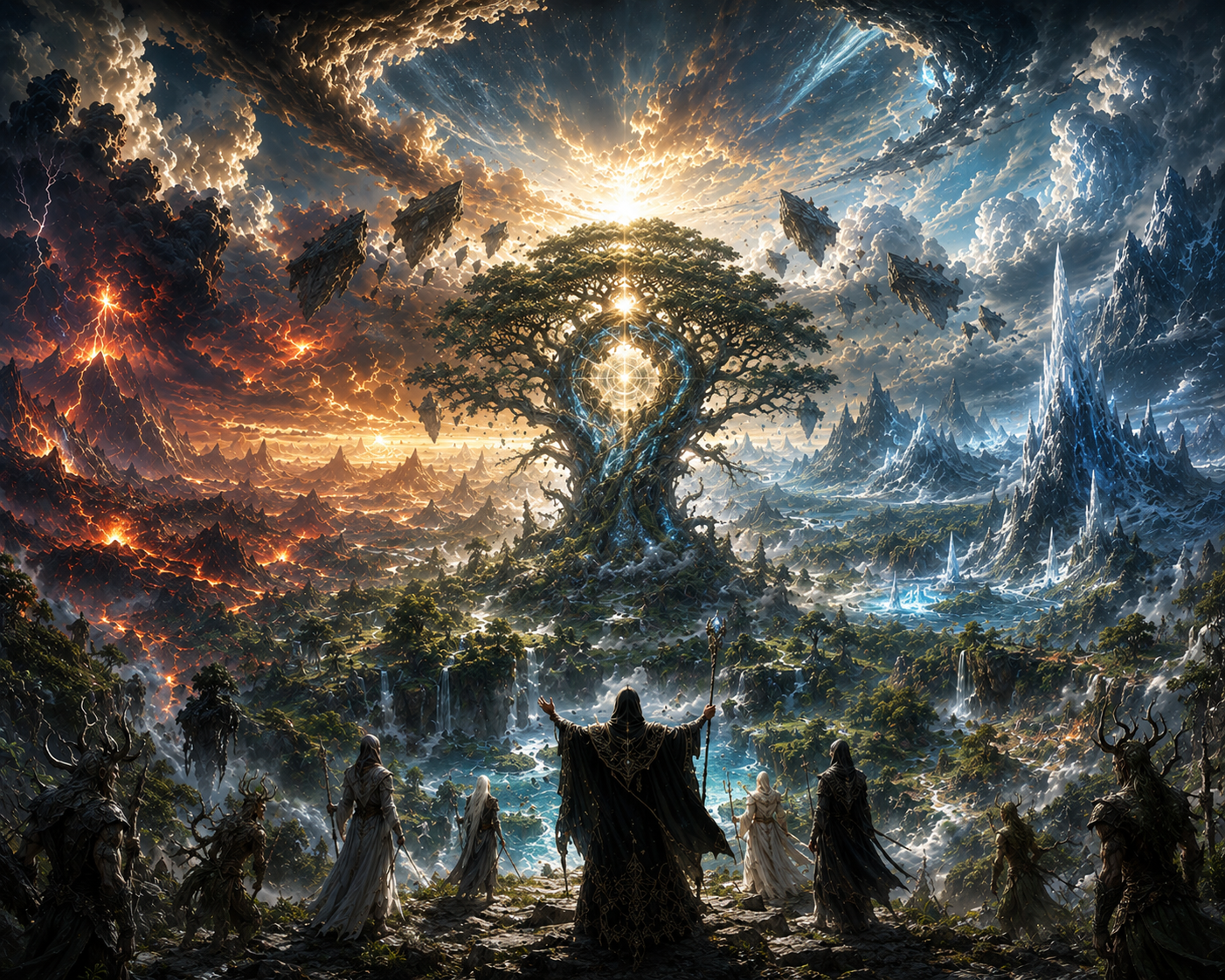
Back to TopThe Founding of Gila`Ysse:
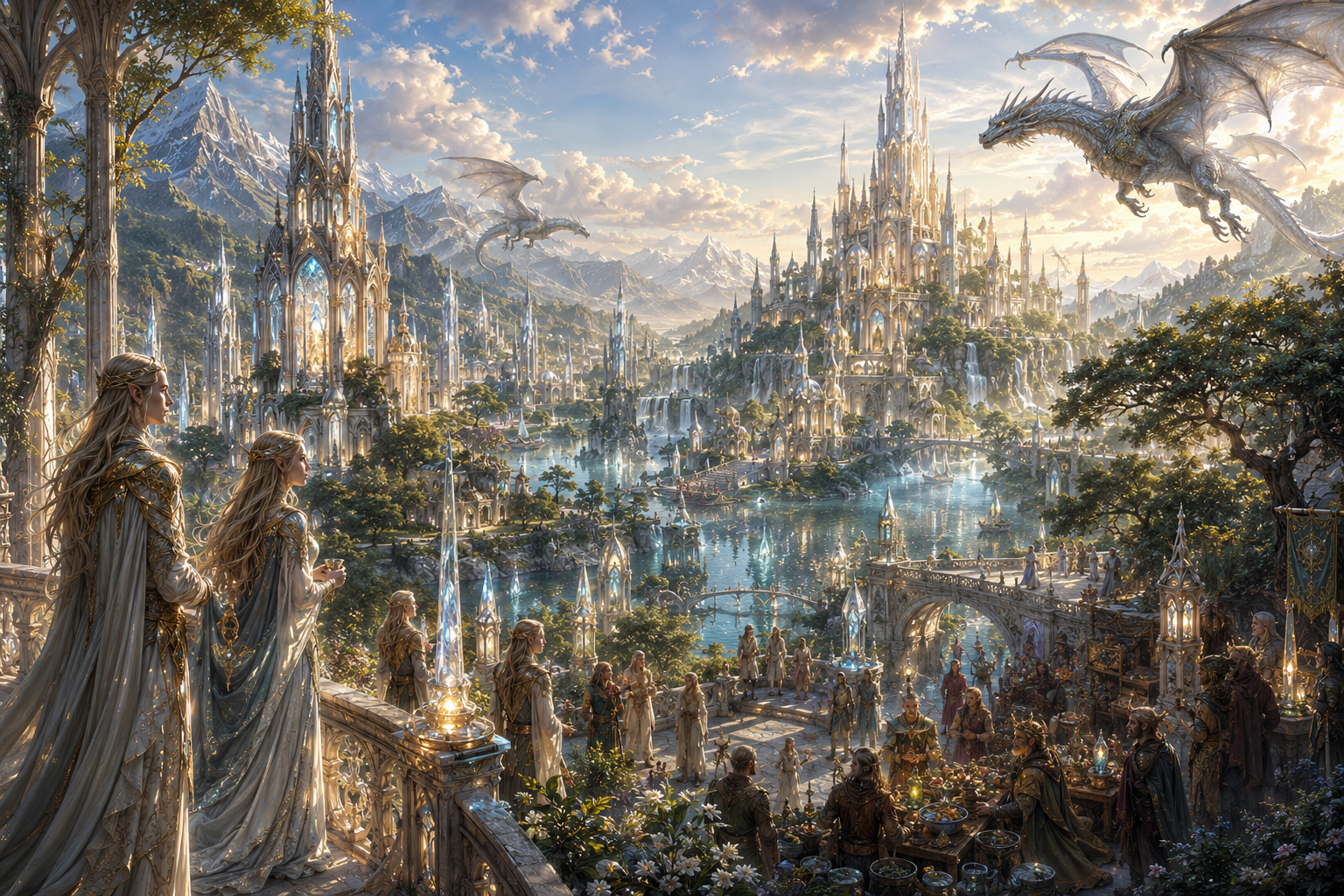
Back to TopThe Elf/Dragon War:
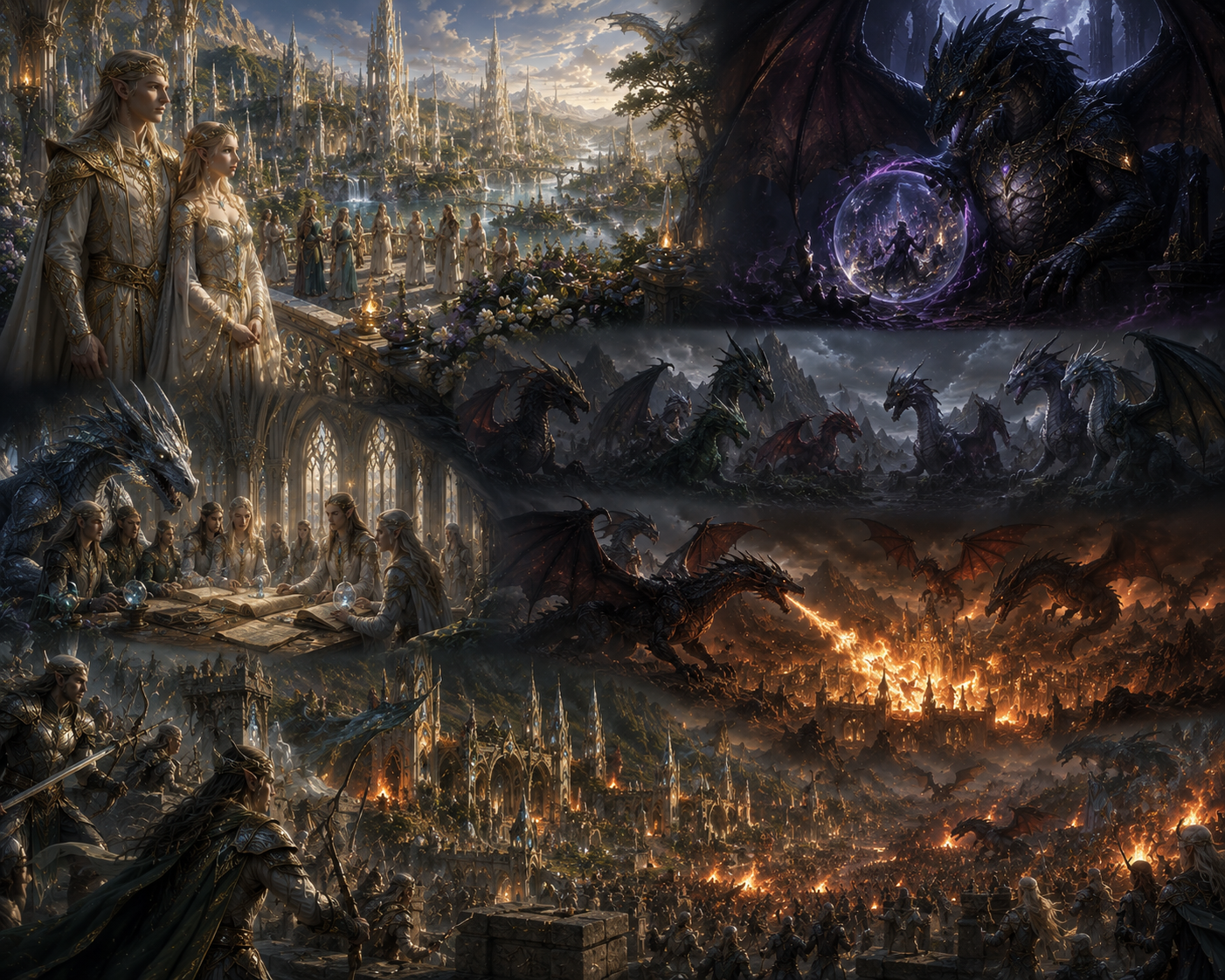
Back to TopThe War of the Dragons:
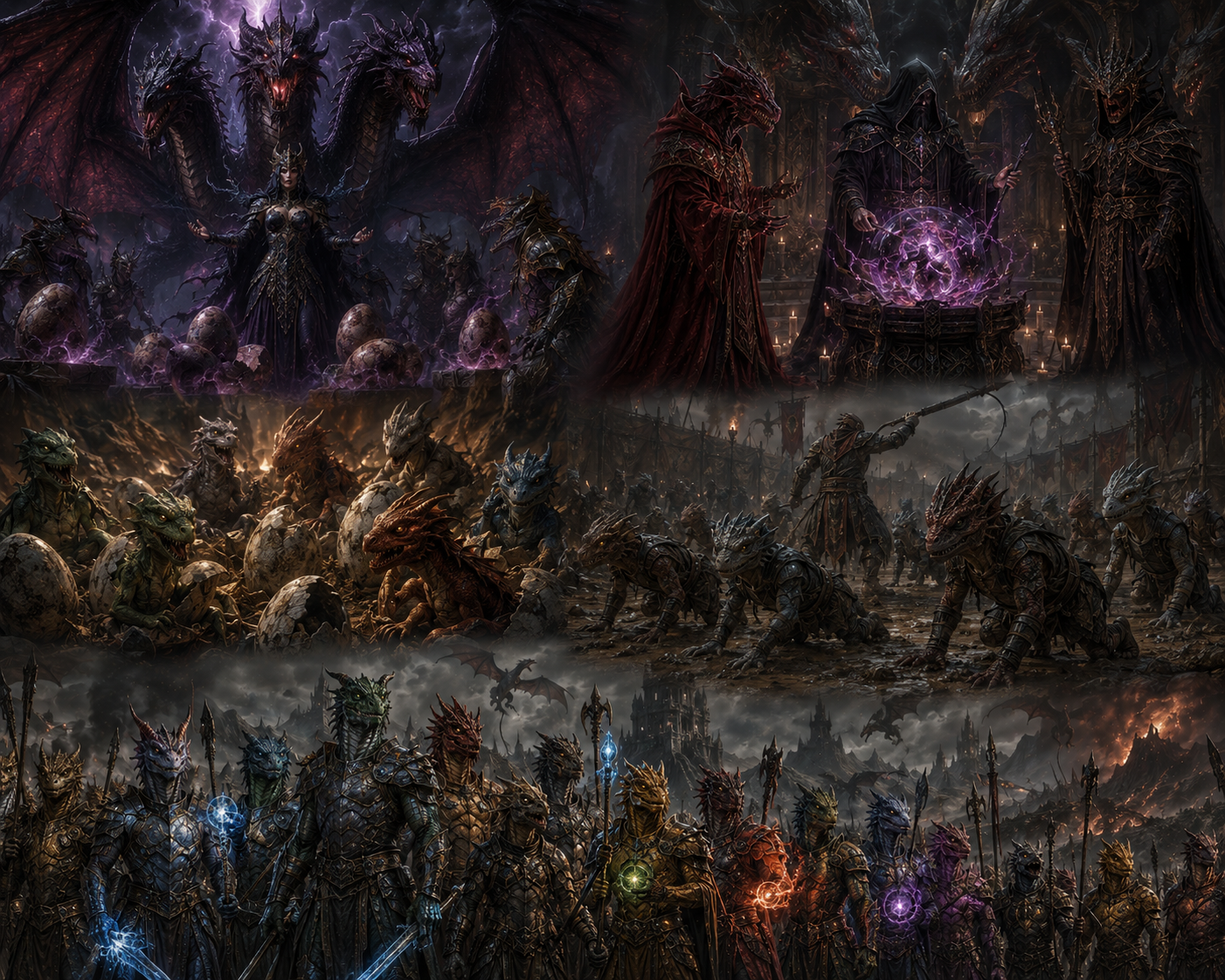
Back to TopThe Fall of Gila`Ysse/Atlan`Ysse:

Back to TopThe Dark Wanderings and the First Golden Age:

Back to TopThe Elf/Orc Wars:
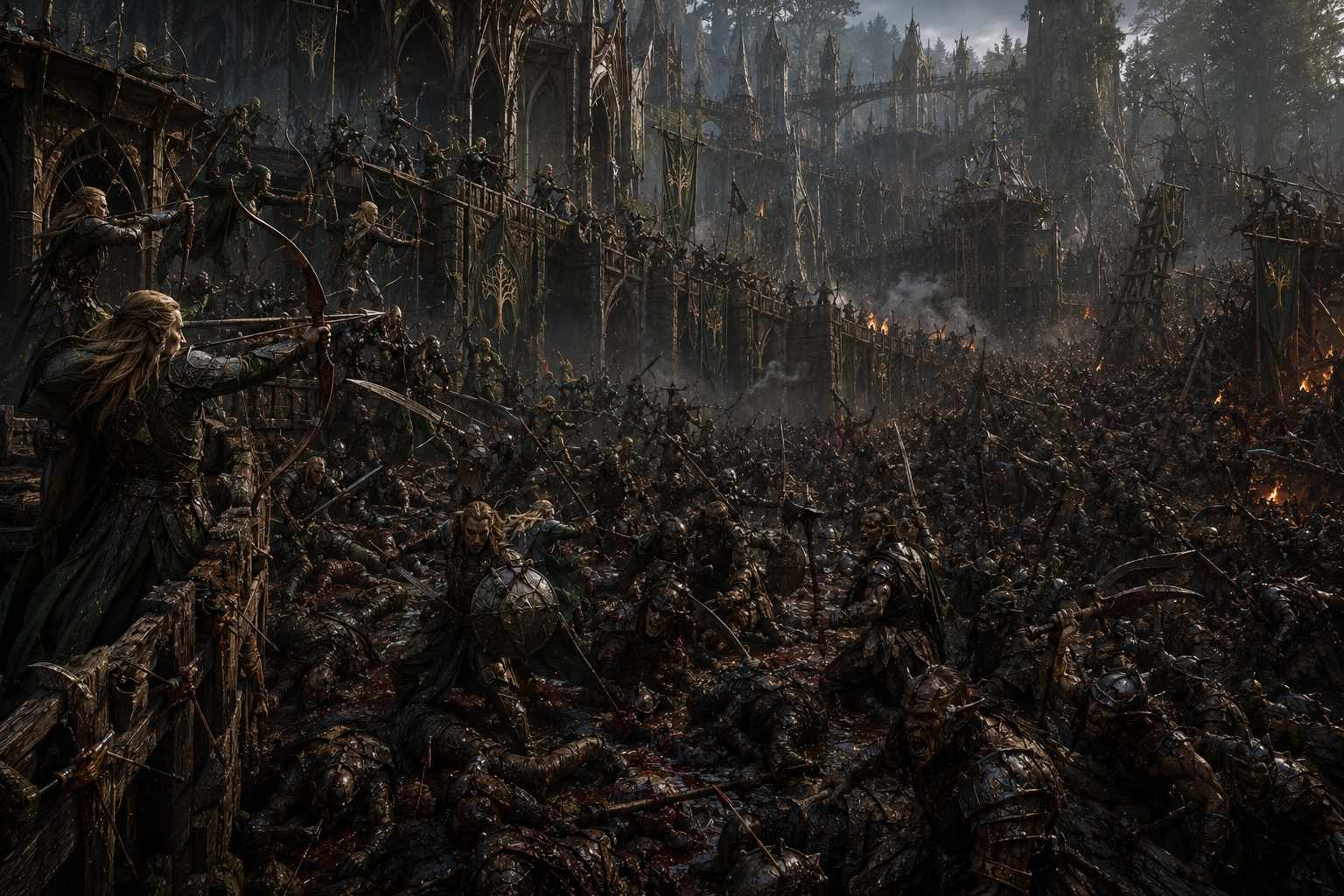
Back to Top
The Crown Wars:

Back to Top
The Formation of the Elven Court of Kael and Miryth Dragkor:

Back to TopThe Elf/Dwarf Wars:
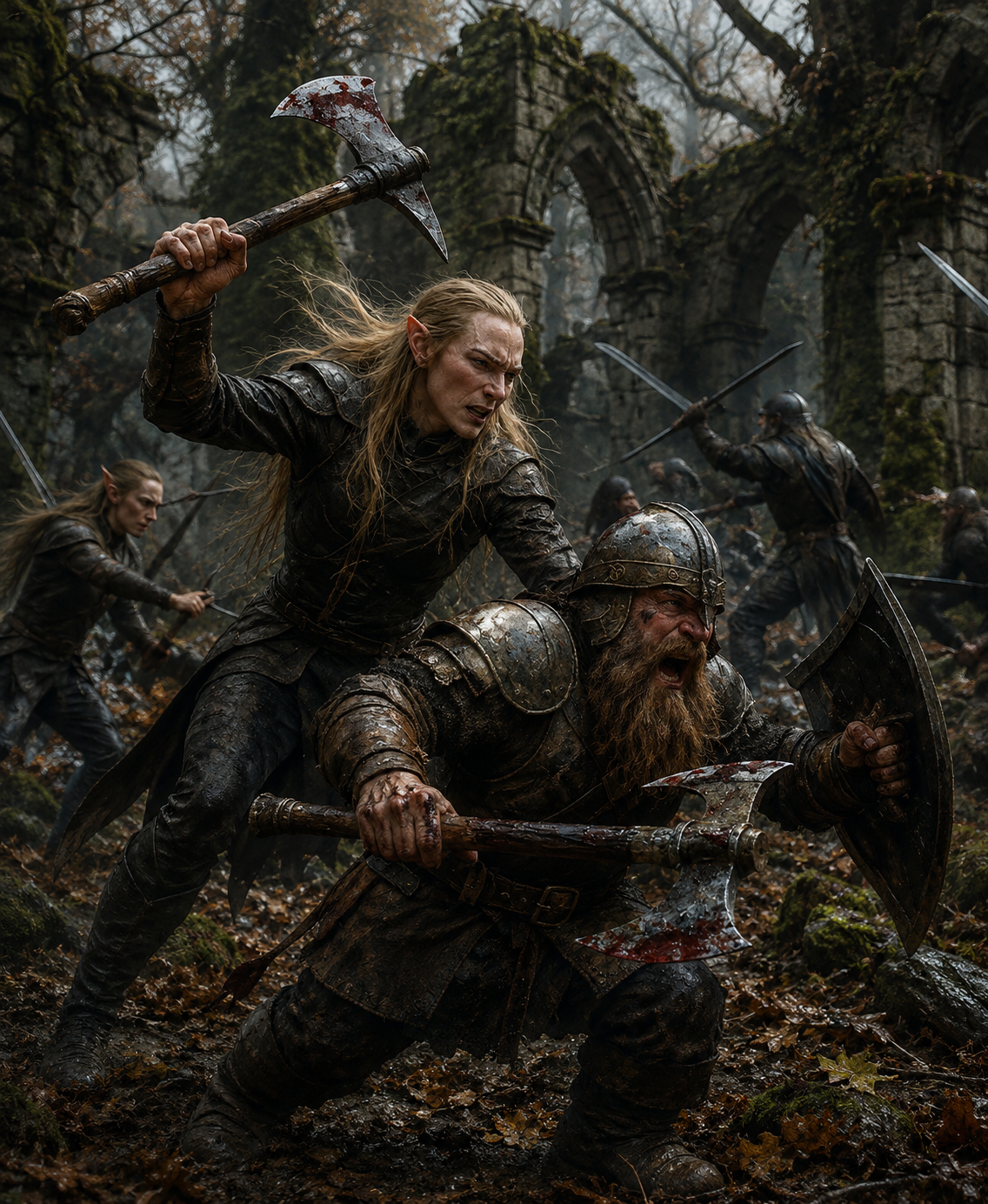
Back to TopThe Elf/Human War:
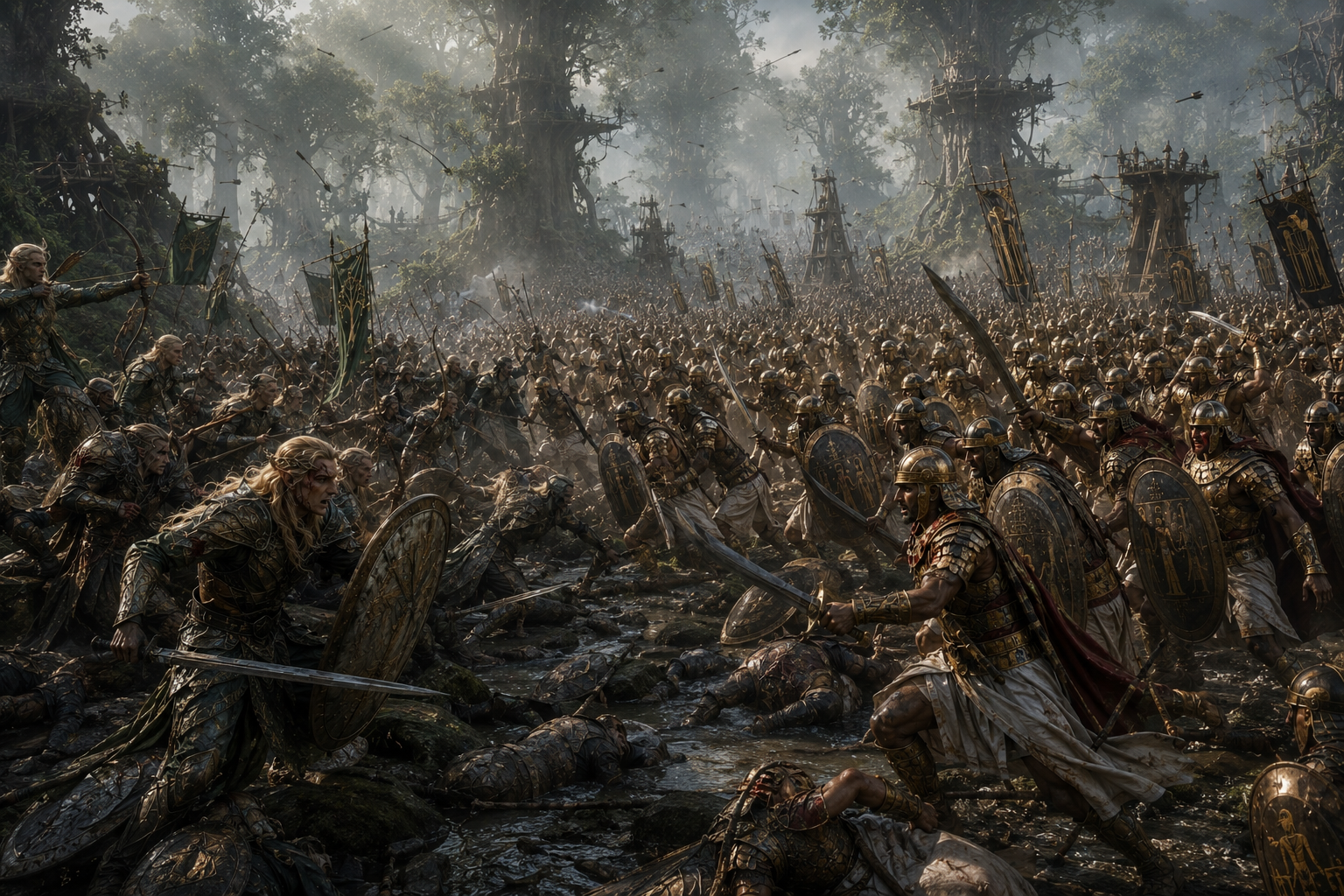
Back to TopThe Creation of Arethane and Lorien and the Elven Retreat:

And from those silver forests, beneath the watch of the Seldarine and the endless stars above Arethane, the Elder Folk began anew. {For more information on the Elven Retreat, see The Secret of the Elven Retreat.}
Back to TopThe Battle of Endar's Field and the Fall of Miryth Dragkor:

Back to Top The Withdrawal of Lorien:

Back to Top
Back to TopDhelcrist and The Knights Templar

Back to Top
The Raise of Vron and the Cursed Lands:

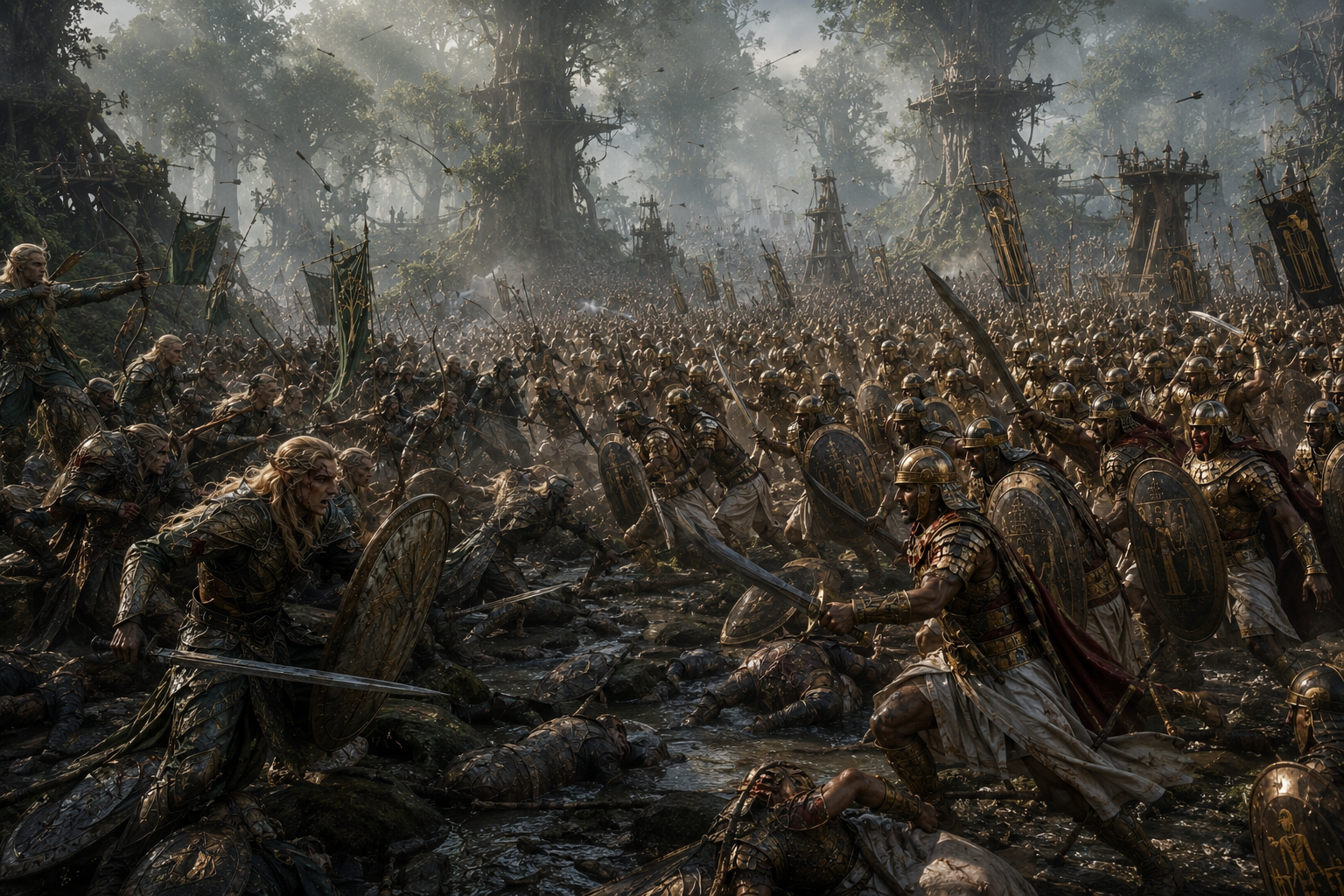
The War of Shadows:

Back to TopThe Re-Surfacing of Atlan`Ysse:

Back to Top The Re-Emergence of Lorien:

Back to Top
| Issue | Arethane's Position | Harak's Reaction |
|---|---|---|
| Jordaine's Reclamation | Rightful Elven dominion, spiritual homeland | Theft of Vordan, national humiliation |
| Religion | Ancestor-worship, Elven pantheons, ley-line devotion | Church of Duality (Light and Dark), inherently opposed |
| Naval Expansion | Guardianship of ancient waters | Militarization of coastline |
| Rhyanne's Evacuation | Strategic consolidation of Elvenkind | Interpreted as Elven failure, leverage for Human pride |
| Diplomacy | "We offer stability through principled hierarchy" | "You offer chains in silver and call them crowns" |
Summary
Arethane, including Jordaine, is an Elven island empire: ancient, mystical, and increasingly assertive. Harak is a proud Human land power facing a naval Elven superpower just off its coast. No open war exists, but the conditions are volatile:
- Trade is restricted.
- Spies are active.
- Skirmishes at sea are rising.
- Both kingdoms prepare for what they call "the inevitable test of will."
Back to Top