Kingdom of Voresch
Geography
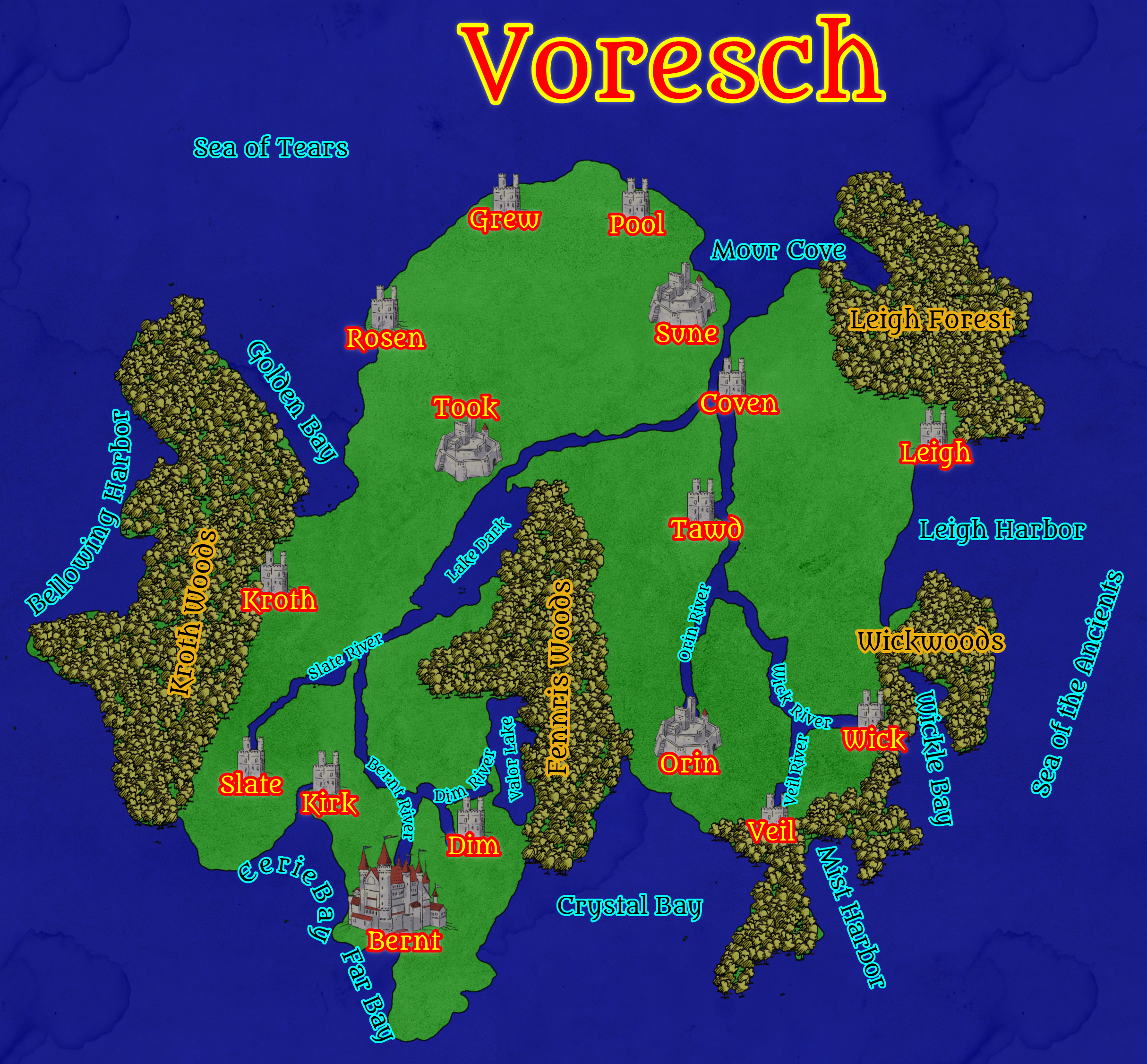
Voresch is an island kingdom with a varied but relatively flat landscape, dominated by vast forests and expansive plains. The natural beauty and resource-rich terrain have shaped both the kingdom's economy and its way of life. The thick forests provide timber, magical herbs, and natural protection, while the plains offer fertile soil for agriculture and settlements.
- Forests: The kingdom is defined by its dense forests, which cover most of the island, especially in the northern and central regions. These forests are both a natural barrier and a source of magical energy and resources. Rich in timber and wildlife, these forests are home to ancient trees, sacred groves, and hidden shrines where nature-based rituals are held.
- Plains: The central and southern parts of the kingdom are dominated by vast grasslands and fertile plains, ideal for agriculture. These plains support grain farming, livestock, and trade routes, making them the heart of the kingdom's economic power.
- Rivers and Waterways: Voresch is crisscrossed by rivers that divide the kingdom into distinct regions. These waterways not only provide a transportation network but are essential for agriculture and trade. The river systems flow into the sea, ensuring the kingdom has easy access to maritime trade.
History of Voresch
The Early Years: The Legacy of Eryndor
Voresch's history begins long before it became an independent kingdom. The archipelago was once a colony of the ancient and coastal Eryndor empire, a powerful maritime dominion that established its presence in Voresch through the construction of outposts, stone roads, and bridges. The rolling hills, rocky coasts, and fertile plains of Voresch became the perfect backdrop for Eryndor's ambitious expansion, serving as both military fortifications and trading hubs.
Under Eryndor's rule, the people of Voresch adopted a variety of the empire's advancements and administrative practices. The ruins of Eryndor's outposts still dot the landscape today, reminders of a time when the island was an integral part of the coastal empire. However, over time, the kingdom of Voresch grew in both strength and autonomy. As the Eryndorians relied heavily on maritime trade and military expansion, the island's people began to develop their own distinct culture and identity, blending the Eryndorian legacy with older traditions rooted in the forests, plains, and seas of the archipelago.
The Arrival of the Templars
The peaceful existence of the reclaimed Voresch would soon be interrupted with the arrival of the Templars. These religious crusaders, hailing from distant lands, brought with them their own stern creed and militant faith. The Templars' arrival marked the beginning of a significant religious shift in the kingdom. They began the construction of towering stone fortresses that dotted the landscape, spreading their influence over the land and its people.
In an effort to convert the heathen islanders, the Templars introduced their foreign god, striking a stark contrast to the old ways of worshiping the natural forces of the world, including the spirits of the seas, forests, and storms. The Templars built temples, stone churches, and cathedrals dedicated to their god, and they imposed new laws based on their strict religious doctrine. They worked tirelessly to reshape Voresch's spiritual practices, governing the people through both military force and religious authority.
Despite their powerful influence, the Templars never fully succeeded in suppressing the kingdom's deeper traditions. The land itself, its forests, mountains, rivers, and seas, continued to hold a deep magical and spiritual power that even the Templars could not extinguish. The people of Voresch, although now bound by new laws and religious practices, continued to honor the spirits of the land, and many of the older, pre-colonial customs persisted quietly beneath the surface.
The Rise of Independence
The transition independent kingdom was neither quick nor peaceful. Voresch, with its people's strong connection to their land, eventually rejected the imperial control of Eryndor. The islanders reclaimed their sovereignty and embraced their ancestral ways. While they respected the achievements of the old colonial empire, they began to focus on self-sufficiency, agriculture, and local governance, building a society that was more attuned to the rhythms of the land rather than the distant ambitions of foreign rulers.
This period marked a transition from a centralized Eryndorian rule to the rise of local monarchs and regional leaders who worked together to create a kingdom that represented the values and traditions of Voresch's people. The rolling plains became the breadbasket of the new kingdom, while the forests provided resources, magic, and spiritual guidance.
The Voresch of Today
Today, Voresch stands as a unique kingdom that blends the legacy of Eryndor, the spiritual influence of the Templars, and the ancient traditions of the land itself. The kingdom is ruled by a monarchy that carries both the weight of divine right and the deep ties to the soil that have defined the Voreschians since the beginning of time.
The Templar influence is still evident, with the Templar creed and stone towers scattered across the kingdom. However, the people of Voresch remain as much devoted to their ancestral ways, the spirits of the forests, seas, and storms, as they are to any god, ruler, or creed.
In modern Voresch, the spiritual balance between the foreign faith brought by the Templars and the natural worship of the land remains a central theme. The monarchy now serves as a mediator between these two forces, ensuring that the ancient practices remain a part of everyday life, while still honoring the Templar traditions.
The kingdom is still marked by its connection to its forests, plains, and seas, and the people are fiercely independent, holding onto their traditions even as they engage with the wider world. The ancient ruins of Eryndor, the stone towers of the Templars, and the sacred groves of Voresch all stand as lasting reminders of the kingdom's complex history, a history shaped by foreign influence, rebellion, and the eternal connection between the land and its people.
Races of Voresch
- Humans: Humans make up the vast majority of the population and dominate the political, military, and economic aspects of Voresch. Found across the kingdom, they are the heart of both its agriculture and trade. The kingdom's ruling monarch is human, and Bernt, the capital, serves as the central hub of governance. Humans also contribute significantly to military leadership and law enforcement.
Culture and Society: Humans in Voresch value honor, hard work, and resilience. They are primarily farmers, merchants, soldiers, and artisans, with a large portion of the population involved in farming the fertile plains and raising livestock. Many humans also work in craftsmanship, producing goods for trade or military needs. - Halflings: Halflings are a key race in Voresch, especially in the more rural and agricultural regions of the kingdom. Known for their hardworking nature, halflings contribute significantly to agriculture in the southern plains around Bernt. Their ability to cultivate and manage the land has helped ensure the kingdom's food security and economic stability.
Culture and Society: Halflings live in small, close-knit communities across the plains. They are primarily involved in farming, brewing, crafting, and trade. Halfling-run taverns and inns are common across Voresch, serving as community hubs for travelers and local folk alike. Their culture celebrates family, community, and good food. Halflings are also known for their peaceful nature and are highly respected for their ability to remain calm even in difficult times. - Gnomes: Gnomes are highly valued for their intellect, innovation, and magical knowledge. Though fewer in number than humans or halflings, they play an important role in Voresch's magical research and technological advancement. Many gnomes live in or around Sune, where their mastery of magic and alchemy is crucial to the kingdom's prosperity.
Culture and Society: Gnomes are an inventive and curious race, known for their engineering expertise, mechanical inventions, and arcane pursuits. Many work in alchemy, enchantments, and mechanical devices. The gnomes' inventiveness has allowed Voresch to excel in both magical research and technology, blending the mystical and the practical. Gnomes are often tasked with building and maintaining the kingdom's magical infrastructure. - Fey Creatures: Fey creatures, such as dryads, sprites, and fauns, live in the forests and sacred groves of Voresch, particularly in the northern and central regions. These magical beings are intricately tied to the natural world, and their role in maintaining the kingdom's balance of magic and nature is revered. Though their numbers are small, they are highly respected for their connection to the land and their mystical powers.
Culture and Society: The fey live in harmony with the natural world, worshiping the spirits of the forest and honoring the land's ancient and magical forces. They rarely engage in human politics but are known to offer guidance in times of need. Many fey serve as guardians of sacred sites and protectors of nature, ensuring that the kingdom's magical energies remain in balance. Sune is home to a strong fey community, where they practice nature magic and serve as spiritual leaders for those who follow the kingdom's nature-based religions.
Political Structure
Voresch operates as a monarchy, with a strong central ruler who oversees the kingdom from the capital of Bernt. The monarchy is advised by a Council of Regional Governors, leaders from the major cities, who oversee governance, military actions, and trade. The council is composed of representatives from Orin, Sune, Took, and other key cities.
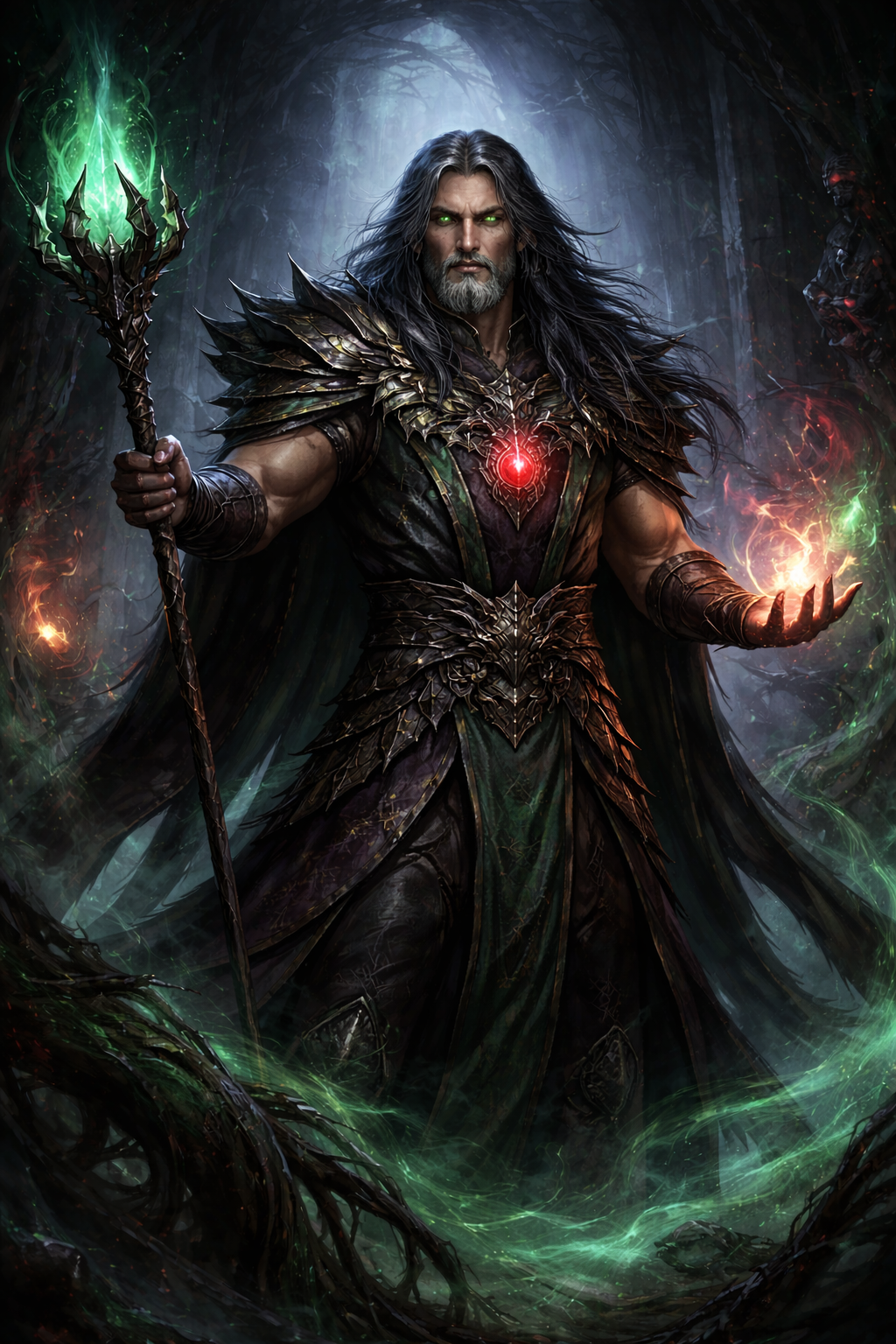
The Monarch: The monarch holds supreme authority in Voresch but must maintain the delicate balance between each city's autonomy and centralized governance. The monarch is seen as a protector of the realm, its natural resources, and its spiritual traditions. The Current Monarch is Lord Valthex, the Sorcerer-King
Regional Councils: Each city has its own council, often composed of local nobles, military commanders, and magical advisors. These councils are responsible for managing the day-to-day affairs within their regions, such as military defense, agriculture, trade, and law.
Economy:
Voresch's economy is based on a combination of agriculture, timber, magic, and trade. The kingdom's plains and forests provide the raw materials for much of its exports, while its rivers serve as important trade routes. The capital city is a hub for maritime trade, with goods flowing in from distant lands via sea.
- Agriculture: The fertile plains around Orin are used to grow grains, vegetables, and livestock, supporting the kingdom's population.
- Timber: The vast forests, particularly near Took, supply the kingdom with wood for building, furniture, and ships.
- Trade: The port city of Bernt allows for significant imports and exports, facilitating commerce with nearby islands and lands.
Military: The military of Voresch is well-organized and focused on defensive warfare. It is structured around a professional army, supplemented by local militias raised during times of conflict. The Royal Army is headquartered in Orin, where infantry and cavalry are trained. The kingdom's military also uses mages from Sune to augment their forces with magical and spiritual capabilities.
Defensive Fortifications: Voresch's defenses are built around key cities like Orin, which sits at the heart of the kingdom's border defense system. Took, located near the northern forests, serves as a strategic checkpoint against invaders.
Religion: Voresch is home to a blend of nature worship and ancestor reverence. The people of Sune worship deities tied to the natural world and magical forces, while Bernt has a more organized system focused on the worship of ancestors and the divine right of the monarch. Sune is home to the Druidic Order and Arcane Temples, where followers honor the elements and the spirits of the forest. Bernt houses a large temple dedicated to ancestors and guides for the monarchy.
Population Breakdown
Total Population: Approximately 500,000 people.
- Humans: 75% (375,000)
- Halflings: 15% (75,000)
- Gnomes: 10% (50,000)
- The population figure mentioned excludes the Fae. The Fae creatures of Voresch are too numerous to be accurately counted so is not precicely known. It is estimated to be at the least, 3 to 5 times that of the Mortal population, and consists of fae and magical creatures of all types. These mystical beings, with their whimsical nature and inherent connection to nature's magic, bring an extra layer of enchantment to Voresch. Fae communities are often nestled in the heart of magical glades, adding to the kingdom's natural wonders.
Key Cities and Locations:
- Bernt, Capital of Voresch: Bernt is the capital city of Voresch, a bustling hub of trade, commerce, and government. The city is strategically located at the mouth of a river and the coast, making it an important port for maritime trade. Bernt serves as the seat of the monarchy, with the Royal Palace built on a hill near the riverbanks. The city is famous for its fortifications and markets, where goods flow in from both inland plains and distant shores. Bernt is also home to powerful guilds and craftsmen, particularly those skilled in metalworking and artisanal goods.
- Orin: Orin is a military and agricultural city, vital for the defense and sustenance of the kingdom. Located near rich plains and accessible waterways, it serves as a strategic fortress as well as a trade center for goods coming from the northern forests. The city's fortifications protect the kingdom from potential external threats and raids. The fertile farmlands surrounding the city ensure the kingdom's ability to sustain itself, with grain crops, livestock, and tradeable goods.
- Sune: Sune is the spiritual heart of Voresch, home to the kingdom's largest mage guilds and druidic circles. It sits on the coast. The city is a mystical center, where arcane research and nature magic blend. The people of Sune are known for their deep connection to the natural world, with sacred gardens and ritual sites scattered around the region. It is also a city that celebrates seasonal festivals, marking important agricultural and magical moments of the year.
- Took: Took is a smaller, resource-rich city that thrives on fishing.
- Leigh: Leigh was built on the ruins of an ancient Eryndorian coastal fort that once controlled vital trade routes. Over time, it has evolved into a military stronghold where stone walls and watchtowers protect the town from potential threats. It has a massive shipyard and has become a defensive hub with a naval and military garrison. The stone docks and lighthouses from the Eryndorian period still serve as critical infrastructure for the port.
- Wick: Built upon the ruins of an Eryndorian base, Wick thrives as a logging town with strong fortified walls. Once a military outpost, it has expanded into a major hub for trade and supply for shipbuilding.
- Veil: Veil sits atop the ruins of an Eryndorian military outpost that was built for both defense and arcane purposes. Over time, the town has become a spiritual and military center, with magical academies and guard barracks integrated into the old Eryndorian fortifications.
- Tawd: Tawd was once a vital Eryndorian trading post. Over the centuries, it has grown into a vibrant market town. The town’s fortifications, built from Eryndorian stone, guard vital trade routes while facilitating the exchange of agriculture and goods.
- Coven: Coven was founded on the ruins of an Eryndorian temple, originally devoted to the gods of nature and the sea. Today, the town is a center of both military defense and arcane study, with its old temples converted into training grounds for both warriors and mages.
- Pool: Built over the remnants of an Eryndorian water fortress, Pool is a small but important town known for its sacred waters and magical properties. The town is a center for healing and ritual, with ancient aqueducts and stone pools remaining from the Eryndorian era.
- Grew: Grew was originally a fortified coastal outpost to defend the kingdom. Today, it remains with a strong military presence, guarding the vagricultural lands that sustain the kingdom.
- Rosen: Rosen is a fortified port town built over the ruins of an ancient Eryndorian naval base. It has become a center for maritime trade, shipbuilding, and naval defense. The town’s stone harbor and defensive walls have been rebuilt to accommodate the kingdom’s growing navy and trade.
- Kroth: Kroth was once an Eryndorian Lumbering outpost and remains a center for logging. Today, it serves as both a loggingg town and fortified settlement, built to protect the valuable wood mills. The surrounding forests are home to skilled lumberjacks and carpenters, who produce much of the kingdom's wooden goods, including, furniture, and weapons. Though not as large as Bernt, Kroth plays a vital role in the kingdom's defense.
- Slate: Slate is a fortified town situated at an important crossroads As well as the river for trade and military movements. Built atop an ancient Eryndorian trading post, it has evolved into a bustling market town, protected by stone walls and gates that date back to the original fortifications.
- Kirk: Kirk is a religious and coastal port town founded on the ruins of an Eryndorian temple to the gods of the sea. Over the centuries, it has grown into a center for maritime worship and naval defense. The temples and ancient ruins remain an integral part of daily life.
- Dim: Dim is a fortified river settlement built upon Eryndorian ruins, known for its defensive fortifications and strategic position along important trade routes. Its stone structures provide protection for both local agriculture and regional trade.
Voresch is a kingdom that blends the natural beauty of its forests and plains with the magic and strength of its people. Its monarchy, supported by regional councils, ensures that each city maintains its autonomy while working together for the greater good of the kingdom. The economy is deeply rooted in agriculture, timber, and trade, while the military stands ready to defend against any threat. Sune, Bernt, Took, and Orin each play vital roles in the kingdom's spiritual, economic, and defensive structures, making Voresch a resilient and thriving realm.