Province of Daral
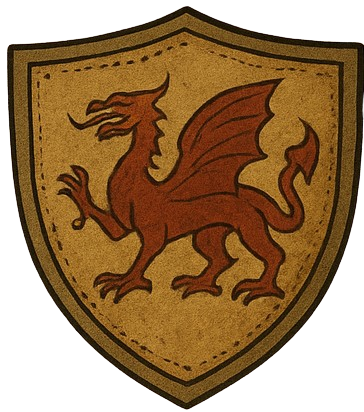
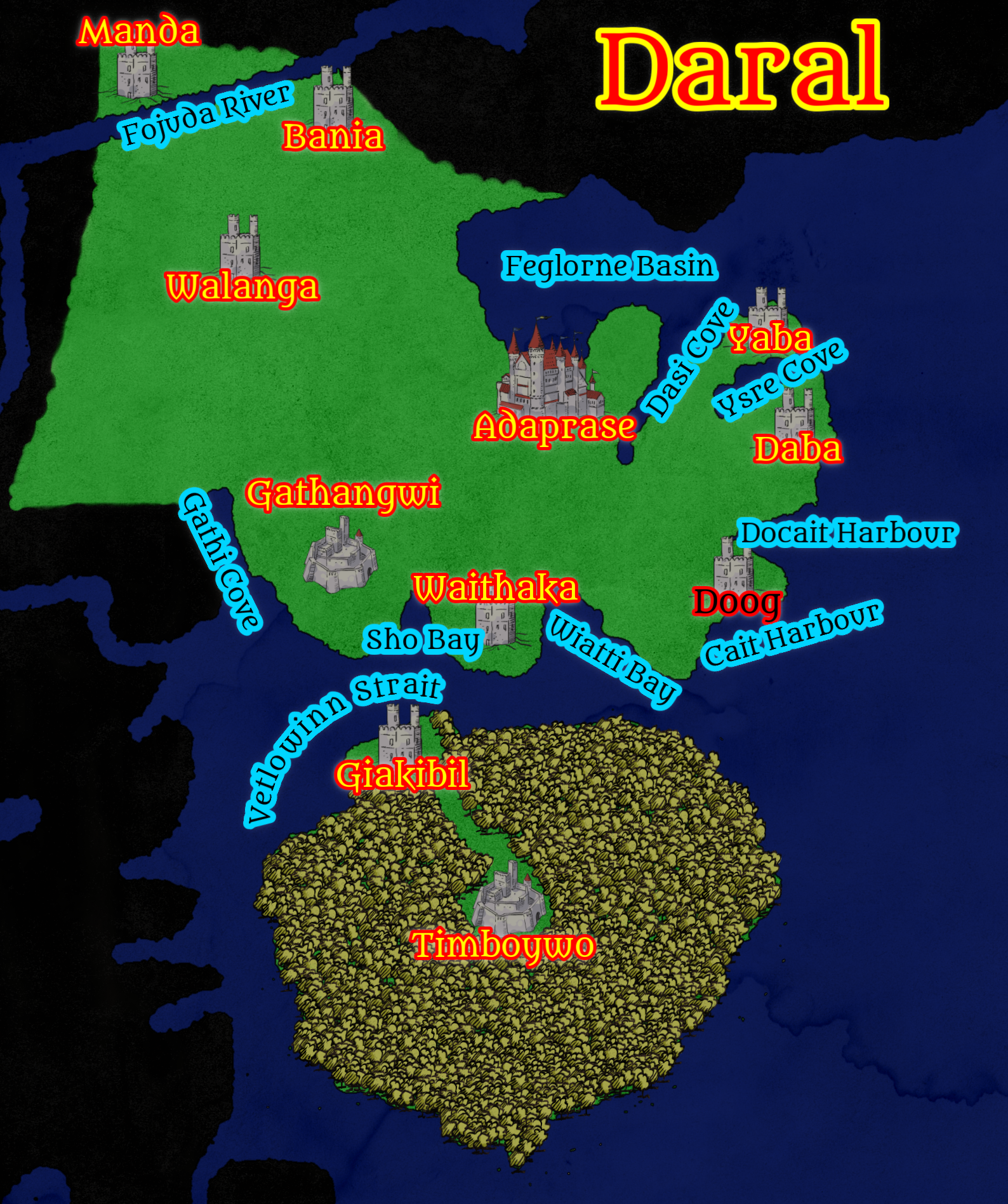
Daral, known throughout the Peldarian Enclave as The Sea's Shield, stretches along the sea. Its cities glimmer like jewels along the water's edge, each a fortified port, half temple and half shipyard. The scent of brine, cedar, and pitch fills the air, mingling with the clang of hammers and the cries of gulls.
Daral's people are born to the sea. Their hearts beat with the rhythm of the tides, their livelihoods shaped by trade winds and monsoon rains. The coastlines are jagged and unpredictable, carved by centuries of storm and tide. Between its cliffs and coves lie hidden harbors where merchant fleets and war galleys anchor side by side, their prows carved with the visages of gods, serpents, and spirits of the deep.
Culturally, Daral is a land of paradox, half pious, half pirate. Its people honor both Light and Dark, revering the sea as the great mediator of both forces. To them, the sea gives life through trade and harvest, yet demands its due in storms and shipwrecks. The Darali live with that truth, seeing in it the Sacred Cycle embodied by the ocean's endless ebb and flow.
Though part of the Enclave, Daral maintains an identity wholly its own, independent, daring, and fiercely proud. The Shahanshah may command armies, but at sea, it is the Admiralty of Daral who holds true power.
History
Daral's history is one of sails, storms, and stubborn independence.
When the Eaepeldar Empire reigned, Daral served as its naval heart, the shipyards of Korktra and Debo supplied fleets that linked the empire's coastal provinces. Its sailors were renowned not just as warriors but as explorers, mapping distant shores and discovering islands that became waystations of trade.
During the Sundering, when the sea swallowed entire cities and broke the continent into fragments, Daral's people endured where others perished. Many say the gods of the deep spared them for their devotion, or perhaps because the Darali were too stubborn to die. Their ships became lifelines between the isolated provinces, carrying news, goods, and even refugees. In this age of ruin, Daral transformed from a provincial harbor into a maritime kingdom in all but name.
For centuries, the Admirals of Daral ruled as sea-kings. They took tribute from the islands and demanded respect from every coast they touched. At times, they defied the mainland completely, turning to piracy when the Shahanshah's reach grew weak. Yet it was also Daral's navy that first answered the call when the Peldarian Enclave was reformed two centuries ago, recognizing that their strength lay not in isolation but in alliance.
Today, Daral stands as both guardian and gatekeeper of the Enclave. Its ports serve as the arteries of trade and defense. Yet, beneath this veneer of unity, the old independence simmers still, each admiral, each harbor-master, each merchant prince remembering the centuries when Daral needed no one but the sea.
Religion
Daral's faith is as fluid as the waves it worships.
While the Church of Light and Dark dominates Peldarian doctrine, Daral's interpretation of the Sacred Cycle flows through a maritime lens. To the Darali, the ocean is the Sacred Cycle, light reflected on calm seas, darkness in the deep trenches below.
Ra, Lord of Light, is seen as the rising sun upon the horizon, his justice and warmth guiding ships to safe harbor.
Set, Lord of Chaos, is the storm itself, his gales testing the courage of sailors and reminding them that destruction, too, has divine purpose.
Isis, the All-Mother, is worshipped as Lady of the Shoals, her gentle hand calming the waves and nurturing the bounty of the sea.
Anubis and Ammit are revered by captains before long voyages, for they judge those lost at sea, ensuring their souls reach the afterlife's calm waters.
Daral's temples are often built directly upon piers or carved into sea cliffs. The Temple of Twin Currents in Amonikrom's western harbor is the most famous shrine, a dual sanctum where priests of Light and Dark pray together, their chants rising with the surf. Rituals often involve offerings cast into the waves, coins, bread, or even crafted effigies representing ships, to ask for protection or forgiveness.
Darali priests are as much sailors as clerics; they serve aboard fleets, blessing ships and calming seas through divine magic. The greatest among them are known as Tidebearers, mystics who can read omens in the motion of the tides or the songs of whales.
Military
Daral's might lies not upon land, but upon the endless horizon.
The Darali Fleet is the pride of the Enclave, a vast armada of galleys, caravels, and warships that dominate the coastal waters of Yeaoshan. Commanded by the Admiralty of the Sea's Shield, this fleet operates as both the Enclave's navy and a quasi-independent military order. Every ship bears the mark of the Church of Light and Dark, its sails divided into halves of white and black silk, symbolizing balance in motion.
Organization of the Fleet:
The First Armada ("Light's Dawn"): tasked with protecting trade convoys and pilgrim routes. Its captains are often drawn from noble families loyal to the Shahanshah.
The Second Armada ("Dark's Veil"): a shadow fleet, patrolling storm zones and uncharted waters. Its mariners are veterans, many rumored to consort with sea spirits and forbidden magics.
The Free Corsairs: Semi-sanctioned privateers who raid foreign ships in the Shahanshah's name (and sometimes their own).
Daral's warriors are trained in naval combat, boarding actions, siege warfare, and divine sea magic. They wield tridents and curved sabres forged to cut through rope and sailcloth. Even their mounts are unique, Darali elites ride war-zebras, trained to swim short distances and charge along surf-wet sands during coastal raids.
The Sacred Warriors of the Tides, a branch of the Divine Defenders, serve as the spiritual heart of the navy. These warrior-priests channel divine blessings through the sea itself, summoning calm waters or storming squalls in battle.
Economy
Daral's economy is the Enclave's lifeblood.
Its harbors, Korktra, Debo, Fich, and Bania, thrum with ceaseless activity. Merchant fleets bring spices, silks, minerals, and exotic beasts from across the southern isles. In return, Daral exports Peldarian glass, gold, and sacred relics crafted by Dwarven artisans.
Shipbuilding is the cornerstone of Daral's wealth. The shipwrights of Korktra are said to whisper prayers as they hammer iron nails, ensuring divine favor upon each vessel. The forests inland are managed carefully, their timber prized for keels and masts.
Daral also controls much of the Enclave's trade taxation, granting its admirals immense political leverage. The Caliph's priests bless every ship that departs under the banner of the Enclave, and a tithe from each voyage fills both temple and treasury.
Piracy, though officially condemned, thrives in the shadows of Daral's prosperity. Many "pirates" are simply captains who fell out of favor with the Admiralty, outlaws one year, pardoned heroes the next, depending on the tides of politics.
Despite its wealth, Daral is vulnerable to famine when storms block trade routes, and to corruption among its merchant lords. Yet, through faith, ambition, and seaborne mastery, Daral remains the bridge between worlds, its sails a symbol of both divine balance and human defiance.
Population of Daral
- Total Population, 1,050,000
- Humans (Dark-skinned Peldarans), 82% (861,000)
- Halflings, 18% (189,000)
Cities of Daral
- Adaprase, Capital of Daral: Adaprase stands at the heart of Daral's northern coast, where the emerald rivers meet the turquoise sea. Known as the "Jewel of the Tides," it is a gleaming port of marble docks, whitewashed towers, and wind-swept banners. The city's harbor is vast, filled with fleets both military and mercantile. Adaprase's Admiralty governs the realm from the Spire of Shells, a tower built from the fused remains of ancient sea-creatures, said to hum softly when storms approach. The people of Adaprase are worldly and disciplined, proud of their navy and their unmatched shipyards. Every Daralian voyage begins here, and every sailor, noble or commoner, dreams of earning a berth beneath the city's proud pennants.
- Timboywo: Timboywo is Daral's southern fortress and sits in the center of the Island Jungle. It is the supplier of all lumber used in Daral's ship production. Life in Timboywo is strict, regimented, and loyal; its people are born to service. When storms roll in, the city's forges glow like molten eyes against the dark sea, crafting the iron hearts of Daral's fleet.
- Gathangwi: The city of Gathangwi lies inland along the great river delta, a lush crossroads of trade between coast and countryside. It is a bustling hub of markets, barge traffic, and Halfling merchant caravans. Known for its river markets and vibrant guild life, Gathangwi produces the finest ship timbers and sailcloth in the region. Its people are shrewd traders and expert bargemen who know every current and tributary of the Daralian rivers. The city's great hall, the "Harbor Without Water," is a vast market square lined with warehouses and inns where sailors and merchants haggle late into the night.
- Waithaka: Waithaka sits on the inland strait that feeds the coast, surrounded by fertile farms and Halfling burrows. It is a peaceful city known for its grain exports, vineyards, and ship provisions. Though far from the coast, Waithaka's economy depends on the sea, for it supplies the fleets with food, timber, and rope. Its people are practical, kind-hearted, and deeply spiritual, often offering prayers to the Sea Mother before sending off their goods. The annual Riverblessing Festival draws thousands to its docks as offerings of bread and ale float downstream toward the ocean, symbolizing the unity of land and tide.
- Giakibii: Giakibii clings to the storm-lashed cliffs south of Daral's mainland. The city is famous for its lighthouses and beacon towers, which have saved countless ships from wreckage. It is a place of solitude and devotion, where the Order of the Lantern, a brotherhood of Halfling and Human monks, maintains the great fires that guide Daral's fleets home. The people live humbly, their homes built into the cliffs like barnacles upon the stone. In the evenings, the wind carries the chants of the Lantern Keepers across the sea like ghostly hymns of light and safety.
- Doog: A bustling port and shipbuilding center, Doog is known as "The Forge of the Coast." Here, the clang of hammers never ceases, and the smell of pitch and salt hangs thick in the air. Human and Halfling artisans work side by side crafting hulls, masts, and enchanted figureheads. Doog's famed drydocks can produce a warship in record time, and its guilds jealously guard the secrets of their trade. The city is rough and industrious, ruled by the Shipwright Council rather than nobles. Every ship built here bears the mark of the Anchor Seal, the proud emblem of Daralian craftsmanship.
- Daba: Daba rests on the misty eastern shore, where the tides bring strange shells and silver fish. The city is quieter than its bustling cousins, a haven for scholars, navigators, and mapmakers. The University of Currents stands here, an institution dedicated to studying tides, winds, and celestial navigation. Daba's people are contemplative and precise, known for their innovations in ship design and their mastery of the stars. It is said that every Daralian captain carries at least one map or chart traced from Daba's archives.
- Yaba: Yaba is a small fishing and pearl-diving town on the warm northern coast. Known for its colorful market and close-knit community, Yaba provides much of the Enclave's seafood and pearls. The Halfling divers of Yaba are famed across Peldara for their daring descents and artistry in carving mother-of-pearl. Its festivals are filled with song, light, and sea-born pageantry. Though humble, Yaba embodies the heart of Daral, hardworking, proud, and bound to the rhythm of the waves.
- Walanga: Walanga lies inland near the high wetlands of the north, where the rivers rise. It is a trade post turned frontier town, supplying food, timber, and minerals to the coastal cities. Its people are rugged and independent, more at home in the marshes than at sea. Walanga is famed for its leatherworks and its hardy Halfling scouts who guide caravans through the wetlands. During the rainy season, the city all but floats, its wooden bridges and elevated streets turning it into a maze of water and reflection.
- Bania: Bania sits upon the edge of the River. Once a fishing town, it has become a refuge for retired sailors. Its taverns are filled with tales of storms and leviathans, and its graveyard of anchors stands as a monument to those lost at sea. The people of Bania are superstitious yet courageous, known for carving intricate totems that are believed to protect ships on long voyages.
- Manda: Manda, the northernmost settlement, guards the approaches to Daral's heartlands. Its cold winds and rough shores have bred a hardy folk, sailors, fishers, and watchmen. The city's harbor is lined with signal fires and lookouts, ever watchful for foreign sails. Despite its martial duty, Manda is famous for its shipwrights' guild and its annual Festival of the Returning Tide, when vessels from across Daral gather to celebrate another safe year at sea.