Province of Mulare
History of Mulare
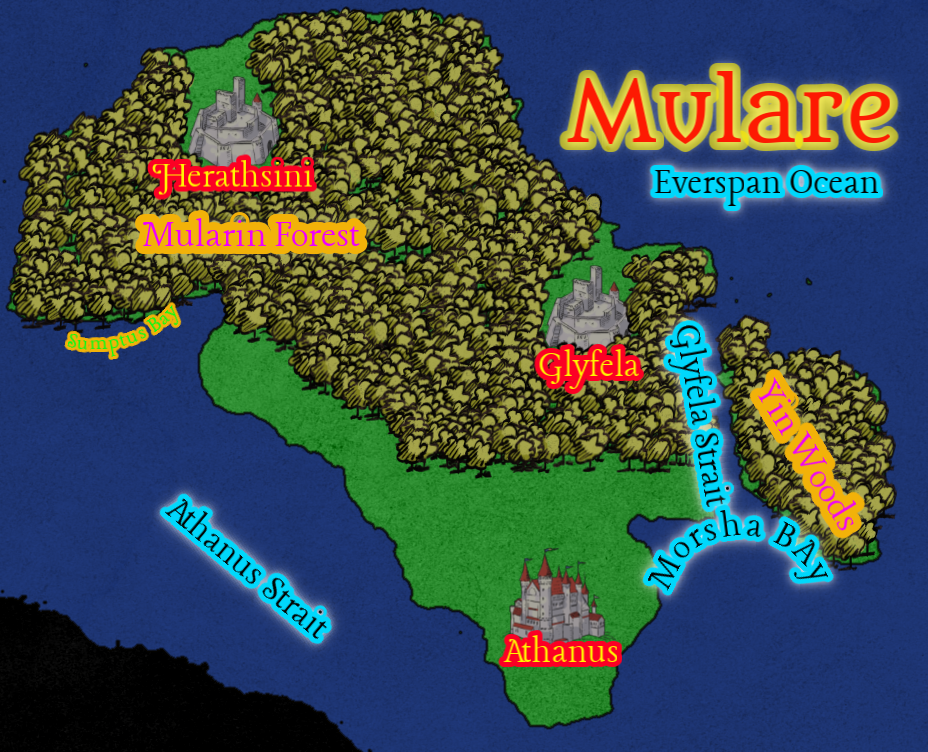
Mulare, once a small and inconspicuous region, has grown into a vital province within the Delgwynthian Empire. Its growth has been shaped by its geography, with a rich balance of forests, coastal regions, and strategic locations. The province's key cities, Athanus, Glyfela, and Herathsini, have each played a crucial role in its development, allowing it to rise as a merchant power, a military center, and a spiritual hub.
The Founding of Mulare
The origins of Mulare trace back to early settlements that sprouted in the shadow of the Delgwynthian Empire's rise. These early settlers were primarily humans and halflings seeking refuge in the fertile lands and forests that dotted the southern coast. The province's location near the sea made it ideal for naval trade, while its inland forests offered protection and resources for timber and agriculture.
During the early years, Mulare was a collection of small farming villages and forests, sparsely inhabited and isolated. Athanus, the future capital, was a modest settlement near the coast, while Glyfela and Herathsini began as woodland hamlets nestled in the heart of the province's forests. These cities attracted settlers drawn by the promise of wealth from the sea and safe haven in the woods.
The Rise of Athanus (The Capital)
As trade flourished along the southern coastline, the city of Athanus began to emerge as the center of commerce and political power. Established as the capital city, it benefitted from its strategic location and expanding port. Over time, the Athanian Merchant Guilds grew powerful, controlling the flow of goods not just within Mulare, but also to and from neighboring provinces. The city quickly became the economic heart of the region, a bustling hub where merchants, noble families, and politicians vied for influence.
Glyfela and Herathsini: Guardians of the Forest
The forest cities, Glyfela and Herathsini, were born out of the need for defense, as well as timber resources for the growing needs of the empire. Situated deep within the forests of Mulare, these cities served as the spiritual and natural guardians of the province. The surrounding forests were dense, filled with wildlife, and rich in resources that fueled the empire's shipbuilding industry.
Glyfela, located in the northern forests, became known as the forest city of the west, home to timber merchants and rangers skilled in tracking and woodcraft. It is a place where the natural world is revered, and halflings dominate the logging industry, while humans manage the export and trade of wooden goods.
Herathsini, located in the eastern woods, was initially founded as a defensive city against marauding beast-men and foreign invaders. Today, it is known for its deep connection to nature, with rangers and archers forming the core of its military forces. The timber trade in Herathsini thrives, with halflings and humans working in tandem to provide the empire with much-needed materials for both civilian and military use.
Population Breakdown:
- Population: 400,000
- Demographics:
- Humans: 70% (280,000)
- Halflings: 30% (120,000)
Cities:
- Athanus as the capital of Mulare, is the center of political power, commerce, and trade. Halflings are crucial in the merchant guilds, running the stalls and market areas, while humans dominate the administrative and justice sectors. The presence of foreign traders and exotic goods creates a cosmopolitan atmosphere, with a strong focus on wealth and prosperity. Athanus Port is a busy harbor where ships from all over the empire dock for trade and commerce. The Merchant Quarter is a district filled with guild halls, merchant homes, and marketplaces where halflings handle the day-to-day business. The Governor's Palace, home to the Imperial Governor maintains with close ties to the Delgwynthian Empire's elite.
- Glyfela (Forest City of the West) is nestled deep within the western forests, Glyfela is the hub of timber production and woodworking in Mulare. The halfling population is vital to the logging and woodworking industries, while humans often oversee the trade and resource management. The city also has strong ties to nature, with forest guardians and rangers ensuring the preservation of the surrounding woods. The Timberyards are the heart of the timber industry, where the halflings manage the logs and oversee the woodcutting operations. The Forest Gate is a fortified entry point to the deep woods, used by rangers to defend against monstrous creatures and poachers. The Sylvan Shrine is a place of worship for those who revere the spirits of the forest and the wilds of Mulare.
- Herathsini (Forest City of the East) is both a defensive stronghold and a resource-rich city. Known for its elite rangers and forest archers, the city's focus is on guard readiness, forestry, and natural defense. The halflings here work as carpenters and timber merchants, while humans make up the majority of the guard presence and defense operations. The Ranger Barracks is where the elite rangers train and prepare for patrols and defense of the surrounding forests. The Great Timberhold is the largest timber warehouse in Herathsini, storing vast amounts of wood and other forest resources. The Eastern Gate is a fortified border post that ensures security against hostile forces.
Economic Structure and Industry
- Primary Industries: Trade, commerce, shipbuilding, luxury goods.
- Key Exports: Spices, silks, metalwork, fine wines, and luxury items crafted in the city's workshops, Wooden furniture, paper, and fine crafted wood items.Timber, bows, arrows, and archery equipment.
Mulare, with its three cities, has grown from humble beginnings into a key province of the Delgwynthian Empire. The province's mix of agriculture, timber production, and merchant trade creates a unique blend of wealth and defense, with halflings playing an essential role in forestry, trade, and local industry. The human population provides the military backbone and administrative power, ensuring that Mulare remains vital to the stability of the empire.