Province of Delgwynth
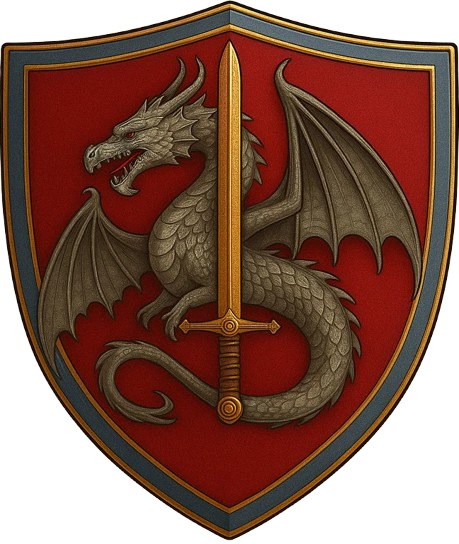
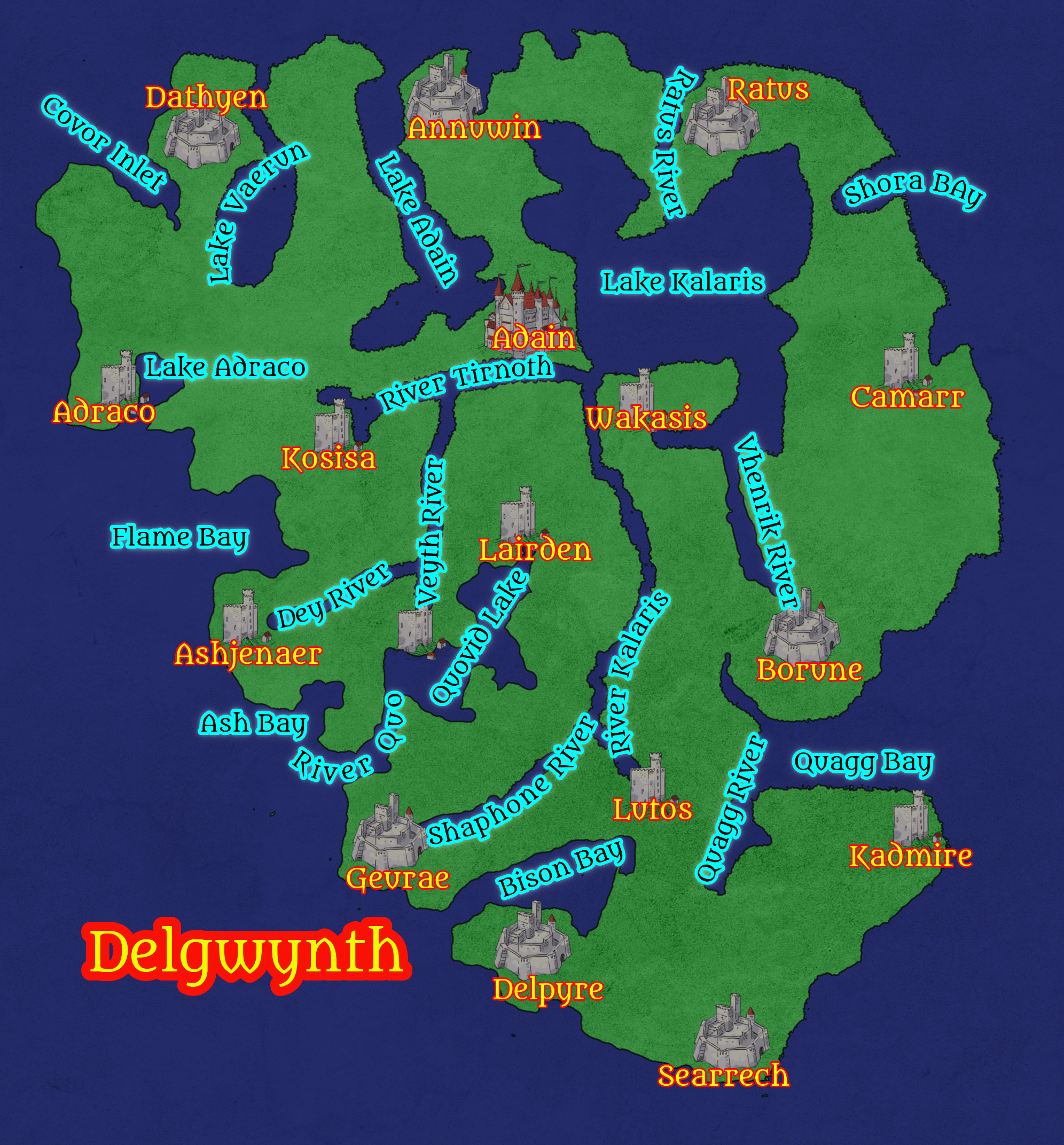
Delgwynth lies in the west of the Delgwynthian Empire, a land defined not by mountains but by its rivers, lakes, and waterways that weave it together like veins in a living body. The province is both the heart and memory of the Empire, a cradle of discipline and flame where the legions are forged and the Dragon God Moranthis is most fervently worshipped.
Its soil, though patchy, yields enough to sustain life, but its true wealth is the water that nourishes fields, carries ships, and unites cities. Rivers are the lifeblood of Delgwynth; war fleets sail upon them, armies march alongside them, and rebellions flare along their banks.
Geography and Climate
Delgwynth is a land of silver arteries: great lakes such as Lake Vaerun and Lake Dreswyn, and rivers like the Tirnoth, Kalaris, and Veyth, define its heartlands.
- Climate: Temperate but humid, with long springs and cool, mist-laden autumns.
- Trade & Travel: Waterways form the backbone of its economy and strategy, barges and ferries carry goods far more easily than caravans.
- Strategic Advantage: Few lands can be besieged long, for rivers carry relief, supplies, and reinforcements swiftly.
Religion
Delgwynth venerates the Trinary God, but most especially Moranthis, the Son. Moranthis is the Flame-Bearer, the Creator who descended into the clay of the world, clothed in flesh, and was broken upon it. Yet this breaking was his triumph: through death he rekindled creation with divine fire. To the Delgwyntians, Moranthis is not the gentle redeemer sung of in other lands but the Dragon Crucified, his wings torn, his scales blackened, who rose anew in flame to demand loyalty and sacrifice from his chosen. His incarnation is a warning as much as a promise, redemption can only be won through fire, agony, and obedience. The other two aspects of the Trinary are:
- Bahamut, the Father He is the Ancient Flame, the austere and terrible Judge, embodiment of divine law and order. His wisdom is not tender but unyielding, a furnace where the dross of imperfection is burned away. To Bahamut is ascribed the forging of empires and the crushing of heresies. His gaze is the weight of eternity, and those who fall short of his commandments are consigned to the ash heap of history.
- Io, the Spirit The Living Flame, the Breath of Divinity, the spark that dwells within all souls. Yet this spark is no gentle warmth; it is a holy fire that consumes. To harbor Io is to feel both the blessing of illumination and the peril of immolation. The Spirit drives mortals to visions, raptures, and frenzies, often indistinguishable from madness. Priests of the Delgwyntian Church preach that to be touched by Io is to stand always upon the knife-edge of glory and ruin.
Government and Society
The Twin Rulers
- The Emperor ("The Flame"): Supreme ruler of the entire Empire, divine voice of the Trinary. Resides in Adain but often distant.
- The Archon ("The Sword"): Military governor of Delgwynth, traditionally a battle-seasoned officer with immense authority over law and war.
The Ember-Council: A conclave of veteran priests, generals, and magistrates who act as the interpretive body of the faith and arbiters of law.
The Chalythra: Feared overseers, both secret police and holy inquisitors. They root out corruption, treason, and heresy with ruthless efficiency.
Classes
- Citizens: Warrior caste; only citizens may vote, serve in the Ember-Council, or command.
- Therioi: Free folk of rivers and crafts, boatmen, traders, artisans, fishermen, who serve as auxiliaries and river-scouts.
- Helots: The bound majority; their rebellions flare like summer storms, swiftly crushed but never fully extinguished.
Culture
- Values: Silence, endurance, unity. Conversation is sparse, meals plain, luxury suspect.
- Training: Mandatory martial schooling; youths are raised in riverside barracks from age 8, trained in swimming, rowing, and spear-drill.
- Martial Festivals: The Rite of Flame marks adulthood, an ordeal of river crossings, endurance trials, and combat in mud and shallows.
Military
The Delgwynthian legions embody their rivers: swift, relentless, and difficult to dam.
- Strength: Amphibious warfare, rapid riverine deployment, and shallow-draft warships called Searrowers.
- Tactics: The Phalanx of Flame, heavy infantry with shield and spear, adapted for marsh and shallow water combat.
- Special Forces: Oathsworn Ferrymen, elite river-commandos who strike behind enemy lines.
Decline and Strain
Delgwynth, though proud, is fraying:
- Peasant Uprisings: Fueled by overtaxation and forced conscription.
- Rigid Discipline: Tradition stifles innovation; other provinces adapt faster.
- Demographic Collapse: Purges and wars have thinned the citizen class to a shadow of its former strength.
- Imperial Rivalries: Sudran controls wealth, Mulare controls trade, leaving Delgwynth austere and overextended.
Legacy
Delgwynth is the Furnace of Water and Flame, it tempers the Empire's armies and provides the discipline that binds the realm. Its banner, a black river-serpent wreathed in red flame upon a field of deep blue, flies in every Imperial garrison.
Even as it weakens, every emperor still swears by the River-Flame of Adain, and every legionary learns: Without Delgwynth, there is no empire, only ashes scattered on the waters.
Delgwynth: Total Population BreakdownTotal population: 3,000,000
|
Cities & Settlements of Delgwynth
- Adain, Capital of Delgeynth and the Empire: Adain is not a city of luxury, but of order and power. Its architecture is imposing, stone barracks, training grounds, and statues of legendary warriors. Every citizen is expected to serve the Empire in some capacity.
- Dathyen: While scholarly, Dathyen's focus is on strategy, history, and the philosophy of warfare. Its libraries are filled with treatises on tactics and honor. It trains commanders, not poets.
- Ratus:Annuwin is the Empire's naval stronghold. Its harbors are filled with warships, and its sailors are trained in both combat and navigation. The city is disciplined, with a strong maritime warrior culture.
- Annuwin: Annuwin is the Empire's naval stronghold. Its harbors are filled with warships, and its sailors are trained in both combat and navigation. The city is disciplined, with a strong maritime warrior culture.
- Adraco: Adraco is a city of fire and steel. Its forges produce weapons, armor, and siege engines. The people here are blacksmiths and engineers, revered for their contributions to the Empire's might
- Camarr: Known for it's Fishermen and it's Farms
- Ashjenaer: Ashjenaer specializes in espionage and unconventional warfare. Its people are trained in stealth, sabotage, and intelligence gathering. The city is secretive, with a reputation for producing elite scouts and spies.
- Lairden: Known for it's cattle and sheep.
- Borune: Borune is the industrial heart of Delgwynth. Its mines and foundries supply the Empire's armies. The city is utilitarian, with a culture of labor, discipline, and pride in craftsmanship.
- Geurae: Geurae is where the Empire celebrates its victories. It hosts parades, honors heroes, and preserves the legacy of Delgwynth's greatest warriors. Art here serves the state, glorifying strength and sacrifice.
- Kadmire: Kadmire is the political center outside Adain, where military leaders and strategists gather. It's a city of debate, law, and command, with a strict hierarchy and a culture of duty.
- Delpyre: Once destroyed in a rebellion, Delpyre was rebuilt as a symbol of imperial resilience. Its people are fiercely loyal, and its architecture is stark and fortified. It's a city of redemption and vigilance.
- Searrech: Searrech trains the Empire's elite cavalry. Its plains are perfect for mounted warfare, and its people are proud horsemasters. The city is mobile, fast, and always ready to ride.
- Kosisa: Kosisa is a spiritual city, but its faith is rooted in discipline and sacrifice. Temples honor fallen warriors, and its monks train in martial arts and meditation. It's a place of reflection and resolve.
- Lutos: Lutos warriors are trained in urban combat and defense. The city is strategic, with fortified bridges and watchtowers.
- Wakasis: Known for it's arena where warriors across the empire compete.